

Key Takeaways
- Both forms effectively raise blood B12 levels in most healthy individuals, but they differ in how the body processes them.
- Methylcobalamin is already in its active coenzyme form; cyanocobalamin requires conversion by the body before use.
- Cyanocobalamin is more chemically stable and typically less expensive, making it dominant in fortified foods.
- People with impaired kidney function or certain genetic variants may have reason to prefer one form over the other.
- Neither form has been proven universally superior - the right choice depends on individual health context.
- Always consult a qualified healthcare professional before starting or changing any supplementation regimen.
Option A
Methylcobalamin
The bioactive, coenzyme-ready form of vitamin B12.
Best for: Individuals seeking a form of B12 that is immediately usable by the body without conversion, particularly those with certain metabolic differences.
Option B
Cyanocobalamin
The synthetic, shelf-stable workhorse of B12 supplementation.
Best for: People looking for a cost-effective, highly stable form of B12 commonly used in fortified foods and clinical supplementation.
If you are a generally healthy adult looking for an affordable, widely available B12 supplement
Cyanocobalamin
It is the most thoroughly studied form, chemically stable, and effective at raising B12 levels in people without metabolic conversion issues.
If you have a known MTHFR gene variant or methylation-related metabolic concerns
Methylcobalamin
Because it is already in its active coenzyme form, it bypasses the conversion steps that some individuals may perform less efficiently.
If you have significant kidney impairment
Methylcobalamin
Cyanocobalamin introduces a small amount of cyanide as a byproduct during conversion, which may be a concern for those with reduced kidney clearance - a point to raise with your doctor.
If you rely on fortified foods as your primary B12 source
Cyanocobalamin
It is the form most commonly used in food fortification due to its exceptional shelf stability and lower production cost.
Understanding Vitamin B12 and Why Form Matters
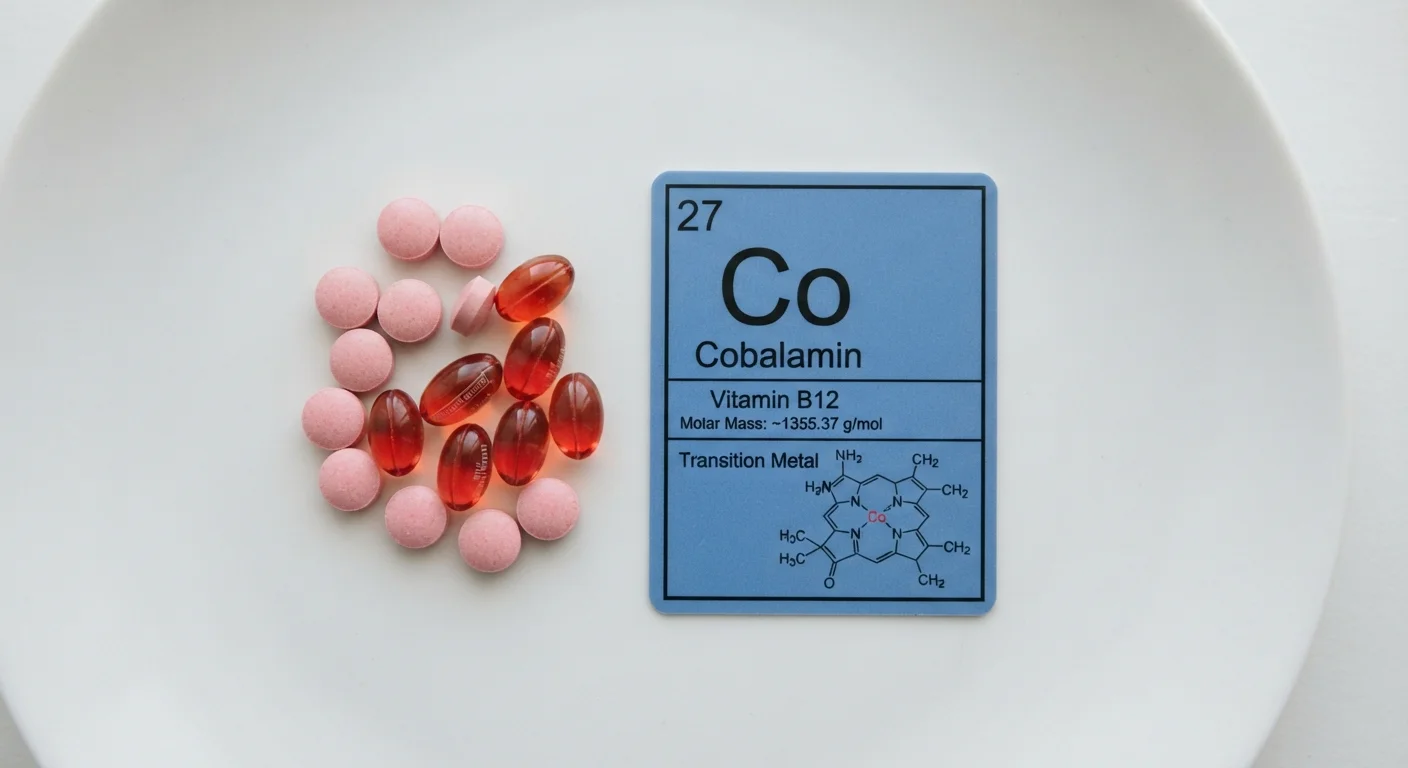
Vitamin B12, chemically known as cobalamin, is an essential water-soluble nutrient critical for red blood cell formation, neurological function, and DNA synthesis. The body cannot produce it, so adequate intake through diet or supplementation is necessary. What is less well known is that B12 is not a single compound - it exists in several chemically distinct forms, each with different properties once inside the body.
The two forms that dominate the supplement market are methylcobalamin and cyanocobalamin. Understanding their differences matters because supplement labels don't always tell the full story - and bioavailability is a key part of what gets left out.
Both forms ultimately supply cobalamin to tissues, but they arrive there by different routes and carry distinct chemical passengers. That distinction has fuelled ongoing debate among researchers and consumers alike about which is the better choice.
B12 Deficiency: Who Is Most at Risk
Strict vegetarians and vegans face heightened B12 deficiency risk because the vitamin is found almost exclusively in animal-derived foods. Older adults, people with atrophic gastritis, and those who have undergone certain gastrointestinal surgeries are also considered higher-risk groups. If you suspect you may be deficient, a blood test ordered by a healthcare provider is the appropriate first step - not self-diagnosis.
How Each Form Is Processed by the Body
Cyanocobalamin is a synthetic form not found in meaningful quantities in food. When ingested, the body cleaves off a cyanide molecule - a trace amount well within what the body handles routinely - and converts the remaining cobalamin into one of two active coenzyme forms: methylcobalamin or adenosylcobalamin. This conversion requires functioning enzyme pathways, and most people perform it without difficulty.
Methylcobalamin, by contrast, is already one of those active coenzyme forms. It participates directly in two critical reactions: the conversion of homocysteine to methionine (important for cardiovascular and neurological health) and the synthesis of SAMe, a compound involved in numerous methylation reactions throughout the body.
Research published in peer-reviewed journals has generally found that both forms raise serum B12 concentrations effectively. However, some studies suggest methylcobalamin may be retained in tissues at higher rates, while cyanocobalamin may produce higher urine excretion. The clinical significance of this difference for most people remains a subject of ongoing study rather than settled science.
| Criterion | Methylcobalamin | Cyanocobalamin |
|---|---|---|
| Natural occurrence | Found in foods and body tissues | Synthetic; not found in food |
| Conversion required | No - already in active form | Yes - must be converted by the body |
| Chemical stability | Less stable; light-sensitive | Highly stable; longer shelf life |
| Cost | Typically higher | Typically lower |
| Cyanide byproduct | None | Trace amount released during conversion |
| Evidence base | Growing, but less extensive | Decades of clinical research |
| Common use | Premium supplements, sublingual formats | Fortified foods, mass-market supplements |
Stability, Cost, and Practical Considerations
Cyanocobalamin holds a clear practical advantage: it is significantly more stable when exposed to light and heat, has a longer shelf life, and is considerably less expensive to manufacture. These properties explain why it is the standard in fortified cereals, plant-based milks, and most mass-market supplements.
Methylcobalamin degrades more readily, which can affect potency over time if supplements are stored improperly. Manufacturers often compensate by adding an overage to the formulation - meaning the stated dose may exceed the amount still active by the time of use - but this is not universally disclosed on labels. This connects to broader questions about the gap between what a supplement label states and what the body actually receives.
~6%
U.S. adults estimated to be B12 deficient
The National Institutes of Health estimates B12 deficiency affects roughly 6% of adults under 60 in the U.S., with higher rates among older adults.
~1.5-2%
Passive absorption rate without intrinsic factor
Research indicates that in the absence of intrinsic factor (a protein produced in the stomach), only about 1-2% of a B12 dose is absorbed passively across the gut lining.
~20%
Older adults with reduced B12 absorption
Studies suggest up to 20% of older adults may have some degree of reduced B12 absorption, often linked to declining stomach acid production or atrophic gastritis.
It is also worth considering that supplement form is just one variable. Delivery method (sublingual, oral tablet, injection), dosage, and individual absorption capacity - which declines with age and with conditions affecting the gut - all influence how much B12 ultimately reaches cells. For more on timing and how B12 interacts with other nutrients, see what science suggests about supplement stacking and timing.
Who Might Benefit from Choosing One Over the Other
For the majority of adults without metabolic complications, the evidence does not strongly favor one form over the other for everyday supplementation. Cyanocobalamin's safety and efficacy record is well-established across decades of clinical use.
However, specific populations may have reason to discuss form with their healthcare provider. Individuals with variants in the MTHFR gene - which affects methylation pathways - are sometimes advised to prioritize already-active forms like methylcobalamin, though research directly linking form choice to measurable outcomes in this group is still developing. People with chronic kidney disease may also warrant a conversation, given that impaired clearance could theoretically slow elimination of cyanide byproduct, though the amounts involved from standard supplementation doses are very small.
Because B12 is a water-soluble vitamin, understanding its behavior in the body is part of a broader literacy around how water-soluble and fat-soluble vitamins differ in absorption and storage. Water-soluble vitamins like B12 are not stored in fat tissue to the same extent as fat-soluble vitamins, making consistent intake especially important.
This article is for general informational and educational purposes only and does not constitute medical advice. Consult a qualified healthcare professional before starting, stopping, or changing any supplement or treatment plan.