

Key Takeaways
- A three-tier wardrobe system - anchors, bridges, and accents - eliminates seasonal overhauls.
- Fabric weight and fiber content matter more than season-specific cuts when building versatility.
- Layering is the primary mechanism that extends any garment's useful temperature range.
- Impulse seasonal purchases are among the most common closet-clutter contributors.
- Rotating and storing items correctly preserves garment life and reduces long-term spending.
Why the 'Seasonal Overhaul' Mindset Costs You
Many consumers feel pressured to purge and replace their wardrobe every few months - a cycle the fashion industry has historically encouraged. To understand how the retail calendar shapes that pressure, see our explanation of the seasonal fashion cycle. The reality is that most people wear a fraction of what they own, repeatedly, while fresh purchases sit unused after one or two outings.
This overhaul habit creates two concrete problems: financial waste and decision fatigue. Buying trend-driven pieces in bulk each season inflates spending without meaningfully improving daily dressing. A more durable approach is building a wardrobe architecture that accommodates temperature shifts rather than responding to them reactively.
Wardrobe Planning Is Not a One-Size Solution
The framework in this guide is general educational guidance based on broadly applicable principles. Climate, lifestyle, profession, and personal style all influence what works for a specific individual. Readers in regions with extreme seasonal variation - harsh winters or consistently high humidity - may need to adjust fabric weights and layer counts significantly. Treat any framework as a starting point, not a prescription.
The Core Framework: Anchors, Bridges, and Accents
Think of a four-season wardrobe in three tiers:
- Anchors - high-wearability basics in neutral or versatile tones: straight-leg trousers, well-fitted denim, classic crewnecks, tailored blazers. These pieces absorb styling from whatever surrounds them.
- Bridges - transitional items that perform well in two or more seasons: a lightweight merino cardigan, a trench coat, an unlined linen blazer. Bridges do the heavy lifting in spring and fall.
- Accents - limited seasonal pieces that reflect current color stories or texture trends without requiring a full wardrobe commitment. Keep this tier small and intentional.
The ratio that works for most people is roughly 60% anchors, 30% bridges, and 10% accents. This structure is not a rigid capsule wardrobe, nor is it trend-chasing. For a side-by-side look at those two philosophies, compare the capsule and trend-driven approaches before committing to either extreme.
When evaluating a bridge piece, hold it against three distinct outfit combinations before purchasing - if it works with fewer than two, it earns an accent slot at best, not a bridge slot.
Bridge pieces derive their value from cross-season versatility; pieces that only pair with one look don't extend your wardrobe range, they just add volume.
Invest in at least one outer layer that compresses and packs flat. A packable mid-weight jacket effectively doubles as both a transitional layer and a travel piece, extracting maximum value from a single garment.
Packable outerwear is among the highest-cost-per-wear performers in a four-season wardrobe because it functions across the widest temperature band.
Fabric Choices That Work Across Climates
Fabric is the single most under-discussed element of versatile dressing. A garment's cut may look season-appropriate, but its fiber content determines whether it can actually be worn comfortably across a range of temperatures.
- Merino wool
- Temperature-regulating, moisture-wicking, and odor-resistant. Lightweight merino works from early fall through late spring when layered correctly.
- Linen and linen blends
- Breathable in heat, but heavy-weave linen can layer under outerwear in mild fall weather without feeling bulky.
- Cotton midweights (180-220 gsm)
- The workhorse fabric range. Avoid ultra-lightweight jersey, which reads as summer-only; opt for structured cotton that holds shape under layers.
- Ponte and technical blends
- Stretch-woven fabrics retain structure season-round and travel well - useful for people whose wardrobe must function across climates.
Synthetic insulation in outerwear (such as jackets with packable fill) bridges the gap between transitional and winter weight without requiring separate wardrobes for mild versus cold climates.
~50%
Wardrobe items rarely or never worn
Multiple consumer studies suggest roughly half of the average person's wardrobe goes unworn in a given year, pointing to volume as the primary closet problem, not variety.
3-5 years
Average lifespan of well-maintained quality knits
Textile care organizations note that proper washing and storage practices can triple the functional lifespan of merino and wool garments compared to poor care habits.
Layering Strategies for Every Temperature Shift
Layering is not about piling on clothes - it is a deliberate system of heat management. A practical three-layer model:
- Base layer: A fitted, breathable piece worn directly against skin. Merino or moisture-managing cotton. This is often the anchor piece.
- Mid layer: A lightweight knit, button-front shirt, or unlined jacket. Adds insulation and visual texture. This is typically a bridge piece.
- Outer layer: Weather protection - a trench, wool overcoat, or packable shell depending on conditions.
The key is that each layer works independently as an outfit for warmer days within the same season. A lightweight denim jacket worn as a mid layer in March should also work standalone in September.
For detailed tactics on adapting specific pieces between the shoulder seasons, see our transitional dressing guide.
Test Layering Compatibility Before Buying
Before committing to a new mid-layer piece, try it over or under items you already own - ideally in the store or with a clear return window. Sleeve bulk under a jacket, collar bulk under a coat, and torso width when tucked are all fit factors that only reveal themselves in combination. A piece that layers badly will not earn wearable days regardless of how good it looks on its own.
Avoiding Common Wardrobe-Building Pitfalls
Even well-intentioned shoppers fall into predictable traps. The most frequent:
- Buying duplicates of items you already own because they are on sale. More pairs of black trousers do not expand your wardrobe's range.
- Prioritizing aesthetics over fabric weight, resulting in pieces that photograph beautifully but are impractical for five months of the year.
- Ignoring fit at purchase. A garment that requires tailoring the moment it arrives is one most people never actually wear.
- Treating all trend pieces as investments. Accent pieces are intentionally temporary; do not spend anchor-level budgets on them.
Before any purchase, it helps to audit against the common buyer pitfalls that drive closet bloat - many of the same psychological mechanisms that affect larger purchases apply equally to clothing. Readers focused on value should also review smart budget buying strategies to maximize what each piece delivers per dollar.
Sale Events Can Undermine Wardrobe Strategy
Deep discounts create urgency that bypasses the 'does this fill a real gap?' question. Purchasing three accent pieces at sale price still costs more than purchasing one bridge piece at full price - and adds less long-term utility. Apply the anchor/bridge/accent framework before any purchase, regardless of pricing context.
Maintaining and Rotating Your Closet Year-Round
A four-season wardrobe only functions if garments are accessible and in good condition. A few maintenance principles worth establishing:
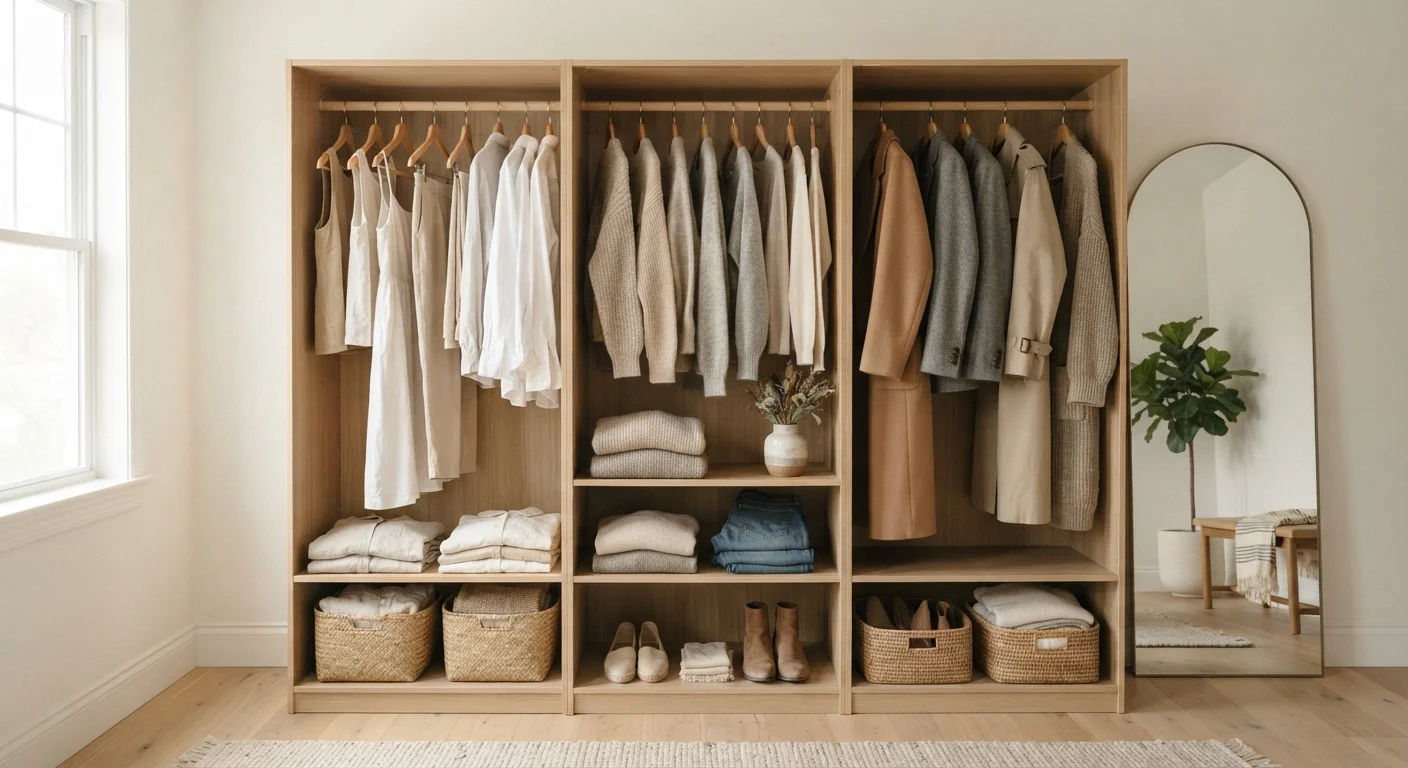
- Rotate by visibility, not by date. Keep current-season pieces at the front of the closet and recently worn items at the back of each category. This surfaces underused pieces naturally.
- Store heavier items properly. Fold chunky knits to prevent shoulder stretch; use cedar blocks or breathable garment bags for wool coats.
- Address minor repairs immediately. A loose button or small snag fixed promptly extends garment life by years; ignored, it removes the piece from rotation permanently.
- Reassess twice a year, not four times. A spring and fall review - roughly aligned with the temperature shifts that matter most - is sufficient for most climates.
The goal is a closet that requires minimal effort to dress from because every item in it earns its space. When your wardrobe is structured around anchors and bridges, the frantic seasonal restart becomes unnecessary - and the relief of that is more valuable than any trend.
Climate Zone Affects Every Recommendation
Readers in mild climates - much of the Pacific Coast or the Gulf South - may find that a two-tier system (anchors plus light bridges) is sufficient, with minimal outerwear investment. Those in the Upper Midwest or Northeast, where temperature swings exceed 80°F across the year, will need a more robust bridge and outer-layer collection. The underlying framework scales; the specific pieces within it do not.