

Key Takeaways
- Layering lightweight fabrics is the most effective way to handle unpredictable transitional weather.
- You rarely need to buy new pieces - most wardrobes already contain strong transitional options.
- Swapping accessories and outerwear can shift a single outfit across multiple temperature ranges.
- Fabric choice matters more than silhouette when dressing for in-between seasons.
- A few strategic additions each season are smarter than a full wardrobe overhaul.
What you will need
Why Transitional Dressing Deserves a Strategy
The fashion industry's calendar moves in defined seasonal blocks, but the weather doesn't follow a script. Across much of the U.S., autumn doesn't arrive uniformly in September, and spring warmth is rarely reliable in March. Understanding how the seasonal fashion cycle works helps explain why retail racks shift so abruptly - but it doesn't mean your closet needs to.
Transitional dressing is the practice of adapting what you already own to cover the weeks or months when one season bleeds into another. Done well, it reduces the pressure to shop and reveals the versatility already sitting in your wardrobe. The four-season wardrobe guide explores this idea at a larger scale, but the steps below focus on the practical outfit-level moves that work right now.
What you will need
What You'll Need Before You Start
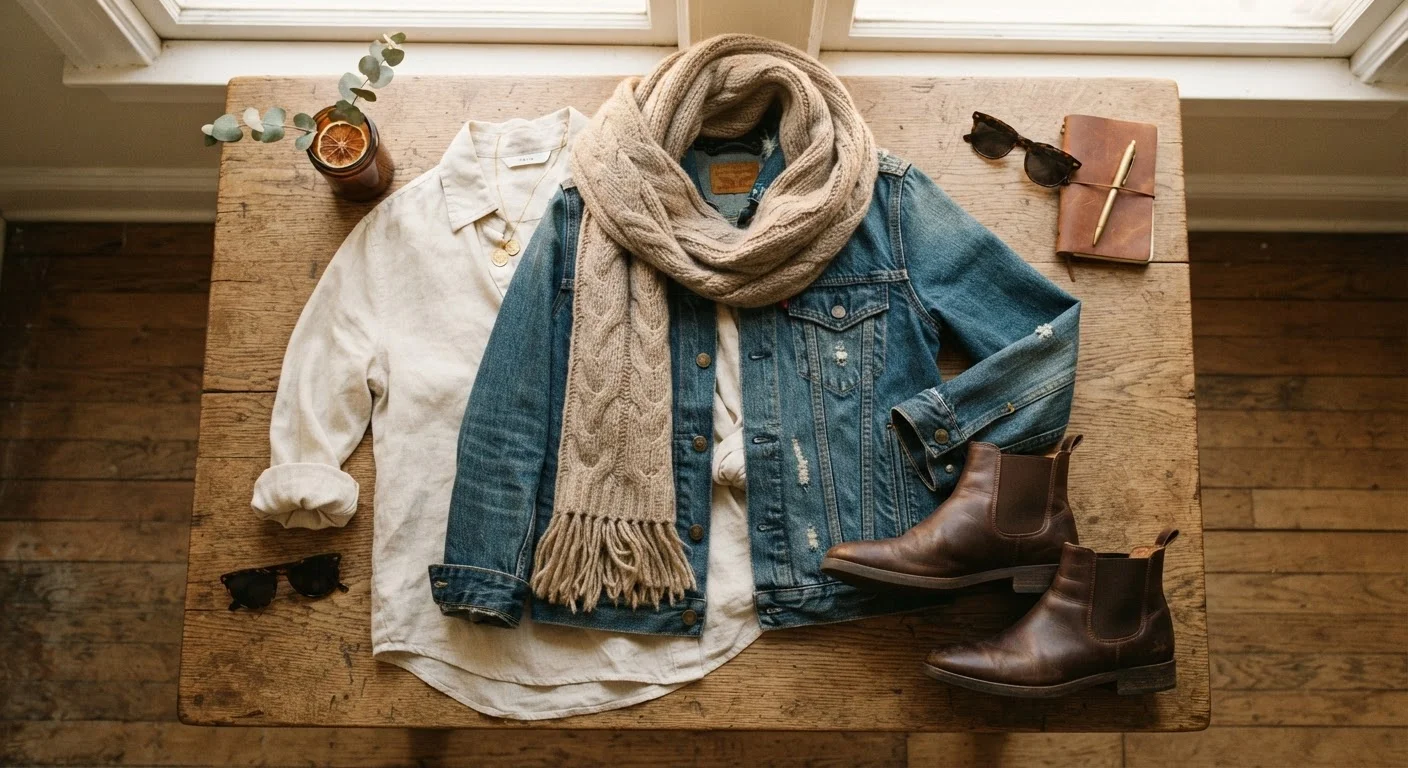
Effective transitional dressing relies on a handful of physical pieces and a clear-headed approach to what you already own - not a shopping list. The tools below represent categories of clothing rather than specific purchases. If you already own items that fall into these categories, you're well-equipped.
Lightweight Knit or Cardigan
Acts as a removable layer that adds warmth without bulk, essential for days with shifting temperatures.
Denim or Chore Jacket
A medium-weight outer layer that works over both summer dresses and autumn basics.
Ankle Boots
A footwear bridge between sandal-season and full winter boots, versatile across multiple outfit types.
Lightweight Scarf
Adds warmth and visual interest while remaining easy to remove when temperatures rise.
Opaque Tights or Slim-Cut Trousers
Allows summer dresses and skirts to extend into cooler months without requiring different bottoms.
Don't Shop Before You Audit
Before purchasing anything for seasonal transition, spend 15 minutes pulling out everything you already own in lightweight layers, transitional fabrics, and neutral tones. Most people discover they have more workable pieces than they realized. Impulse transitional shopping is one of the most common wardrobe mistakes - see common buyer pitfalls before you add to cart.
Step-by-Step: Building Transitional Outfits
Follow these steps sequentially the first time through. Once the logic becomes familiar, you'll apply it instinctively each morning. The process works for both summer-to-autumn and winter-to-spring transitions with only minor adjustments to fabric weight and color palette.
Audit your current wardrobe for transitional pieces
Pull everything out of your closet that fits into these categories: lightweight knits, long-sleeve tops, mid-weight outerwear, and versatile bottoms like straight-leg trousers or dark denim. Lay them out together. This physical overview helps you see what combinations already exist before you consider buying anything new.
Use the wardrobe audit checklist to identify gaps versus redundancies as you go.
Identify your anchor pieces
Anchor pieces are the items your transitional outfits will build around. Good candidates include dark wash jeans, neutral-toned midi skirts, relaxed blazers, and straight-cut trousers. These are pieces that hold up visually whether worn with a linen tank or a ribbed turtleneck - which means they work across a temperature range of 20 or more degrees with only a layer swap.
Apply the layering framework
Build each outfit using a three-layer logic: a base (your lightest piece - a tank, tee, or lightweight blouse), a mid-layer (a cardigan, overshirt, or light knit), and an outer layer (a denim jacket, trench coat, or unlined blazer). On warmer transitional days, shed the outer layer. On cool mornings, all three layers create genuine warmth without requiring heavier winter pieces.
Fabric matters here: breathable mid-layers in cotton, modal, or fine merino wool are more comfortable than synthetic blends when temperatures fluctuate mid-day.
Extend summer pieces into cooler months
Summer dresses, linen trousers, and lightweight shorts don't have to disappear at the first sign of autumn. Pair a floral midi dress with opaque tights and ankle boots to carry it through October. Layer a button-down shirt underneath a slip dress for a grounded, season-appropriate look. Linen trousers worn with a chunky knit and loafers translate well into early autumn without reading as out-of-place.
Bring winter pieces forward into late spring
Autumn and winter staples can work in reverse - worn lightly in late winter and early spring when temperatures are still cool but brighter colors and lighter silhouettes feel appropriate. A fine-gauge turtleneck worn under a slip dress or a tailored coat over a spring floral blouse are examples of this approach. The key is contrast: heavier textile underneath, lighter color palette or silhouette on top.
Use accessories to complete seasonal shifts
Accessories do more work in transitional dressing than most people give them credit for. A summer outfit instantly reads as autumn-ready when paired with a structured leather bag, a lightweight scarf in a warm earth tone, and block-heeled ankle boots. Conversely, swapping heavy footwear for loafers or mules and removing the scarf shifts the same outfit back toward spring or late summer. This approach gets maximum utility from core pieces without requiring additional clothing purchases.
Avoid Over-Relying on One Trend
Transitional dressing works best when it's grounded in versatile pieces rather than season-specific microtrends. Heavily trend-driven buys can feel dated within months and rarely earn their cost-per-wear. For a balanced perspective, consider the upsides and downsides of trend-led dressing before committing to a transitional look built around a single statement piece.
Making Transitional Dressing a Long-Term Habit
The most enduring wardrobes aren't built for a single season - they're assembled with flexibility in mind from the start. If you find yourself consistently short on transitional options, that's useful information: it may point to gaps in fabric variety or a lack of lightweight outerwear rather than a need for more clothes overall.
For those weighing how much trend-following serves their personal style, the capsule wardrobe vs. trend-driven closet comparison is worth exploring. And if prints are a regular part of your wardrobe, wearing prints without the overwhelm addresses how to layer and mix patterns without losing visual cohesion across seasons.
Neutral Tones Bridge Seasons Effortlessly
Earth tones - camel, olive, rust, and cream - appear in both summer and autumn palettes, making them naturally cross-seasonal. Building transitional outfits around a neutral base lets you add or remove warmer accent layers without the outfit losing coherence. If you're not sure where to start, the principles behind lasting personal style offer a strong foundation.
Transitional dressing isn't about having the perfect answer for every temperature - it's about building enough flexibility into your closet that you're never caught unprepared. The skills covered here compound over time: the more seasons you navigate intentionally, the less effort each transition requires.