

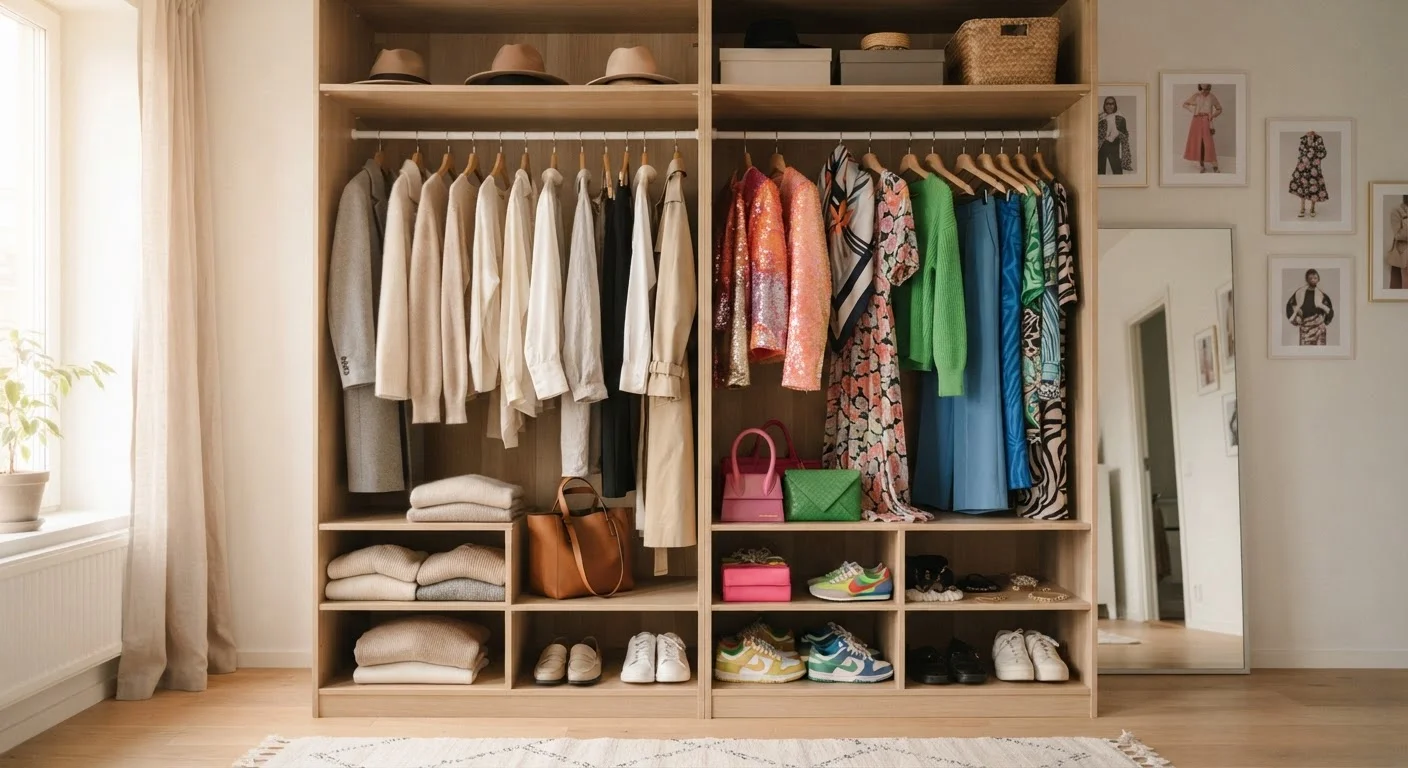
Key Takeaways
- A capsule wardrobe prioritizes versatility and longevity over seasonal novelty.
- A trend-driven closet offers creative expression but can lead to higher costs and clutter.
- Most people benefit from a hybrid model that blends core staples with selective trend pieces.
- Your lifestyle, budget, and personal style goals should guide which approach you lean toward.
- Neither strategy is objectively superior - sustainability and satisfaction depend on individual habits.
Option A
Capsule Wardrobe
The intentional, versatile foundation approach.
Best for: People who want a stress-free, cohesive closet built on timeless pieces that work across multiple occasions.
Option B
Trend-Driven Closet
The expressive, fashion-forward approach.
Best for: People who draw energy from staying current with fashion cycles and enjoy experimenting with new looks each season.
If you want fewer decisions and a consistently polished look
Capsule Wardrobe
A curated set of versatile pieces reduces morning friction and ensures every item in your closet earns its place.
If fashion experimentation is a genuine source of joy for you
Trend-Driven Closet
Engaging with current trends can be a meaningful creative outlet when approached with intention and a realistic budget.
If you're working with a limited clothing budget
Capsule Wardrobe
Investing in durable, multi-use staples typically delivers more cost-per-wear value than frequently rotating trend pieces.
If you work in a creative or fashion-adjacent industry
Trend-Driven Closet
Demonstrating awareness of current aesthetics can be professionally relevant in fields where visual communication matters.
If you want a sustainable middle ground
Capsule Wardrobe
Building from a stable foundation of classics, then adding one or two trend pieces per season, keeps costs and waste manageable.
What Each Approach Actually Means
The term capsule wardrobe describes a deliberately small collection of clothing - typically 30 to 50 pieces - chosen for their ability to work together across multiple outfits and occasions. The idea, popularized in the 1970s by fashion consultant Susie Faux, centers on quality over quantity: neutral palettes, classic silhouettes, and fabrics built to last. The goal is a closet where almost everything can be combined with almost everything else.
A trend-driven closet, by contrast, is organized around fashion cycles. Pieces are added seasonally in response to what's currently showing up on runways, in editorial spreads, and across social media. This approach isn't inherently reckless - some trend followers are highly selective - but it does involve more frequent turnover and a closer eye on what's culturally current. For a deeper look at how trends form and why they matter, see our introduction to fashion concepts.
Head-to-Head: Key Differences
Comparing these two approaches across practical dimensions reveals where each genuinely excels - and where it asks the most of you.
| Criterion | Capsule Wardrobe | Trend-Driven Closet |
|---|---|---|
| Closet size | 30-50 intentional pieces | Varies; grows each season |
| Upfront cost | Higher per item | Lower per item, more frequent |
| Cost-per-wear over time | Generally lower | Can be high for short-lived trends |
| Creative expression | Constrained by design | High; reflects current culture |
| Decision fatigue | Low - everything coordinates | Higher - more variables daily |
| Environmental footprint | Lower with durable choices | Higher with fast-fashion churn |
| Adaptability to life changes | Requires deliberate updating | Naturally evolves with trends |
Cost-per-wear is often the most revealing metric. A classic trench coat worn 80 times over five years outperforms a viral statement piece worn twice before it feels dated. That said, trend pieces don't always lose value quickly - some become enduring style touchstones. The upsides and downsides of trend-led dressing are worth understanding before committing either way.
The Real Costs - Financial and Otherwise
The financial case for a capsule wardrobe is straightforward: fewer pieces purchased more deliberately tends to mean less cumulative spending. But the calculus changes depending on the quality tier you shop. Capsule wardrobes built from luxury basics can cost more upfront than a season's worth of fast-fashion trend items. The difference shows up over time in durability and resale value, not at the point of purchase.
Trend-driven dressing carries its own hidden costs. Following every trend usually backfires financially and environmentally - excess purchases often go unworn, and the dopamine cycle of newness can be hard to break once established. If budget discipline is a concern, our smart budget buying strategies offer practical frameworks for keeping clothing spend intentional regardless of your style philosophy.
~$1,800
Average annual US clothing spend per person
According to the U.S. Bureau of Labor Statistics Consumer Expenditure Survey, apparel and related services represent a significant recurring household expense.
30%
Clothes never or rarely worn
Research from environmental organizations suggests a significant share of purchased clothing goes largely unworn, contributing to textile waste concerns.
Finding the Balance That Works for You
The most livable wardrobe strategy for most people isn't a strict either/or. Fashion editors and stylists frequently recommend what might be called an 80/20 model: roughly 80% reliable, versatile staples and 20% trend-informed pieces that reflect your current interests. This structure gives you a dependable daily foundation while leaving genuine room for creative expression.
Practically, this might look like a neutral base of well-fitting trousers, quality knitwear, and timeless outerwear - paired with one or two seasonal additions like a print-forward blouse or a color-blocked bag. For guidance on integrating bolder pieces without visual chaos, our article on wearing prints without the overwhelm offers useful starting points. If you dress across multiple seasons, transitional dressing strategies can help you maximize what you already own rather than rebuilding your closet each quarter.
Ultimately, neither approach is universally right. The wardrobe that serves you best is the one that fits your real life - your routine, your budget, and what genuinely makes you feel confident when you get dressed. Avoiding common buyer pitfalls is equally important whether you're investing in classics or experimenting with trends.