

Key Takeaways
- Higher potential returns almost always come with higher potential for loss - this is a fundamental investing principle.
- No investment eliminates risk entirely; even cash held in savings loses purchasing power to inflation over time.
- Your time horizon and personal comfort with uncertainty both shape how much risk is appropriate for you.
- Diversification can help manage risk without necessarily sacrificing all potential for growth.
- Understanding this tradeoff helps you make more informed decisions rather than chasing returns blindly.
Risk-Return Tradeoff
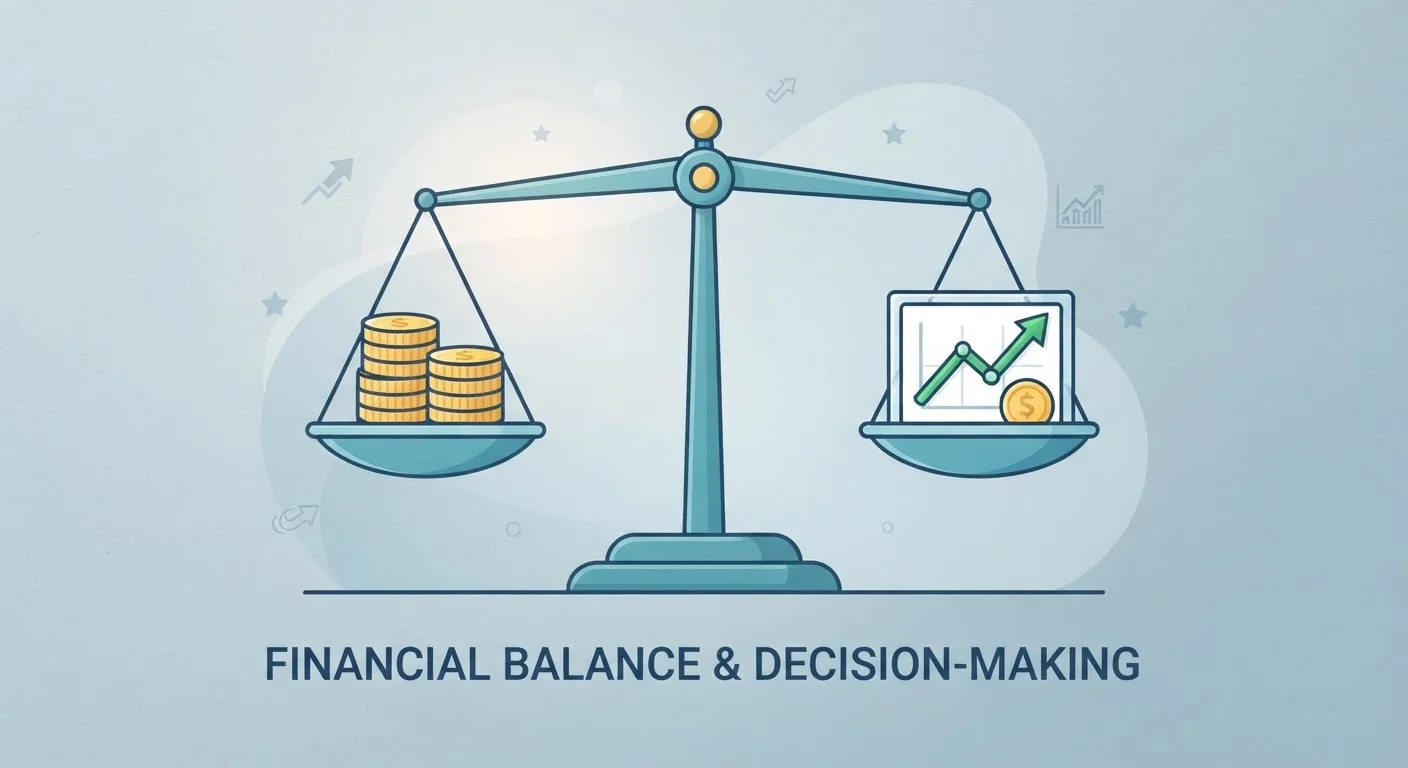
The risk-return tradeoff is the principle that higher potential investment returns are generally paired with higher levels of risk - meaning a greater chance of losing some or all of your money. Investments that feel safer, like savings accounts or government bonds, typically offer lower returns. Investments with more uncertainty, like stocks, offer the possibility of higher gains but also steeper losses.
In portfolio theory, this relationship is quantified through metrics like standard deviation (a measure of volatility) and the Sharpe ratio, which gauges return per unit of risk taken.
Why the Risk-Return Tradeoff Is the Starting Point
Before you put a single dollar into any investment, one principle will shape almost every decision you make: the risk-return tradeoff. It's not a complex formula - it's a logical relationship. In exchange for accepting a greater chance of losing money, investors are offered the possibility of earning more. In exchange for safety, they accept lower growth.
Think of it as a dial. Turn it toward safety and predictability, and potential gains shrink. Turn it toward growth, and the possibility of losses grows alongside it. Neither end of the dial is universally right - the right setting depends on your goals, your timeline, and your financial situation.
If you're just getting started, our beginner's investing guide walks through foundational concepts before you commit any money.
~10%
Average annual U.S. stock market return (historical)
The S&P 500 has historically averaged roughly 10% annually before inflation, but individual years have ranged from large gains to significant losses - illustrating that averages mask real volatility.
3-5%
Typical annual inflation rate range (U.S. historical average)
According to U.S. Bureau of Labor Statistics historical data, inflation has averaged around 3-4% annually over long periods, highlighting why purely cash-based savings can lose real value over time.
~50%
S&P 500 peak-to-trough decline during 2008-2009 downturn
During the 2008 financial crisis, the S&P 500 fell by roughly half from peak to trough - a stark reminder that higher return potential comes with real downside risk in practice.
How Risk Shows Up in Real Investments
Risk isn't abstract - it appears differently depending on the asset type involved. Stocks, for instance, can rise dramatically in value but can also drop sharply in a market downturn. Bonds generally offer more predictable income but with lower upside. Cash savings carry almost no volatility, yet inflation quietly chips away at purchasing power year after year.
A plain-language overview of stocks, bonds, and mutual funds can help you understand how risk behaves across these foundational asset types.
Here are the main categories of investment risk worth knowing:
- Market risk: The value of your investment falls due to broader economic conditions.
- Inflation risk: Your returns don't keep pace with rising prices, reducing real purchasing power.
- Liquidity risk: You can't access your money quickly without taking a loss.
- Concentration risk: Too much money in one asset or sector magnifies the damage if it performs poorly.
Matching Risk to Your Situation
There's no single correct level of risk for every investor. Two factors matter most: time horizon (how long before you need the money) and risk tolerance (how comfortable you are watching your portfolio value fluctuate).
Someone saving for retirement 30 years away generally has more room to weather short-term volatility than someone saving for a home purchase in three years. A longer runway allows more time to recover from downturns - though recovery is never guaranteed.
“Risk comes from not knowing what you're doing.”
— Warren Buffett, Chairman and CEO of Berkshire Hathaway, widely cited investor
Diversification - spreading investments across different asset types - is one of the most widely recognized ways to manage risk without abandoning growth potential entirely. It doesn't eliminate losses, but it reduces the chance that one poor-performing investment wipes out everything.
Before deciding how much risk to take on, it helps to review your broader financial picture. Our financial readiness checklist outlines the foundations worth having in place first.
Know Your Risk Tolerance Before You Invest
Before choosing any investment, honestly assess how you'd react if its value dropped 20% or more in a year. If that would cause you to sell in a panic, a more conservative approach may suit you better. Emotional decisions during downturns are a common way investors lock in losses unnecessarily.
This article is for general informational and educational purposes only, and does not constitute personalized financial or investment advice. All investing involves risk, including potential loss of principal. Please consult a licensed financial professional before making decisions based on your individual circumstances.