

Key Takeaways
- Scale weight alone is an unreliable measure of a pet's true body condition or fitness.
- Body condition scoring (BCS) is the veterinary standard for evaluating fat coverage and muscle mass.
- Breed, age, sex, and neuter status all influence what a healthy weight range looks like for an individual pet.
- Regular at-home assessments between vet visits help catch weight drift early.
- Feeding quality and portion accuracy matter as much as caloric quantity for weight management.
What you will need
Why the Scale Tells an Incomplete Story
When a pet steps on a scale, the number reflects total mass - bone, organ, muscle, fluid, and fat combined. Two dogs of identical weight can have entirely different body compositions: one may carry lean muscle and appropriate fat reserves, while the other may have significant fat accumulation masking underlying muscle loss. This is why veterinary professionals rely on structured assessment tools rather than weight alone when evaluating a pet's physical condition.
Breed variation adds further complexity. A healthy Greyhound and a healthy Labrador Retriever may share the same weight but require completely different body condition benchmarks. Neuter status, age, and individual metabolism further alter what a target weight should look like for any given animal. The Pet Nutrition hub covers the broader nutritional framework that supports healthy body composition across life stages.
Always Consult Your Veterinarian First
This article provides general educational information, not veterinary advice. Unexplained weight gain or loss in a pet can signal underlying medical conditions such as thyroid disorders, diabetes, or organ disease. Never attempt to change a pet's diet or exercise plan significantly without first consulting a licensed veterinarian who can evaluate your specific animal.
Tools and Habits That Support Healthy Weight Management
Consistent at-home monitoring - combined with regular veterinary assessments - forms the foundation of effective weight management. The steps below walk through the practical skills every pet owner can develop, from performing a body condition check to auditing portion sizes accurately.
What you will need
Veterinarian or veterinary technician
Performs a clinical body condition score and rules out medical causes of weight change.
Accurate digital scale
Tracks weight trends over time as one data point alongside body condition scoring.
Measuring cup or kitchen scale
Ensures accurate, consistent portion sizes rather than relying on visual estimates.
BCS reference chart
A 9-point body condition score chart (available from veterinary organizations) guides at-home visual and tactile assessment.
Understand Body Condition Scoring (BCS)
The 9-point Body Condition Score system, used widely in veterinary medicine, evaluates fat coverage over key anatomical landmarks - ribs, spine, waist, and hip bones - as well as visible muscle mass. A score of 4-5 out of 9 is generally considered ideal for most dogs and cats. Scores below 4 indicate underweight status; scores of 6 and above suggest excess body fat. Unlike a number on a scale, BCS accounts for body composition rather than mass alone.
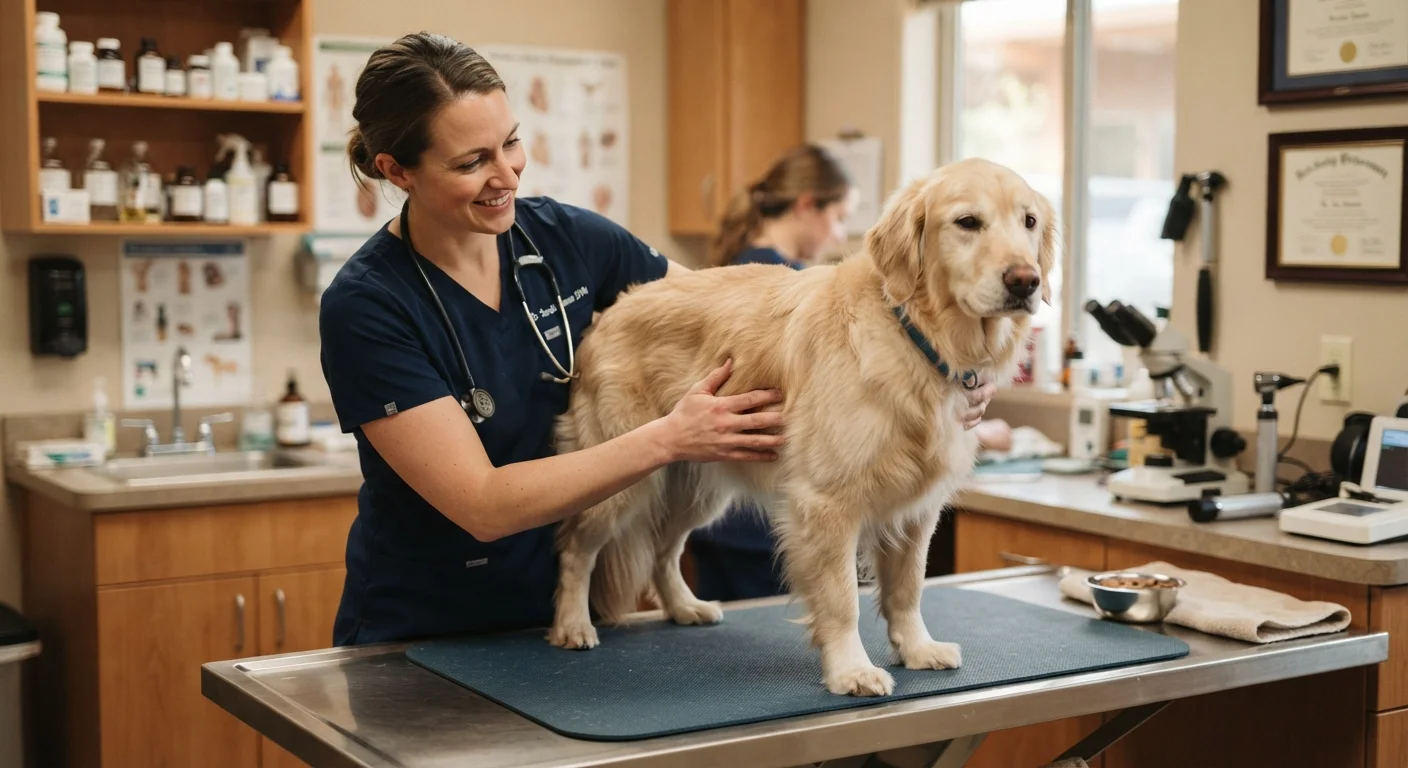
Perform a Hands-On Rib Check at Home
Place both thumbs along your pet's spine and spread your fingers across the ribcage. You should be able to feel each rib with light pressure - similar to running fingers over the back of your hand. If you cannot feel ribs without firm pressing, excess fat coverage is likely present. If ribs are highly prominent with no detectable padding, the animal may be underweight. This tactile check supplements visual observation and is more reliable than eyeballing fur-covered pets.
Assess Waist Definition and Abdominal Tuck
Viewed from above, a healthy dog or cat should show a visible narrowing behind the ribcage - this is the waist. Viewed from the side, the abdomen should tuck upward from the chest toward the hind legs rather than hanging level or sagging. Pets who lack a waist or carry a pendulous belly are likely carrying excess body fat regardless of what the scale reads. Documenting this with a consistent photo taken from the same angle monthly can reveal gradual changes that are easy to miss day to day.
Evaluate Muscle Condition Separately from Fat
Muscle Condition Score (MCS) assesses muscle mass over the skull, scapulae, spine, and pelvis, and is graded from normal to severe wasting. A pet can appear at a normal scale weight while losing lean muscle mass - a condition called sarcopenic obesity that is especially common in aging animals and those with chronic illness. Ask your veterinarian to include MCS in routine checkups, and watch for signs such as difficulty rising, reduced activity tolerance, or visible prominence of bony landmarks beneath a soft belly.
Audit Feeding Portions and Hidden Calories
Measuring food with a kitchen scale (by weight in grams) is more accurate than volume cups, which can vary by as much as 20-30% depending on kibble shape and how tightly the cup is packed. Treats, table scraps, dental chews, and food puzzle fillers all add calories that are rarely tracked. For context, a single medium dog treat can represent 5-10% of a small dog's daily caloric need. Log every food source for one week to get an honest picture of your pet's actual intake.
Build a Consistent Review Routine with Your Vet
Schedule weight and BCS checks every three to six months even for apparently healthy pets. Life-stage transitions - puppyhood to adulthood, adulthood to senior, spay or neuter surgery - shift caloric needs significantly and often require feeding adjustments. The annual pet nutrition checklist is a useful framework for structuring these conversations. Bring a feeding diary and a list of all treats and supplements so your veterinarian has complete information.
Rapid Weight Loss Can Be Dangerous
Cats in particular are at risk of hepatic lipidosis (fatty liver disease) if they lose weight too quickly. Even overweight pets should only lose mass at a gradual rate recommended by a veterinarian. Avoid crash-dieting a pet without professional oversight.
Use Consistent Weigh-In Conditions
Weigh your pet at the same time of day, ideally before a meal. For small pets, use a kitchen scale; for dogs, step on a bathroom scale holding them, then subtract your own weight. Logging results over time reveals trends that a single reading cannot.
This article is for general informational and educational purposes only and does not constitute veterinary advice. Always consult a licensed veterinarian for guidance specific to your pet's health, diet, and medical history.