

Key Takeaways
- Wet food contains roughly 70-80% moisture, while dry kibble typically falls between 6-10%, significantly affecting hydration.
- Caloric density is much higher in kibble per ounce, so portion sizing matters more when switching between formats.
- Dry kibble's abrasive texture may provide mild dental benefits, though it is not a substitute for regular dental care.
- Cats with low water intake may benefit most from wet food due to their naturally low thirst drive.
- Life stage, health conditions, and veterinary guidance should drive food format decisions, not convenience alone.
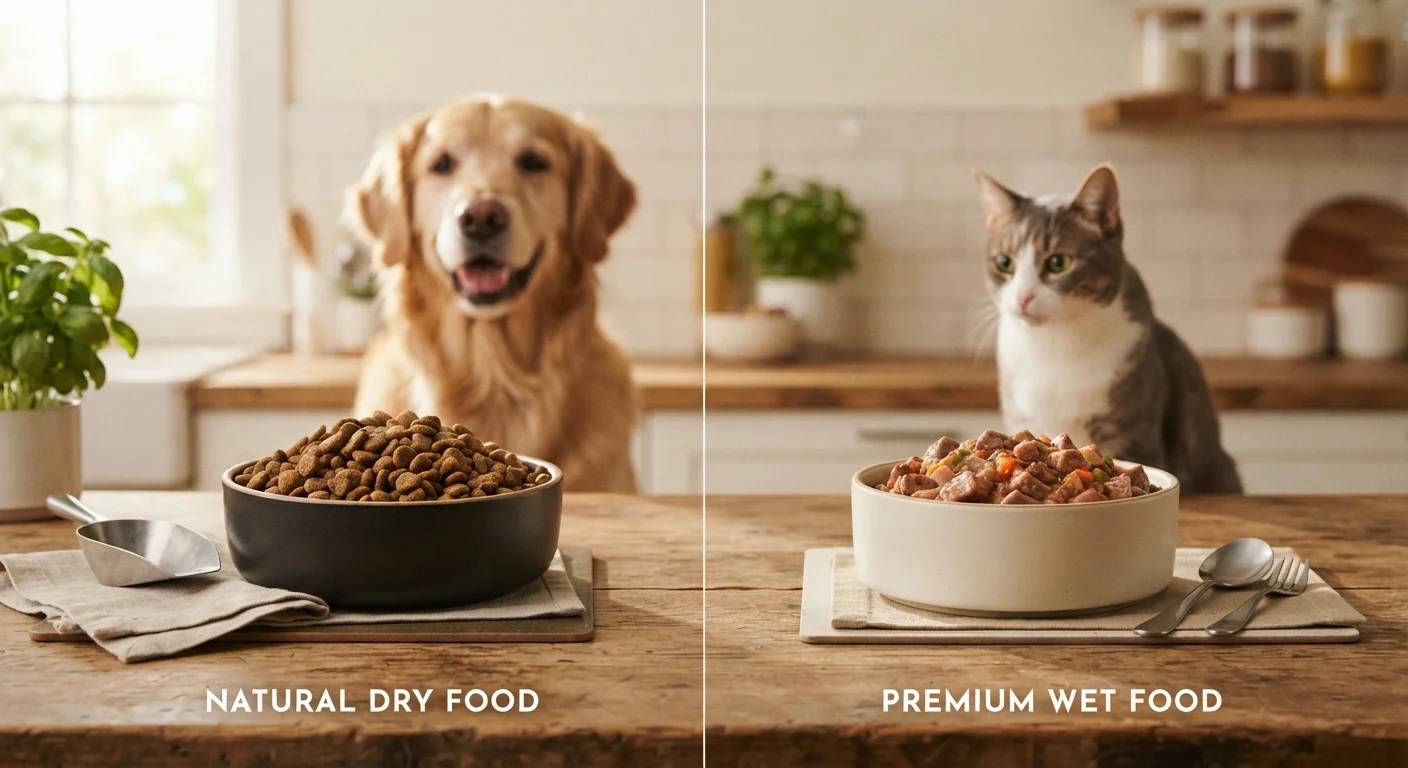
Option A
Dry Kibble
The convenient, calorie-dense everyday staple.
Best for: Pets needing dental support, multi-pet households, and owners prioritizing cost-effectiveness and storage ease.
Option B
Wet (Canned) Food
The moisture-rich, palatable option for targeted health needs.
Best for: Pets with urinary issues, low thirst drive, kidney concerns, weight management goals, or picky appetites.
If your pet has kidney disease or urinary tract concerns
Wet (Canned) Food
High moisture content supports kidney function and urinary tract health by increasing fluid intake, which is critical for cats and dogs with these conditions.
If dental health support is a priority
Dry Kibble
The mechanical chewing action of kibble provides mild plaque reduction, though professional dental cleanings remain essential.
If weight management is a concern
Wet (Canned) Food
Higher water content means lower caloric density per gram, helping pets feel fuller on fewer calories - useful for overweight animals.
If you have multiple pets and need budget-friendly, shelf-stable feeding
Dry Kibble
Kibble is generally less expensive per calorie, stores easily without refrigeration, and is straightforward to portion across multiple animals.
If your pet is a senior with reduced appetite or dental issues
Wet (Canned) Food
Softer texture is easier on aging teeth and gums, and stronger aroma can entice seniors with diminished appetite to eat consistently.
Moisture Content: The Single Biggest Difference
When comparing dry kibble and wet food, moisture content is the most consequential nutritional distinction. Wet food typically contains 70-80% moisture, while dry kibble ranges from just 6-10%. This gap has real physiological consequences, particularly for cats.
Cats evolved as desert predators and obtain a significant portion of their daily water through prey - which typically mirrors the moisture profile of wet food. Many cats do not adequately compensate for low-moisture diets by drinking more water, making them vulnerable to chronic dehydration on a kibble-only regimen. This matters because inadequate hydration is a recognized contributing factor to feline lower urinary tract disease (FLUTD) and chronic kidney disease (CKD), two of the most common feline health conditions in the US.
Dogs are more adaptable drinkers but still benefit from higher dietary moisture, especially during illness, recovery, or in warmer climates. For pets with diagnosed kidney or bladder concerns, a veterinarian may specifically recommend transitioning to or including wet food as part of hydration management. For a broader look at how hydration and nutrition interact across life stages, see our annual pet nutrition checklist.
| Criterion | Dry Kibble | Wet (Canned) Food |
|---|---|---|
| Moisture Content | 6-10% | 70-80% |
| Caloric Density (per 100g) | ~300-400 kcal | ~70-120 kcal |
| Dental Health Support | Mild mechanical abrasion | Minimal benefit |
| Palatability | Moderate | High (stronger aroma) |
| Cost Per Serving | Generally lower | Generally higher |
| Storage After Opening | Weeks at room temperature | Refrigerate; use within 2-3 days |
| Best For Urinary/Kidney Health | Less suitable | Often recommended |
| Carbohydrate Content | Higher (binding agents needed) | Typically lower |
Caloric Density, Macronutrients, and Palatability
Because kibble is low in moisture, it is substantially more calorie-dense per ounce than wet food. A typical dry kibble may deliver 300-400 kcal per 100 grams, while an equivalent weight of wet food may provide 70-120 kcal per 100 grams. This means that switching between formats without adjusting portion sizes can easily lead to overfeeding or underfeeding.
On a dry matter basis - a method that removes moisture from the equation to allow accurate comparison - many wet and dry foods are more nutritionally similar than they first appear. Both can meet AAFCO (Association of American Feed Control Officials) nutrient profiles for protein, fat, and essential vitamins. However, some wet foods, particularly pâté-style formulas, tend to be higher in animal protein and lower in carbohydrates, which may benefit obligate carnivores like cats.
Palatability is another practical factor. Wet food's aroma and texture make it more appealing to finicky eaters, aging pets with reduced olfactory sensitivity, and animals recovering from illness. Dry kibble, by contrast, is easy to leave out without spoiling and is less likely to be wasted in free-feeding setups.
~70%
Moisture in typical wet pet food
Per AAFCO guidelines, wet food moisture is often 70-80%, compared to 6-10% in dry kibble - a critical distinction for hydration-sensitive species like cats.
1 in 3
Cats affected by kidney disease in their lifetime
Chronic kidney disease is estimated to affect a significant proportion of cats, particularly seniors, underscoring the importance of dietary moisture management.
7-10 days
Recommended diet transition period
Veterinary nutrition guidelines generally advise gradually introducing any new food format over 7-10 days to reduce the risk of gastrointestinal upset.
Life Stage and Health Condition Considerations
The right food format is rarely one-size-fits-all. Puppies and kittens have high caloric and protein demands; either format can meet these needs if the product is labeled for growth or all life stages. Senior pets, however, often benefit from wet food's softer texture and higher moisture - particularly those with dental disease or reduced kidney function. For a deeper dive, our guide on nutritional needs in older dogs and cats covers life-stage adjustments in detail.
Many veterinarians recommend mixed feeding - combining kibble and wet food - as a practical middle ground. This approach can balance hydration support, dental benefits, palatability, and cost. Any dietary change should be introduced gradually over 7-10 days to minimize digestive upset.
If your pet shows signs like dull coat, persistent digestive issues, low energy, or excessive thirst, the food format may not be the only variable at play. These signs can point to broader dietary gaps, which are discussed in our article on recognizing nutritional deficiencies in pets. Always consult your veterinarian before making significant changes to your pet's diet, especially if they have an existing health condition.
A Note on AAFCO Nutritional Labeling
When evaluating any pet food - wet or dry - look for an AAFCO nutritional adequacy statement on the label. This indicates the food meets established minimum nutrient profiles for the stated life stage. A food labeled 'for intermittent or supplemental feeding only' is not formulated as a complete diet and should not serve as a pet's sole food source. Your veterinarian can help you interpret labels and select formats appropriate to your pet's specific needs.