

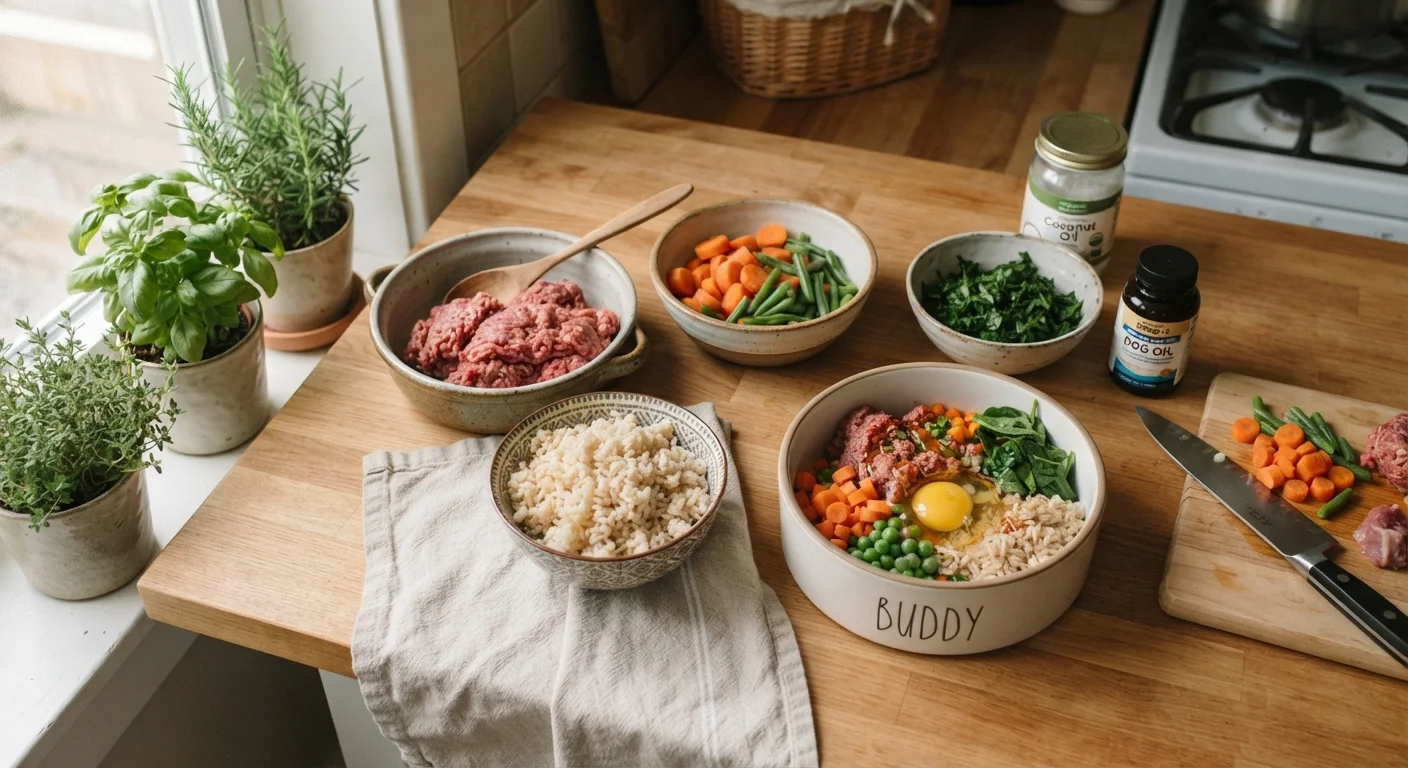
Key Takeaways
- Most homemade pet food recipes found online are nutritionally incomplete or imbalanced.
- Key micronutrients like calcium, zinc, and vitamin D are frequently missing from home-cooked diets.
- Life stage matters: puppies, kittens, pregnant animals, and seniors have distinctly different nutritional requirements.
- A board-certified veterinary nutritionist can formulate recipes tailored to your specific pet.
- Rotating proteins without a complete supplementation plan does not guarantee nutritional balance.
Why Home Cooking for Pets Is Riskier Than It Looks
The desire to cook for your pet comes from a genuinely caring place. Home-cooked meals feel wholesome, transparent, and controllable - especially for owners concerned about commercial pet food recalls or ingredient quality. But the gap between good intentions and nutritional adequacy is significant, and the consequences of getting it wrong can be serious.
Pets - particularly dogs and cats - have nutrient requirements that differ substantially from humans, and from each other. Cats, for example, are obligate carnivores with specific requirements for taurine and arachidonic acid that must come from animal tissue. Dogs have their own precise calcium-to-phosphorus ratios, vitamin D requirements, and trace mineral needs that are almost impossible to meet reliably without careful formulation. For a deeper look at how feline biology drives specific dietary requirements, see our article on why cats cannot thrive on plant-only diets.
95%
Homemade recipes with nutrient deficiencies
A study published in the Journal of Nutritional Science found that approximately 95% of homemade dog food recipes evaluated were deficient in at least one essential nutrient.
5+
Essential nutrients commonly missing
Research has consistently identified calcium, zinc, copper, vitamin D, and choline as among the most frequently under-supplied nutrients in home-cooked pet diets.
The risks aren't hypothetical. Nutritional deficiencies from long-term unbalanced homemade diets have been documented to cause dilated cardiomyopathy, metabolic bone disease, and other preventable conditions in pets. If you notice physical or behavioral changes in a pet eating a homemade diet, our guide to signs a pet's diet may not be meeting nutritional needs can help you recognize warning signs early.
The Most Common Mistakes - and How to Avoid Them
Most nutritional errors in homemade pet diets aren't caused by carelessness - they stem from an understandable lack of species-specific knowledge and the misleading confidence of well-intentioned but unverified recipes. The following mistakes represent the patterns most commonly identified in veterinary nutritional research.
Homemade Diets Require Professional Formulation
Studies have found that the vast majority of homemade pet food recipes - including those published in books and on veterinary websites - fail to meet established nutrient profiles for dogs or cats. Feeding an unbalanced diet long-term can lead to serious, sometimes irreversible health consequences. Before committing to home cooking for your pet, consult a board-certified veterinary nutritionist (Diplomate of the American College of Veterinary Nutrition) for a professionally formulated recipe.
Using online or cookbook recipes without veterinary nutritionist review.
Why it happens: Pet owners assume published recipes have been professionally validated, but most have not been tested against AAFCO or NRC nutrient guidelines.
Skipping or guessing at mineral and vitamin supplementation.
Why it happens: Owners focus on protein and carbohydrate sources and assume whole foods will cover micronutrient needs, which is rarely true for pets.
Feeding the same unbalanced recipe long-term without reassessment.
Why it happens: Once a routine is established, owners often continue it indefinitely without realizing that nutrient deficiencies accumulate and health consequences may take months or years to appear.
Ignoring life-stage nutritional differences when preparing meals.
Why it happens: Owners prepare one recipe for the whole household regardless of whether they have a puppy, an adult dog, and a senior cat living together.
Inadvertently including foods that are toxic to pets.
Why it happens: Many common kitchen ingredients - onions, garlic, grapes, xylitol - are safe for humans but genuinely dangerous for dogs and cats, and owners may not realize this.
Assuming rotation of protein sources ensures nutritional completeness.
Why it happens: Pet owners apply human dietary wisdom - variety equals balance - without accounting for the fact that rotating proteins addresses only amino acid diversity, not the full nutrient picture.
Don't Rely on Human Nutrition Logic
Dogs and cats have fundamentally different nutrient requirements than humans. Foods that are nutritionally complete for people - like lentil-based meals or grain bowls - can be dangerously deficient for pets. Never assume that a diet balanced for human health translates to a balanced diet for your animal. Always base feeding decisions on species-specific research and veterinary guidance.
If you're currently transitioning your pet from commercial food to a home-cooked diet, doing so gradually is also important. Abrupt changes can cause digestive upset independent of any nutrient concerns - our article on transitioning a pet to a new food without digestive upset outlines a safer approach. And if you continue purchasing commercial food alongside home cooking, understanding how to read what's actually in those products is equally valuable - see our breakdown of what pet food labels are really telling you.
This article is for general informational purposes only and does not constitute veterinary or medical advice. Always consult a licensed veterinarian or board-certified veterinary nutritionist before making significant changes to your pet's diet.