
Researching Online vs. Researching In-Store: Trade-offs Every Shopper Should Weigh

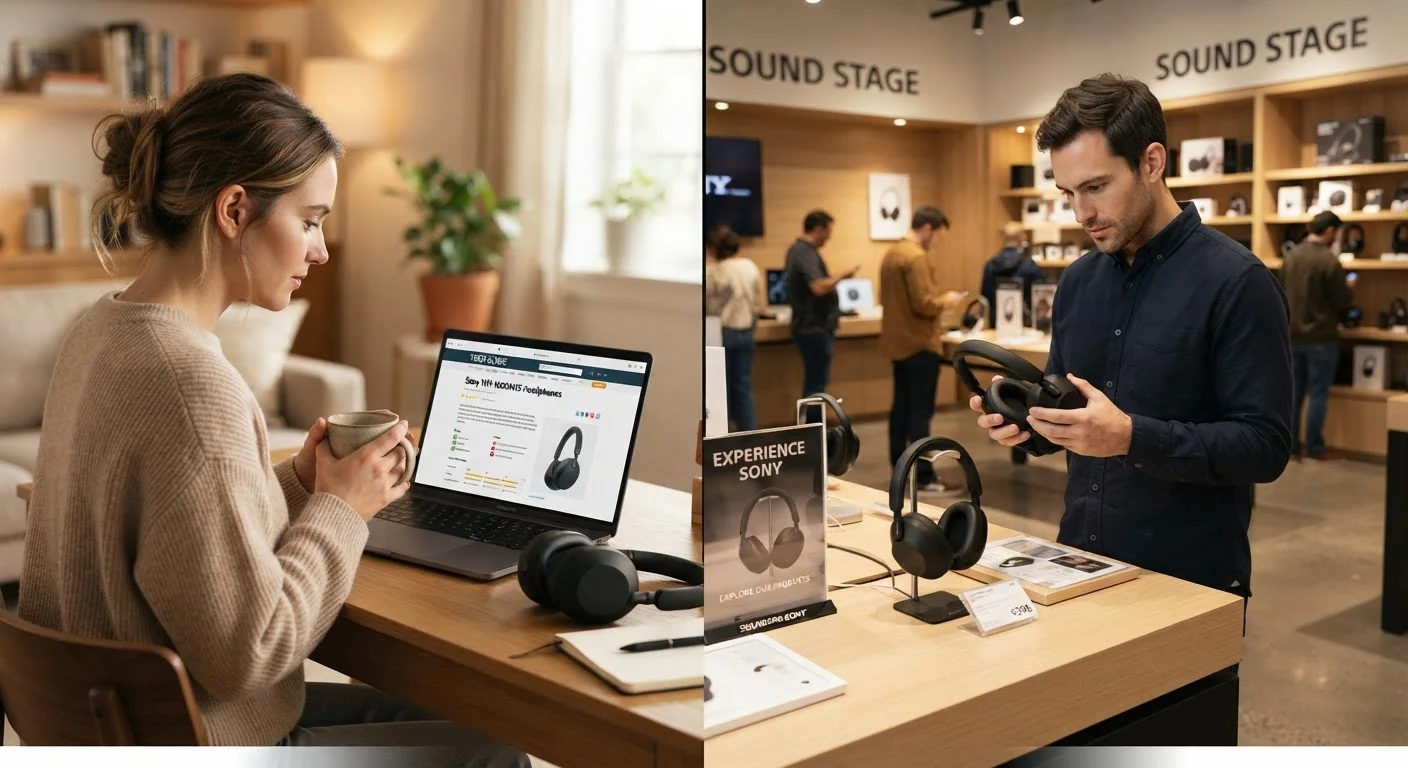
Key Takeaways
- Online research offers broader price comparisons, user reviews, and specification data unavailable in stores.
- In-store evaluation reveals tactile qualities - fit, weight, material feel - that photos and descriptions cannot replicate.
- Combining both methods strategically tends to produce more confident, lower-regret purchasing decisions.
- Product category matters: high-sensory items benefit more from in-person evaluation than commodity purchases.
- Be cautious of review authenticity online and sales-floor pressure in stores - both can distort your judgment.
Our Verdict
Neither online nor in-store research is universally superior. Online research excels at breadth - aggregating specifications, pricing context, and large-scale user feedback efficiently. In-store research excels at depth - delivering sensory and contextual information that no screen can fully substitute. For most significant purchases, a hybrid approach that leans on each method's strengths will serve you best.
| Best for | Recommended |
|---|---|
| Commodity purchases, electronics spec comparisons, and price benchmarking | Online Research |
| Apparel, furniture, mattresses, and any item where fit or feel is decisive | In-Store Research |
| Complex or high-stakes purchases where both price and quality must be verified | Hybrid Approach |
Why the Research Channel Shapes What You Learn
Where you research a product isn't just a matter of convenience - it actively determines which information you can access. Online environments surface data that physical stores rarely provide: aggregated user ratings across thousands of buyers, side-by-side specification tables, and historical pricing trends. Store environments surface something equally valuable: direct sensory experience that digital channels can only approximate.
Recognizing each channel's information architecture helps you avoid the most common research mistake - using one source where only the other will do. For a structured checklist that works regardless of channel, see this pre-purchase research checklist.
| Online Research | In-Store Research | |
|---|---|---|
| Information breadth | High - aggregates specs, reviews, pricing | Limited to displayed inventory |
| Sensory evaluation | Minimal - photos and descriptions only | Full - touch, fit, weight, sound |
| Price comparison ease | Efficient across multiple retailers | Difficult without a phone or prior research |
| Review authenticity risk | Moderate - manipulation is documented | Low - staff input is direct |
| Purchase pressure | Low - easy to pause and reconsider | Higher - sales environment present |
| Best product fit | Commodities, electronics, appliances | Apparel, furniture, tactile goods |
The Real Strengths of Online Research
Online research compresses comparison time dramatically. Within a single session, a shopper can review manufacturer specifications, read verified buyer feedback, check return policies across multiple retailers, and compare price trajectories - tasks that would require hours of in-store visits to accomplish partially.
User-generated reviews are one of online research's most distinctive assets, but they require critical reading. Volume alone doesn't indicate quality; a product with 4,000 reviews rated 3.8 stars may be more informative than one with 12 reviews at 5 stars. Look for reviews that describe real use conditions, mention time of ownership, and flag specific failures - not just general satisfaction scores.
One significant caveat: review manipulation is documented across major retail platforms. Suspiciously uniform positive language, a sudden spike in five-star ratings, or reviews that avoid any product-specific detail are worth treating skeptically. Independent user communities outside retailer pages often provide more candid, experience-based feedback than on-platform reviews.
Cross-Reference Specs Before You Visit a Store
Before heading in-store, download or screenshot the full specification sheet for items on your shortlist. This lets you ask store staff targeted questions rather than relying on whatever information they volunteer. It also makes it easier to verify that a floor model matches the exact configuration you've been researching online - model numbers and feature sets can differ across retail channels.
What In-Store Research Reveals That Screens Cannot
For a meaningful category of purchases, in-store evaluation isn't optional - it's decisive. Apparel sizing varies enough across manufacturers that a posted size chart frequently fails. Mattress firmness, sofa cushion density, the acoustic quality of headphones, the grip of a tool handle: these are sensory judgments that require physical interaction to make reliably.
In-store research also provides spatial context. A piece of furniture that looks proportional in a product photo can look awkward in your actual room dimensions - but physically standing next to a floor model gives you a reference point. Sales staff, when approached as information sources rather than sales prompts, can provide product comparison knowledge that isn't published anywhere online.
The in-store environment also carries risks. Time pressure, sales-floor dynamics, and limited ability to cross-reference prices on the spot can push shoppers toward premature decisions. If you find something you like in person, there's no obligation to purchase on the spot - take the model number, verify the return policy details, and complete your price research before committing. Reading the return policy carefully before any purchase is a step that's easy to skip and often costly.
Building a Hybrid Research Strategy
The most practical framework treats online and in-store research as sequential rather than competing. For most purchases above a modest threshold of complexity or cost, a two-phase approach works well: use online research first to narrow your field to two or three viable options based on specifications and user feedback, then use in-store evaluation to make the final tactile determination.
This order matters. Walking into a store with a shortlist prevents the cognitive overload that a full product wall creates. It also lets you walk in knowing the approximate price range, making you less susceptible to anchoring on the first price a salesperson quotes.
Category should calibrate how much weight you put on each phase. Before buying something you can't evaluate in person, pay particular attention to dimensions, materials, and weight specifications - the attributes most commonly misread from online listings alone. And if analysis paralysis is starting to set in after too many open browser tabs, recognizing when you have enough information to decide is itself a useful skill.
81%
Shoppers who research online before in-store purchase
According to a consumer behavior survey by the Pew Research Center, a large majority of Americans research products online before making purchases, even when they ultimately buy in a physical store.
~30%
Online apparel returns due to fit or feel
Industry estimates consistently place clothing and footwear return rates around 30% for online purchases, with fit and material feel cited as primary reasons - underscoring where in-store evaluation adds clear value.