

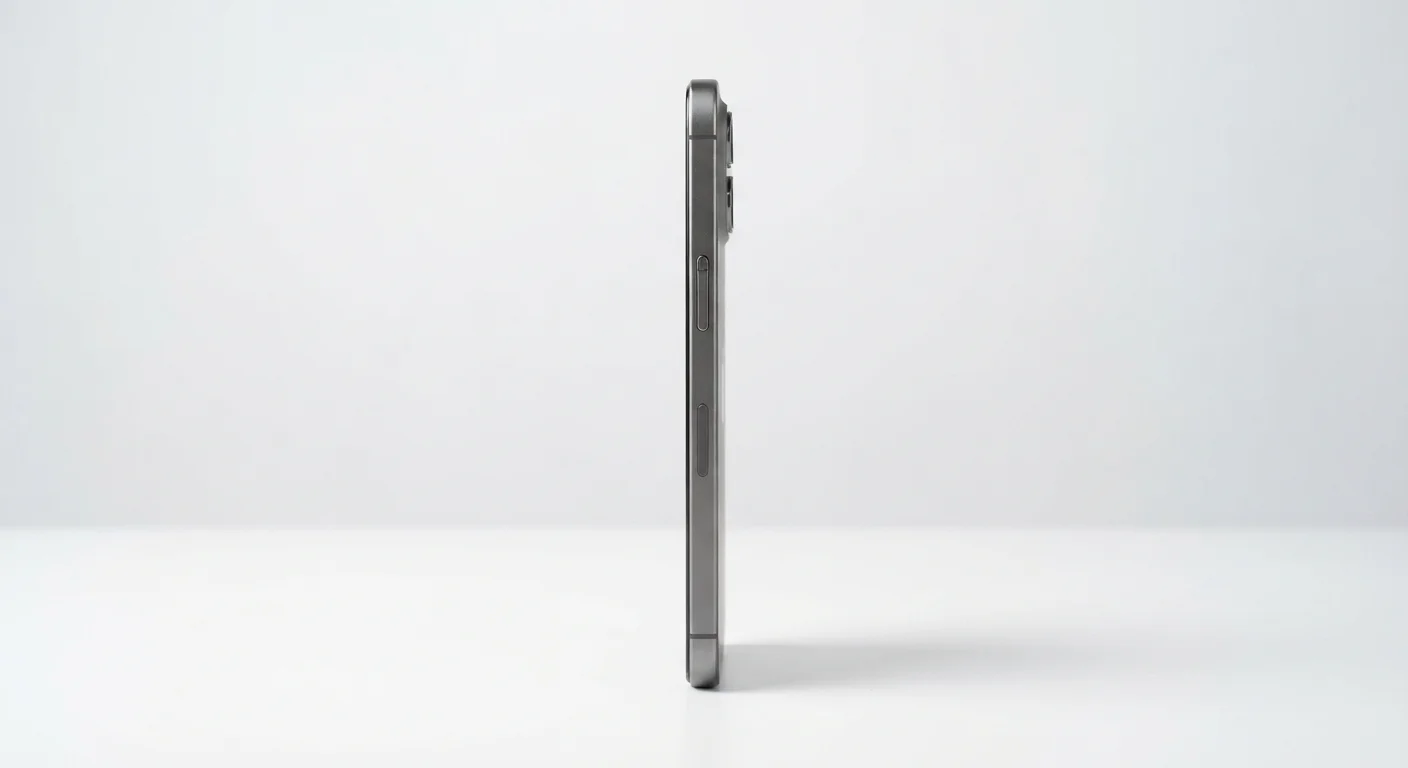
Key Takeaways
- Thinner frames almost always mean smaller battery cells and shorter charge cycles.
- Slim designs frequently eliminate headphone jacks and reduce thermal headroom.
- A lighter phone can be more comfortable to hold but is often more fragile.
- Weight and thickness are legitimate factors, but rarely the only ones that matter.
- Understanding what gets cut helps you decide whether the trade-off works for your life.
More comfortable to carry and hold all day
A lighter, thinner profile reduces hand fatigue during extended use and fits more naturally into pockets without bulging. This is a practical ergonomic benefit that heavier flagships can't replicate.
Modern aesthetic with a premium feel
Slim designs signal engineering refinement and tend to look and feel more polished. This matters to users who view their phone as a daily object they interact with dozens of times per day.
Often pairs with efficient, well-tuned processors
To keep thin devices running well, manufacturers typically prioritize chip efficiency. This can translate to snappy day-to-day performance even when raw power is moderated.
Easier to use one-handed for many people
Reduced thickness and weight make one-handed operation more natural, particularly for people with smaller hands or those frequently multitasking while carrying other items.
Smaller battery capacity limits all-day use
Physical battery size is constrained by chassis depth. Slim phones routinely house smaller cells than their thicker counterparts, which directly reduces how long a charge lasts under real-world usage.
Less thermal headroom causes processor throttling
Thin chassis have less room for heat-dispersal components. During sustained tasks - video recording, gaming, GPS navigation - slim phones can slow down their own processors to prevent overheating.
Ports and physical features are often eliminated
Headphone jacks, physical SIM trays, and expansion slots are frequent casualties of aggressive thinning. Users who rely on these features must adapt or invest in dongles and accessories.
Greater fragility and repair complexity
Tightly packed thin designs rely more on adhesive bonding than screws, making components harder and more expensive to repair. Slimmer glass panels are also more susceptible to flex-related cracking.
Compromised speaker and microphone performance
Audio components need depth to deliver volume and bass. Slim phones typically house smaller speaker drivers, which limits loudness and audio quality compared to phones with more internal volume.
Our Verdict
Slim, lightweight phones genuinely excel at portability and aesthetics, and for many users that's enough. But the compromises - especially around battery life, repairability, and heat management - are real and worth weighing against your daily habits before committing.
Ideal for users who prioritize pocket comfort and premium feel over all-day battery and expandability, and who already have reliable charging access throughout the day.
Why Slim Phones Are So Appealing
There's a genuine reason ultra-thin smartphones attract attention. A device that slides effortlessly into a jeans pocket, feels weightless in your hand, and looks refined is solving a real comfort problem - not just a style one. Ergonomics matter. A phone that doesn't drag on your pocket or fatigue your wrist during long calls is a better companion for daily life.
Manufacturers have also gotten remarkably skilled at fitting capable hardware into tighter spaces. Advances in chip efficiency, antenna design, and display technology mean that slimmer doesn't automatically mean weaker in every category. For light to moderate users, a thin phone can genuinely deliver everything they need without any noticeable sacrifice.
That said, physics still applies. Every millimeter removed from a phone's chassis comes from somewhere, and understanding where helps you make a smarter call. See our guide on assumptions that lead buyers to regret their phone choice for a broader look at how these decisions play out.
More comfortable to carry and hold all day
A lighter, thinner profile reduces hand fatigue during extended use and fits more naturally into pockets without bulging. This is a practical ergonomic benefit that heavier flagships can't replicate.
Modern aesthetic with a premium feel
Slim designs signal engineering refinement and tend to look and feel more polished. This matters to users who view their phone as a daily object they interact with dozens of times per day.
Often pairs with efficient, well-tuned processors
To keep thin devices running well, manufacturers typically prioritize chip efficiency. This can translate to snappy day-to-day performance even when raw power is moderated.
Easier to use one-handed for many people
Reduced thickness and weight make one-handed operation more natural, particularly for people with smaller hands or those frequently multitasking while carrying other items.
The Real Costs of Going Thin
The trade-offs in slim phone design are rarely advertised on spec sheets - they show up weeks or months into ownership.
Smaller battery capacity limits all-day use
Physical battery size is constrained by chassis depth. Slim phones routinely house smaller cells than their thicker counterparts, which directly reduces how long a charge lasts under real-world usage.
Less thermal headroom causes processor throttling
Thin chassis have less room for heat-dispersal components. During sustained tasks - video recording, gaming, GPS navigation - slim phones can slow down their own processors to prevent overheating.
Ports and physical features are often eliminated
Headphone jacks, physical SIM trays, and expansion slots are frequent casualties of aggressive thinning. Users who rely on these features must adapt or invest in dongles and accessories.
Greater fragility and repair complexity
Tightly packed thin designs rely more on adhesive bonding than screws, making components harder and more expensive to repair. Slimmer glass panels are also more susceptible to flex-related cracking.
Compromised speaker and microphone performance
Audio components need depth to deliver volume and bass. Slim phones typically house smaller speaker drivers, which limits loudness and audio quality compared to phones with more internal volume.
~15-20%
Typical battery capacity reduction in slim flagship phones
Industry teardown analyses consistently show that phones under 7mm thick house battery cells noticeably smaller than those in similarly priced devices with standard chassis depths.
3-5°C
Average additional surface heat during sustained tasks
Thermal testing by independent hardware reviewers has found slim-chassis phones run measurably hotter during sustained workloads due to reduced internal cooling space.
Battery capacity is the most direct casualty. Battery cells need physical volume, and when chassis depth shrinks, so does the cell. Manufacturers can partly offset this with efficient processors, but there's a hard ceiling on how much a software optimization can compensate for a physically smaller energy store. For a deeper look at how battery numbers actually translate to real-world usage, the article everything your phone's battery spec sheet isn't telling you breaks this down clearly.
Heat dissipation is a less obvious but equally important issue. Thin frames leave less room for thermal spreaders and vapor chambers - the components that move heat away from the processor during demanding tasks. Sustained workloads like video recording, gaming, or navigation can cause a slim phone to throttle its processor sooner than a bulkier model would.
Slim Doesn't Always Mean Fragile - But Often Does
Some manufacturers reinforce thin frames with titanium alloys or aerospace-grade aluminum, which partially compensates for reduced thickness. However, these materials add cost and still can't fully replicate the structural rigidity of a thicker chassis. If drop resistance is a priority, checking independent drop-test results - not just marketing claims - is worth the extra step before purchasing.
What This Means for Your Daily Use
The trade-offs of a slim design aren't hypothetical - they show up in predictable ways depending on how you use your phone. Heavy travelers who rely on the device through full days away from outlets will feel the battery limitation most acutely. Mobile gamers or video editors will run into thermal throttling more quickly. Users who still use wired headphones will find themselves adapting without a dedicated port.
On the flip side, users who keep a charger at a desk and use their phone primarily for communication, streaming, and social media may genuinely never notice the compromises. Context matters enormously here. It's worth being honest about your actual habits rather than your ideal ones. For a fuller comparison of device form factors, tablets vs. smartphones: which one actually fits your life offers useful framing.
Repairability also deserves mention. Tightly packed, thin devices are harder and more expensive to repair. Components are more likely to be glued rather than screwed, and screens on thinner devices tend to be more vulnerable to flex damage. The smart shopping guide to avoiding buyer pitfalls covers how to factor long-term ownership costs into upfront decisions.