

Key Takeaways
- A complete vehicle history log helps mechanics diagnose problems faster and more accurately.
- Documented service records can meaningfully influence a vehicle's resale or trade-in value.
- Keeping records takes minutes but can prevent expensive repeated or unnecessary repairs.
- Both paper binders and digital apps are effective ways to maintain a service history.
Why Most Drivers Skip This Simple Habit
Ask most drivers where their vehicle's service history is, and the honest answer is often: scattered receipts in a drawer, a few digital records from a dealership, and a lot of gaps. Keeping a maintenance log feels like extra paperwork - until the moment you actually need it.
A complete vehicle history does real work for you. Mechanics can skip redundant diagnostic steps when they see what's already been done. You avoid paying for the same service twice at a new shop. And when it's time to sell, documented care is one of the few things that can genuinely support the asking price. See our complete car maintenance timeline to understand which services are worth tracking most closely.
What to Record and How to Organize It
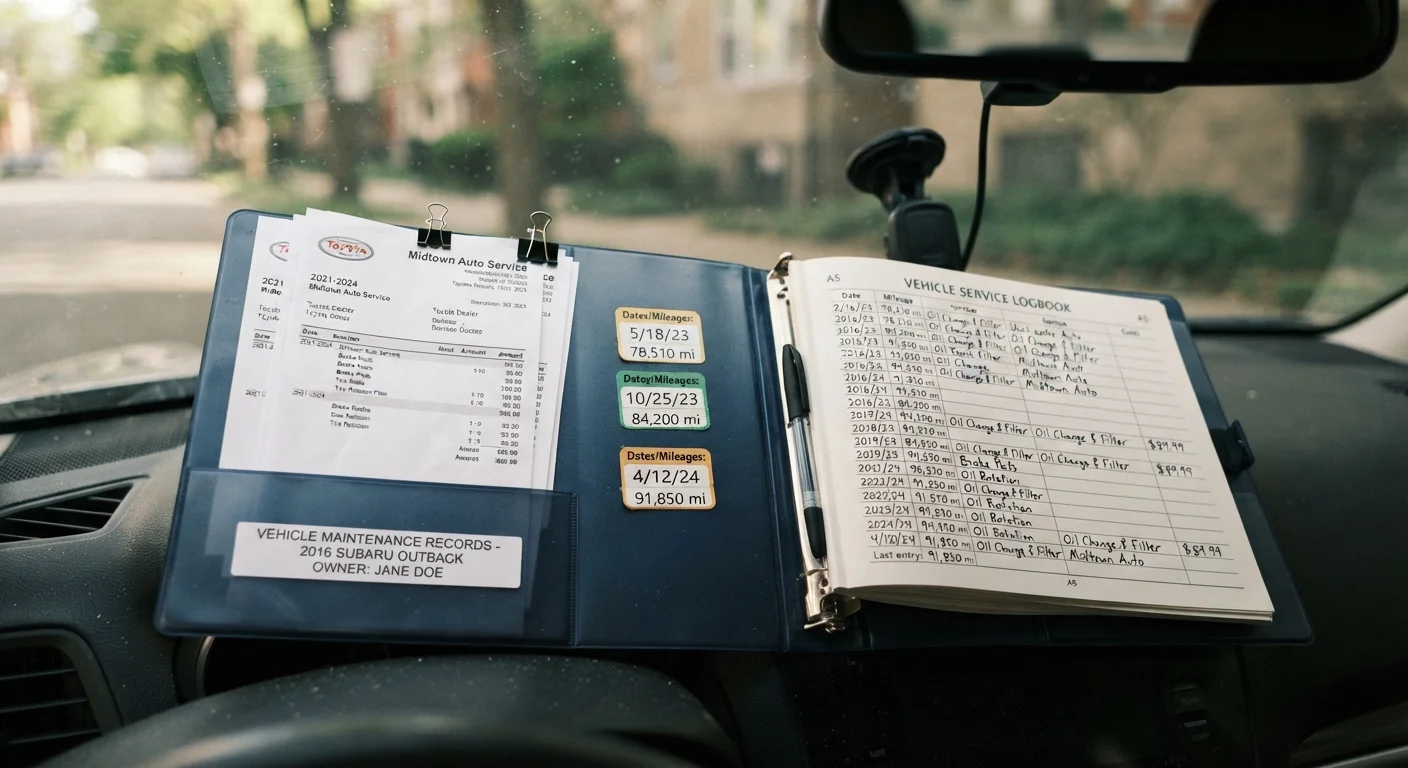
A useful vehicle log doesn't need to be elaborate. At minimum, record the date, odometer reading, service performed, parts used (if any), and where the work was done. That's enough to give any technician a clear picture.
Record every service visit, no matter how minor.
Small services like tire rotations and cabin air filter replacements are easy to forget, but they establish a pattern mechanics rely on. Gaps in a log can lead to duplicate work or missed intervals that accelerate wear.
Store physical receipts alongside your written log.
Receipts provide third-party verification that work was actually performed - something a handwritten note alone cannot prove to a buyer or warranty administrator. They also capture part numbers that can matter if a component fails prematurely.
Log the mileage at every service, not just the date.
Most maintenance intervals are mileage-based, not calendar-based. Recording odometer readings lets you - and any mechanic - see at a glance what's due and catch intervals that were stretched too long.
Note any symptoms or unusual events, not just completed work.
Intermittent problems are notoriously hard to diagnose. A written timeline of when a noise started, what conditions trigger it, or when a warning light briefly appeared gives technicians a significant diagnostic head start.
Back up your records digitally, even if you prefer paper.
Paper logs can be lost in a vehicle fire, flood, or theft - exactly the moments when a documented service history would matter most for an insurance or warranty claim. A quick photo of each receipt stored in cloud storage costs nothing.
Transfer records to any new owner when selling the vehicle.
A complete service history is one of the most credible signals a private seller can offer. It reduces a buyer's perceived risk and tends to support stronger negotiating positions, though actual outcomes vary by market and buyer.
If you prefer digital tools, dedicated vehicle maintenance apps can store photos of receipts and send interval reminders automatically. If you prefer paper, a simple spiral notebook or accordion folder kept in the glovebox works just as well. The format matters far less than the consistency.
Records From a Previous Owner Still Count
If you purchased a used vehicle, contact the dealership or independent shop listed on any receipts - they may have service history on file. Some automakers also maintain records tied to a vehicle's VIN (Vehicle Identification Number) that authorized dealers can access. Even partial records are worth gathering.
How Records Pay Off at Resale and in the Shop
When a vehicle changes hands, buyers face genuine uncertainty about how the car was treated. A well-maintained log - especially one backed by receipts - reduces that uncertainty. It doesn't guarantee a higher sale price, but it removes a major objection that buyers use to negotiate down.
In the shop, the value is even more immediate. Intermittent faults, warranty claims, and multi-system problems all become easier to address when a technician can trace a timeline. Some extended warranty administrators also require documentation that scheduled maintenance was performed - without records, a claim may be denied regardless of the underlying problem.
Building this habit early is easiest. For new drivers especially, starting a log with the very first oil change sets a foundation that pays dividends for years. Our guide on car maintenance for new drivers covers the broader habit-building picture.
For a broader look at managing what you spend on your vehicle, the vehicle ownership cost audit checklist is a practical starting point. And if you want to separate fact from fiction on upkeep, common car maintenance myths is worth a read.
“The single most useful thing a vehicle owner can bring to a shop is a written history of what's been done and when. It changes the entire diagnostic conversation.”
— ASE-Certified Master Technician, Independent automotive service professional with over 20 years of shop experience