

Key Takeaways
- Depreciation is typically the single largest cost of car ownership, outpacing fuel and insurance.
- New vehicles lose a significant portion of their value within the first few years of ownership.
- High mileage, accident history, and poor maintenance all accelerate depreciation.
- Buying a used vehicle that has already absorbed early depreciation can meaningfully reduce this cost.
- Understanding depreciation helps you make smarter decisions about when to buy, sell, or trade in.
Vehicle Depreciation
Depreciation is the loss in a vehicle's market value over time. Every car depreciates - meaning what someone would pay for it today is less than what you paid, often significantly less. Unlike fuel or insurance, depreciation doesn't show up as a monthly bill, which is why most drivers underestimate it.
Depreciation is calculated as the difference between a vehicle's original purchase price and its current resale or trade-in value. It can also be expressed as an annual percentage rate of value loss.
Why Depreciation Is the Cost Nobody Talks About
When drivers tally up what their car costs them, they typically think of gas, insurance, and the occasional repair. Depreciation rarely makes the list - yet it routinely represents the largest single expense of vehicle ownership when calculated honestly.
Consider this: if you purchase a new vehicle and sell it five years later, the gap between those two prices is a real, out-of-pocket loss. That gap doesn't arrive as a bill, which makes it easy to ignore. But ignoring it doesn't make it disappear.
For a complete picture of what a vehicle actually costs per year, see our full breakdown of car ownership costs in America. Depreciation is always near the top of that list.
~20%
Typical first-year value loss for new vehicles
Industry estimates consistently place first-year depreciation for new cars in the 15-25% range, depending on segment and market demand.
~50%
Average value retained after five years
Many mainstream vehicles retain roughly half their original value after five years, though this varies widely by brand, model, and condition.
#1
Largest single cost of car ownership
Transportation cost analyses from organizations such as AAA have repeatedly identified depreciation as the top annual cost for new vehicle owners.
How Depreciation Works - and Why It Hits Hardest Early
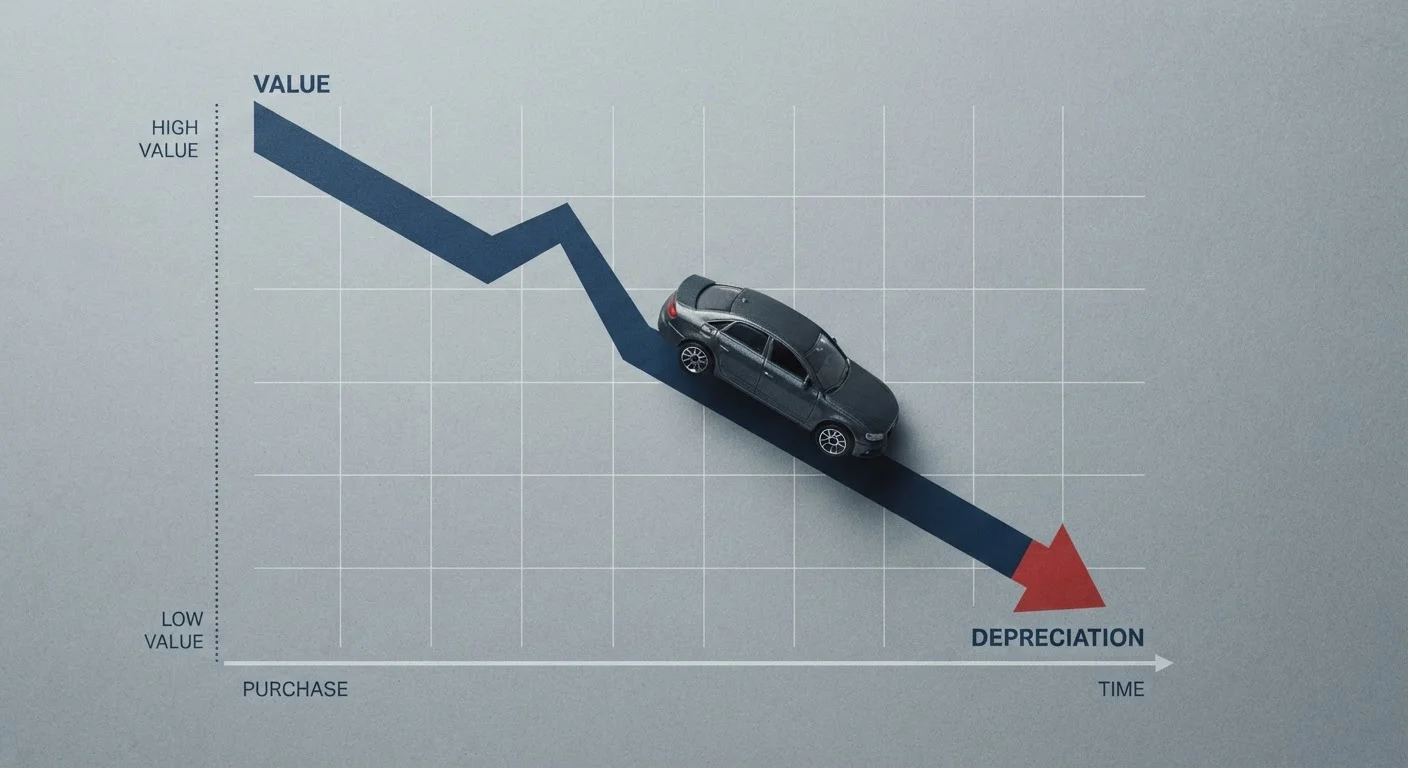
A vehicle's value doesn't decline at a steady, predictable rate. Depreciation is front-loaded: the steepest drop happens in the first one to three years of a vehicle's life. Several forces drive this pattern.
- New-car premium: Buyers pay extra for the certainty and novelty of a brand-new vehicle. Once it's used, that premium evaporates.
- Warranty transfer: A new vehicle's full factory warranty is a genuine financial asset. As the warranty ages or expires, buyers discount the vehicle accordingly.
- Mileage accumulation: Each mile adds wear, and the market prices that wear into resale value.
- Newer models: Each new model year introduces fresher alternatives, pushing older versions further down the desirability ladder.
After the initial steep drop, depreciation typically moderates but never fully stops until a vehicle reaches near-zero resale value or collector status.
What Accelerates - or Slows - Your Vehicle's Depreciation
Not all vehicles depreciate at the same pace, and not all owners experience the same loss. Several controllable and uncontrollable factors shape how quickly your specific vehicle loses value.
Factors that accelerate depreciation
- High annual mileage (well above the market average)
- Accident or flood history visible in vehicle history reports
- Deferred maintenance and poor service records
- Unpopular colors or trim levels with limited resale appeal
- Fuel types falling out of favor in a shifting market
Factors that slow depreciation
- Strong brand reputation for reliability
- Low production volume or consistently high consumer demand
- Complete, documented maintenance history
- Excellent physical and mechanical condition
Regular upkeep genuinely protects resale value. Skipping routine services like oil changes doesn't just risk mechanical damage - it chips away at the value you'll recover when you eventually sell or trade in.
Keep Your Service Records - They Have Real Dollar Value
A complete folder of oil change receipts, tire rotations, and inspection reports isn't just paperwork - it's evidence that can increase your vehicle's resale price. Buyers and dealers pay more for vehicles with verifiable maintenance histories. Store physical receipts and take photos of service invoices as a backup.
How to Use Depreciation Knowledge in Your Car Decisions
Understanding depreciation isn't just an academic exercise - it changes how you should think about buying and selling a vehicle.
Buying used absorbs less depreciation risk
A vehicle that is two to four years old has already shed its steepest early-year losses. A buyer in that window can get a car that's still relatively modern while paying a meaningfully lower price. The remaining depreciation curve is typically shallower.
Know when to sell or trade in
Holding a vehicle for many years spreads the fixed purchase cost over more miles and time, which can improve your cost-per-mile math even as the vehicle ages. Selling just before major depreciation events - such as a full model redesign or a known reliability turning point - can preserve more value.
Factor depreciation into your affordability math
A vehicle you plan to keep for five years and sell should factor in the expected resale value when calculating what you can afford. Our annual car ownership cost summary offers a useful framework for this kind of calculation.
You can also run a full audit of your vehicle-related spending using our vehicle ownership cost checklist.
“The most expensive car you can own is often not the one with the highest sticker price - it's the one that loses value fastest relative to what you paid.”
— Cars & Autos Editorial Team, Automotive consumer finance analysts
This article is for general informational purposes only and does not constitute financial or investment advice. For guidance on your personal financial situation, consult a qualified financial professional.