

Key Takeaways
- Start with your real schedule, not an ideal one, to build a sustainable exercise habit.
- Combining cardio, strength, and rest days creates a balanced weekly structure.
- Gradually increasing workout intensity over time reduces injury risk and improves long-term adherence.
- Rest and recovery are non-negotiable parts of any effective exercise plan.
- Tracking progress through non-scale metrics keeps motivation grounded and consistent.
What you will need
Why Most Exercise Schedules Fall Apart
Most people don't abandon exercise because they lack willpower - they abandon schedules that were never designed to fit their actual lives. A plan built around an idealized week, one with unlimited time and energy, will collapse the moment reality reasserts itself. The most effective exercise schedule is one calibrated to your real constraints, not borrowed from someone else's fitness journey.
Research consistently shows that adherence, not intensity, is the strongest predictor of long-term fitness outcomes. A moderate routine followed reliably over months outperforms an aggressive program done sporadically. If you're also working to weave movement into a genuinely busy day, building a sustainable wellness routine when you have almost no time offers complementary strategies worth reading alongside this guide.
What you will need
How to Build Your Schedule Step by Step
The following steps walk you through structuring a weekly exercise plan from scratch - starting with your calendar, not with a fitness template someone else created. Work through each step in order, and resist the urge to skip ahead to intensity or variety before the foundation is in place.
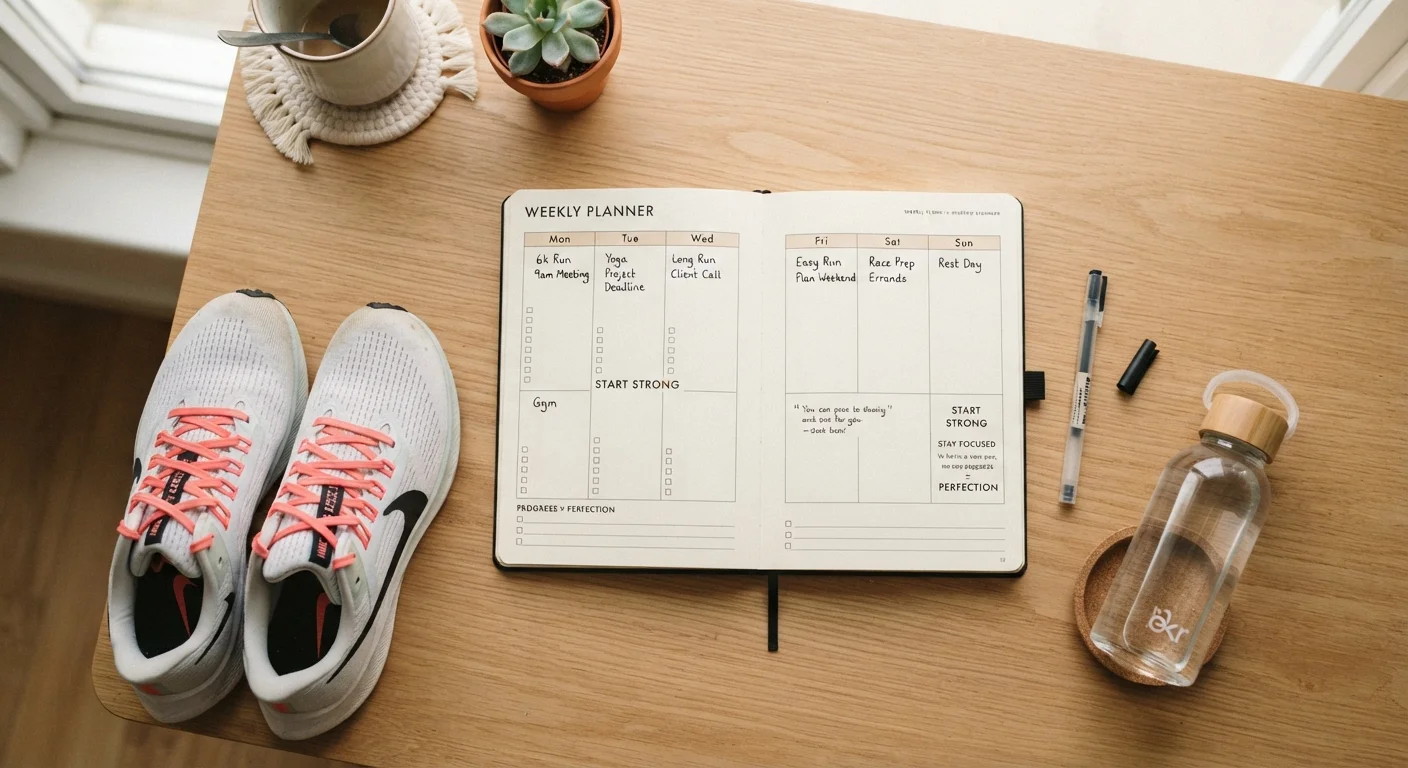
Weekly planner or calendar app
Used to block dedicated workout times and visualize your schedule across the full week.
Fitness tracking app or journal
Logs workouts, notes how sessions felt, and helps identify patterns over time.
Timer or interval app
Keeps work and rest periods consistent during cardio or strength sessions.
Resistance bands or adjustable dumbbells
Enables strength training at home without a full gym setup.
Audit your actual available time
Before building any schedule, map out what your week genuinely looks like - not what you wish it looked like. Open your calendar and identify windows of 20 to 60 minutes that are realistically yours to use. Note whether mornings, lunchtimes, or evenings tend to be more predictable. Consistency thrives on routine, so slot workouts into slots that recur weekly rather than chasing gaps that shift around.
Choose your movement types
A balanced weekly plan typically draws from three categories: cardiovascular exercise (walking, cycling, swimming, jogging), resistance or strength training (bodyweight, weights, resistance bands), and flexibility or recovery work (stretching, yoga, foam rolling). You don't need all three every day - spreading them across the week creates variety and reduces overuse strain. Choose activities you genuinely find tolerable or enjoyable; motivation follows engagement, not the other way around.
Structure your weekly template
A practical starting template for most beginners might look like this: two days of cardio, two days of strength or resistance work, one day of active recovery (light walking, stretching), and two full rest days. Avoid scheduling intense sessions on back-to-back days for the same muscle groups - muscles need 48 hours to repair and adapt. Write your template into your calendar as recurring blocks so it becomes a standing commitment rather than a weekly negotiation.
Set a realistic starting intensity
Begin at a level that feels manageable - slightly challenging but not exhausting. If you're returning to exercise after a long break, 20 to 30 minutes of moderate effort per session is a reasonable starting point. The goal in the first two to three weeks is to establish the habit and teach your body to expect regular movement, not to test your limits. You can build from a foundation; you can't build from an injury.
Apply gradual progression over time
Once your baseline feels routine - typically after two to four weeks - introduce small increases in duration, frequency, or effort. A commonly cited guideline in exercise science suggests increasing total weekly volume by no more than roughly 10% per week, though individual responses vary. This could mean adding five minutes to a cardio session, increasing resistance slightly, or adding a fourth workout day. Progress should feel earned, not forced.
Build in flexibility for real-life disruption
Travel, illness, long work weeks, and family demands are not exceptions - they're a normal part of life. Build a "minimum viable" version of your plan: a 15-minute home workout or a brisk walk that counts as your session when the full version isn't possible. This mindset prevents the all-or-nothing thinking that derails most exercise habits. Missing one session is irrelevant; missing three weeks because one session was skipped is the real risk.
Pair Your Schedule With a Weekly Check-In
At the end of each week, spend five minutes reviewing what you completed, what you skipped, and how your energy felt. This brief self-audit helps you refine the plan before the next week begins. Our weekly wellness audit offers a structured checklist to guide this review across sleep, movement, and recovery.
Once your schedule is running, consider how you'll track what's working. Tracking fitness progress without obsessing over the scale covers meaningful metrics beyond body weight - from endurance benchmarks to strength milestones - that keep motivation grounded in genuine progress.
Keeping Your Schedule Working Long-Term
A weekly exercise schedule is a living document, not a contract. Expect to revisit it every four to six weeks as your fitness level changes, your life shifts, or your interests evolve. If a particular workout type starts feeling tedious, that's useful data - not a character flaw. Swapping in a new activity that meets the same physiological goal keeps the habit intact while refreshing your engagement.
Timing matters more than most people realize. If you're debating whether morning or evening sessions suit you better, morning workouts vs. evening sessions lays out what the evidence suggests about how timing affects energy and consistency. And when life inevitably disrupts your routine, staying active through life changes provides practical strategies for keeping momentum through travel and unpredictable seasons.
Structured Plans Have Real Trade-Offs
Rigid schedules can become a source of stress rather than support if they're not designed with flexibility in mind. Before committing heavily to a structured approach, it's worth understanding the full picture. Structured wellness routines: the trade-offs worth knowing offers a balanced look at both the benefits and the limitations of highly scheduled approaches.
This article is for general informational and educational purposes only and is not a substitute for professional medical advice. If you have any health conditions or concerns, consult a qualified healthcare provider before beginning a new exercise program.