

Key Takeaways
- Functional fitness trains movement patterns, not just individual muscles.
- It benefits people of all ages and fitness levels, including beginners and older adults.
- Exercises like squats, hinges, and carries directly improve everyday physical tasks.
- Functional training can reduce injury risk by building stability and body control.
- It complements - rather than replaces - other forms of exercise like cardio or strength training.
Functional Fitness
Functional fitness is a style of training that focuses on movements mirroring what your body does in everyday life - bending, lifting, pushing, pulling, and rotating. Rather than isolating individual muscles for aesthetics, it trains multiple muscle groups together to improve coordination, stability, and strength that directly carries over to daily tasks. The goal is a body that works efficiently and safely in real-world situations.
Functional training typically emphasizes multi-planar, compound movements and recruits stabilizer muscles alongside primary movers - a distinction from single-joint isolation exercises common in traditional bodybuilding programs.
What Makes Fitness "Functional"?
The word functional gets used broadly in fitness marketing, which has muddied its meaning. At its core, functional fitness is simply exercise designed to improve your capacity to move well in real life. It asks: what does your body actually need to do each day, and how can training support that?
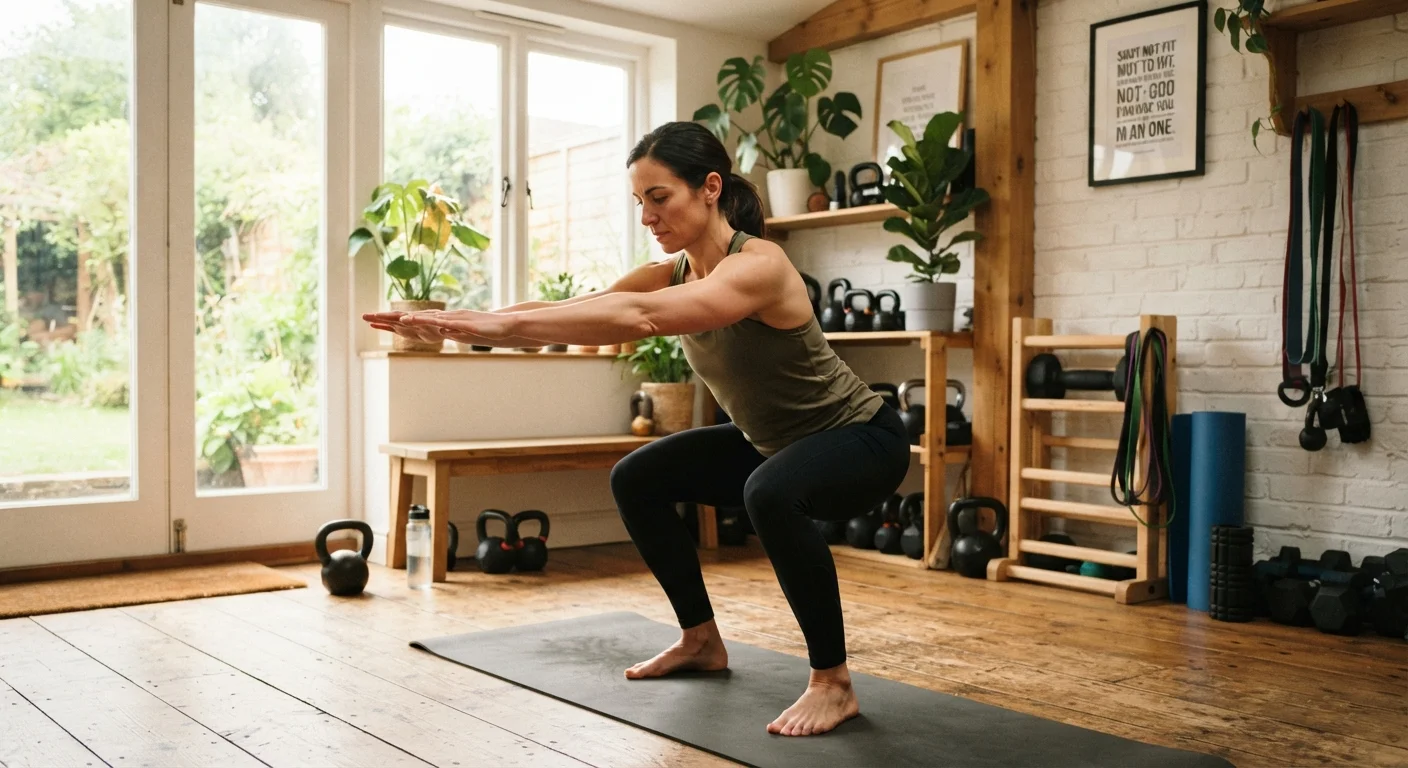
Where a conventional leg-press machine trains your quadriceps in a fixed, seated plane, a functional squat pattern trains your legs, hips, core, and stabilizing muscles together - the same coordination your body uses when lowering yourself into a chair or picking up a child. The emphasis is on movement quality and integration, not muscle size in isolation.
Key movement patterns in functional training include: squatting (sitting and standing), hinging (bending at the hips to lift), pushing, pulling, rotating, and carrying. These six patterns cover the vast majority of what the human body is called on to do throughout the day.
Functional Fitness Is Not a Single Program
The term describes a training philosophy, not a specific workout protocol. You'll find functional fitness principles applied in physical therapy, group fitness classes, personal training, and home workout programs. What they share is the focus on movement quality and real-world applicability - the specific exercises vary widely depending on your goals and current ability.
Who Benefits Most - and Why It's Not Just for Athletes
A common misconception is that functional fitness is the domain of athletes or people training for demanding physical jobs. In practice, the population that may benefit most is everyday Americans who want to stay active, avoid injury, and maintain independence as they age.
For older adults, functional training directly addresses the physical demands that support independent living - getting up from the floor, maintaining balance on uneven surfaces, carrying bags without strain. For desk workers, it counters the postural and movement deficits that accumulate from sitting for hours. For beginners, it provides a practical, low-intimidation entry point that makes fitness feel relevant rather than cosmetic.
That said, competitive athletes also incorporate functional training to reinforce movement efficiency and reduce injury risk - the same principles scale across ability levels. See our beginner's guide to starting exercise if you're just getting started.
How Functional Fitness Differs From Conventional Training
Conventional gym training - particularly machine-based programs - often isolates muscles and controls movement to a single plane. This approach has real value: it builds muscle mass, is easy to learn, and allows precise loading. Functional training takes a different approach, deliberately introducing instability, multi-directional movement, and whole-body coordination.
The distinction isn't a competition. Many evidence-informed trainers recommend a blend: compound, functional movements as the foundation, supplemented by isolation work where it makes sense. Understanding what different training types do to your body helps you build a more complete routine.
1 in 4
Older adults who fall each year in the U.S.
According to the CDC, falls are the leading cause of injury among adults 65 and older - a risk that balance and functional strength training may help reduce when maintained consistently.
~30%
Muscle mass lost between ages 40-80 without intervention
Research published in various exercise science journals estimates significant age-related muscle loss (sarcopenia) over decades of inactivity - highlighting the long-term value of sustained functional movement.
One practical difference is equipment. Functional training often uses free weights, kettlebells, resistance bands, and bodyweight - tools that require the body to stabilize the load, engaging muscles conventional machines handle automatically. This added demand is part of what builds transferable strength.
It's also worth noting that some common fitness beliefs don't hold up to scrutiny - including the idea that more pain always means more progress. Functional fitness generally prioritizes sustainable, controlled effort over intensity for its own sake.
Getting Started Without Overwhelm
Starting a functional fitness routine doesn't require a complete program overhaul or expensive equipment. The most effective approach for most people is to begin with foundational bodyweight movements, focus on form, and gradually increase challenge over time. This is precisely the logic behind progressive overload - the principle that drives lasting fitness improvement by incrementally adding difficulty.
Start With Bodyweight, Build From There
If you're new to functional training, begin with unloaded versions of foundational movements - bodyweight squats, glute bridges, push-ups, and walking lunges. Master the movement pattern before adding resistance. Good form with no weight is more valuable than sloppy form with a heavy load, both for results and for injury prevention.
Tracking progress in functional fitness looks different from tracking on a scale. You might notice that carrying heavy bags feels easier, that getting up from a low couch no longer requires effort, or that you can garden or play with kids longer without fatigue. These are meaningful, durable fitness outcomes. Our guide to tracking fitness beyond body weight offers practical ways to measure what matters.
Recovery also plays a central role. Sleep directly affects how your body adapts to exercise, and functional training is no exception. Building rest into your routine is part of the program, not an afterthought.
This article is for general informational and educational purposes only and is not a substitute for professional medical advice. Consult a qualified healthcare provider before beginning any new exercise program, particularly if you have existing health conditions, injuries, or concerns.