

Key Takeaways
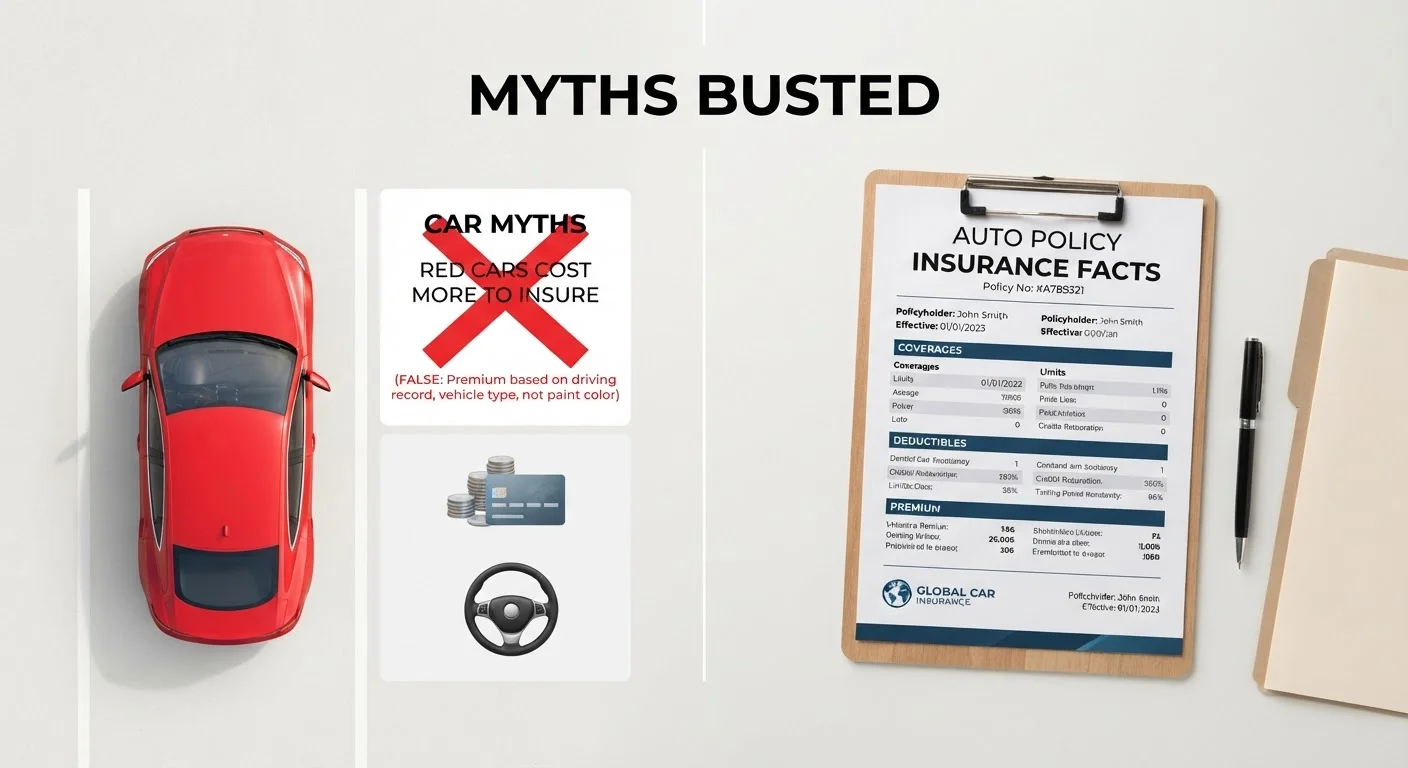
- Car color, including red, has no effect on your auto insurance premium.
- Standard homeowners insurance does not cover flood damage - a separate policy is required.
- Minimum legal liability coverage often falls far short of protecting your financial assets.
- Filing a small claim can raise your premium more than paying out of pocket would cost.
- Renters insurance covers your belongings - your landlord's policy does not.
Why Insurance Myths Are Genuinely Costly
Insurance is one of the few financial products most people buy hoping never to use. That distance from the claims process makes it easy for myths to take root - and hard to know they're wrong until something goes badly. The consequences of acting on bad information range from paying unnecessarily high premiums to discovering a major loss isn't covered at all.
The myths below are among the most persistent in American households. Each one has a concrete, measurable cost. Understanding what's actually true is a practical step toward making informed coverage decisions - not just having a policy, but having the right one.
This article is for general educational purposes only and does not constitute personalized insurance or financial advice. Coverage terms vary by provider, policy, and state. Consult a licensed insurance agent or adviser for guidance specific to your situation.
Common Insurance Myths - Debunked
Below are some of the most widespread insurance misconceptions, paired with accurate corrections and practical context.
Myth
Red cars cost more to insure because insurers charge a premium for flashy colors.
Fact
Vehicle color is not a rating factor used by insurance underwriters. Your premium is based on the make, model, engine size, your driving record, location, and other risk factors - not the paint.
This myth is one of the most durable in auto insurance. In practice, insurers do not ask for your car's color on an application. What they do assess includes the vehicle's safety record, theft statistics for that model, your claims history, and the cost to repair that specific make. For a fuller picture of what actually moves your premium up or down, see what drives car insurance costs.
Myth
My homeowners insurance will cover flood damage if a storm causes flooding.
Fact
Standard homeowners insurance policies explicitly exclude flood damage. Flood coverage requires a separate policy, typically purchased through the National Flood Insurance Program (NFIP) or a private flood insurer.
This is one of the most financially damaging myths in home insurance. Even a few inches of water can cause tens of thousands of dollars in damage, and without a separate flood policy, that cost falls entirely on the homeowner. The exclusion applies regardless of the flood's cause - heavy rain, storm surge, or overflowing rivers are all treated the same way. For a broader look at what else may be missing from your homeowners policy, see the parts of a homeowners policy most people never read.
Myth
The minimum car insurance required by law is enough to protect me financially.
Fact
Minimum liability limits are set to satisfy legal requirements, not to fully protect your assets. In a serious accident, costs often exceed minimum limits significantly, leaving you personally responsible for the difference.
State minimum liability requirements vary widely. In many states, the minimum property damage limit is low enough that a single moderate accident - involving a newer vehicle - could exceed it. Medical costs from an injury claim can exceed minimums by even larger margins. Understanding the difference between liability-only and broader coverage is essential; liability coverage vs. full coverage explains exactly what each option includes and when each matters.
Myth
Filing a claim is always the right move - that's what insurance is for.
Fact
Filing a claim for a small loss can trigger a premium increase that costs more over time than simply paying for the repair yourself. Frequent claims can also affect your insurability.
Insurance is designed to protect against significant, unexpected losses - not every minor incident. Insurers track claims history, and multiple claims in a short period can lead to higher premiums at renewal or, in some cases, non-renewal. A general rule of thumb many financial educators suggest: if the out-of-pocket cost is close to or below your deductible, paying out of pocket may be the more cost-effective choice. This is general guidance only; the right decision depends on your specific policy terms and circumstances.
Myth
My landlord's insurance covers my belongings if something happens to my apartment.
Fact
A landlord's property insurance covers the building structure, not tenants' personal possessions. If your belongings are damaged or stolen, renters insurance is what covers them.
Many renters discover this gap only after a theft, fire, or water damage event. Renters insurance is generally affordable and covers personal property, liability, and often temporary living expenses if the unit becomes uninhabitable. It is a separate policy that renters must purchase independently. For a full breakdown of what it covers and what it excludes, see renters insurance explained.
Myth
Comprehensive auto coverage means everything is covered, no matter what happens.
Fact
Despite its name, comprehensive coverage is a specific type of coverage for non-collision events - such as theft, vandalism, and weather damage. It does not cover collision damage or liability, which require separate coverage types.
The term "comprehensive" is genuinely misleading. It refers to a specific coverage bucket, not a catch-all policy. Drivers often assume they're fully protected and are surprised when a collision claim isn't covered because they only carried comprehensive. A clear explanation of how liability, collision, and comprehensive each work - and what each pays for - is available in auto insurance coverage types decoded.
~40%
Renters who carry renters insurance
According to a survey by the Insurance Information Institute, roughly 4 in 10 renters carry renters insurance, leaving the majority without protection for their belongings.
1 in 4
Flood claims from outside high-risk zones
The Federal Emergency Management Agency (FEMA) has noted that a significant share of flood insurance claims come from properties outside designated high-risk flood areas.
How These Myths Shape Coverage Decisions
Myths don't just cause confusion - they drive real decisions. Someone who believes their homeowners policy covers floods may skip purchasing a separate flood policy, leaving them exposed to one of the most common and expensive natural disaster losses in the U.S. Someone who assumes minimum coverage is sufficient may face a lawsuit that wipes out savings after a serious accident.
The pattern is consistent: myths tend to make people feel more protected than they are, or push them toward avoiding coverage they actually need. Both outcomes carry financial risk.
Policy Language Controls - Not Assumptions
What you believe your policy covers and what it actually covers can be two very different things. Insurers are bound by the written policy document, not verbal summaries or common assumptions. Always read the declarations page and any exclusions section before assuming a loss is covered. If you are uncertain, ask your insurer or agent for written clarification.
Before any renewal period, it's worth reviewing your actual policy documents - not just the summary - and asking questions about exclusions and limits. Our guide to questions to ask before agreeing to any policy covers the key areas most often overlooked. You should also know that certain behaviors can void a claim entirely - see what can invalidate an insurance claim for a detailed breakdown.
For deeper context on where standard policies routinely fall short, insurance coverage gaps that fall between standard policies is a useful companion read.