

Key Takeaways
- An EOB is a summary document from your insurer, not a bill you must pay.
- Every EOB shows what was billed, what the insurer covered, and what you may owe.
- Errors on EOBs are more common than most consumers expect - always review carefully.
- Comparing your EOB to the provider's bill can reveal billing mistakes or duplicate charges.
- Your deductible, copay, and coinsurance all appear as separate line items on an EOB.
What you will need
Why EOBs Matter - and Why Most People Ignore Them
An Explanation of Benefits arrives in your mailbox or member portal a week or two after a medical visit, and most people file it away without reading it. That habit can be expensive. EOBs contain the complete record of how your insurer processed a claim - including how much was billed, how much the plan covered, and how much may remain your responsibility.
Understanding an EOB also helps you catch errors. Medical billing is a complex, code-driven process, and mistakes - duplicate charges, incorrect procedure codes, or services billed to the wrong patient - occur with some regularity. An undetected error can result in an inflated bill or an incorrectly applied deductible that costs you money.
Before working through the steps below, gather the materials listed in the prerequisites. If any of the cost-sharing terms feel unfamiliar, the guide on insurance deductibles, premiums, and copays provides plain-language definitions to bring you up to speed quickly.
What you will need
This article provides general information about reading insurance documents and is not personalized insurance, financial, or legal advice. Coverage terms, benefit structures, and plan rules vary by insurer and policy. Always refer to your actual plan documents and consult a licensed insurance professional for guidance specific to your situation.
How to Read Each Section of Your EOB
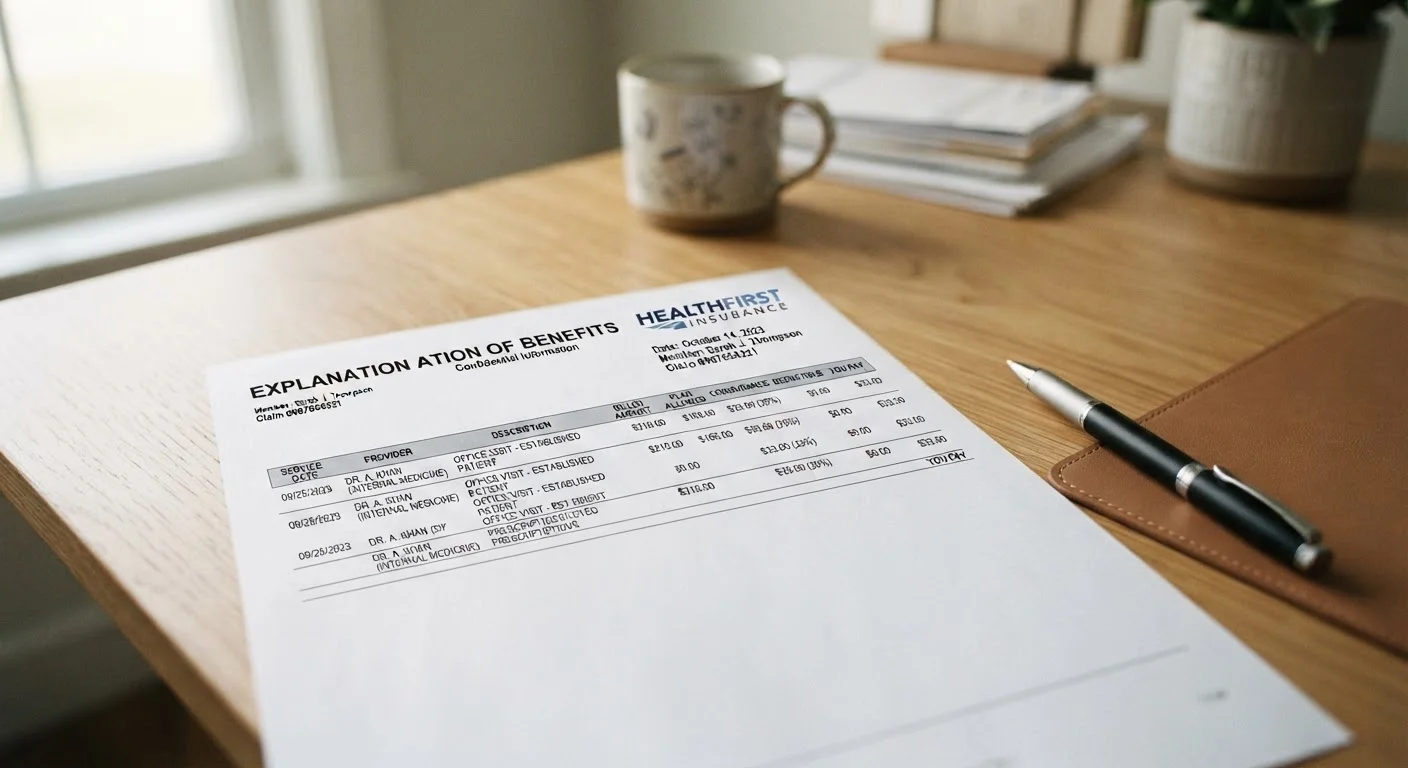
A standard EOB is divided into predictable sections regardless of which insurer issued it. Follow the steps below to move through each section methodically. After completing the walkthrough, compare the patient responsibility amount on your EOB to the amount on your provider's bill to confirm they align before submitting any payment.
An EOB Is Not a Bill
Many people mistake an Explanation of Benefits for a bill and either panic or ignore it. It is a summary statement from your insurer explaining how a claim was processed. Wait to receive an actual bill from your provider before making any payment - and compare both documents carefully before paying anything.
Locate the Header and Verify Patient Information
The top section of any EOB identifies the policyholder, the patient (who may be a dependent), the insurer's name, and a claim reference number. Confirm that the name, member ID, and date of service match the visit you are reviewing. A mismatch here - such as the wrong member ID - can indicate a processing error that could affect coverage.
Read the Service Description and Procedure Codes
The next section lists each service that was billed, typically identified by a procedure code (CPT code) and a plain-language description. Read this line by line and confirm every listed service is one you actually received. A service you did not receive appearing here is a red flag worth investigating immediately.
Understand the Billed Amount vs. Allowed Amount
The billed amount is what your provider initially charged. The allowed amount (also called the negotiated rate or contracted rate) is the lower figure that your insurer and in-network provider have agreed to accept. The difference between the two - sometimes called a contractual adjustment - is typically written off by in-network providers; you are not responsible for it.
If you saw an out-of-network provider, the allowed amount may be lower than the billed amount, and you could be held responsible for the gap. This is often called balance billing.
Identify What Your Insurer Paid
This column shows the dollar amount your insurer actually paid to the provider. The insurer's payment is calculated after applying your deductible, any coinsurance, and your copay. If the insurer paid $0 for a covered service, check whether you have not yet met your deductible for the plan year - this is the most common reason. For a refresher on how these cost-sharing terms work, see our guide on deductibles, premiums, and copays.
Find Your Patient Responsibility Amount
The patient responsibility section is the most important number for your wallet. It represents what you may owe the provider after the insurer's payment. This figure typically reflects any combination of your deductible applied, your coinsurance share, and your copay. Note the word may - some providers bill separately, so the amount on the EOB and the amount on your bill should match. If they do not, contact your provider before paying.
Check the Denial Reason or Remark Codes (If Applicable)
If a service was denied or adjusted, the EOB will include a remark code or reason code - a short alphanumeric code with an explanation key, usually printed at the bottom of the document. Common reasons include services not covered under your plan, missing prior authorization, or a claim submitted outside the filing deadline. Each denial reason tells you whether an appeal is worth pursuing and what documentation you would need to support it.
Understand your plan type and network rules before assuming a denial is final - certain plan designs have strict referral or network requirements. Our overview of HMO, PPO, EPO, and HDHP plan differences explains how these rules vary.
Errors on EOBs Can Cost You Money
Billing codes on an EOB are sometimes entered incorrectly, causing your insurer to underpay or deny a claim that should have been covered. If a service looks wrong or an amount seems off, contact your insurer's member services line to request a review before the appeal window closes.
Keep EOBs Until Claims Are Fully Resolved
File every EOB you receive alongside the corresponding provider bill. If a dispute arises - or if you are audited for medical expense deductions - having both documents together makes the resolution process significantly faster. Most insurers also store EOBs in your online member portal for at least 18 months.
Once you are comfortable reading EOBs, you may also want to review how your underlying plan document is structured - our article on how an insurance policy is structured explains declarations pages, exclusions, and benefit limits in the same plain-language format.