

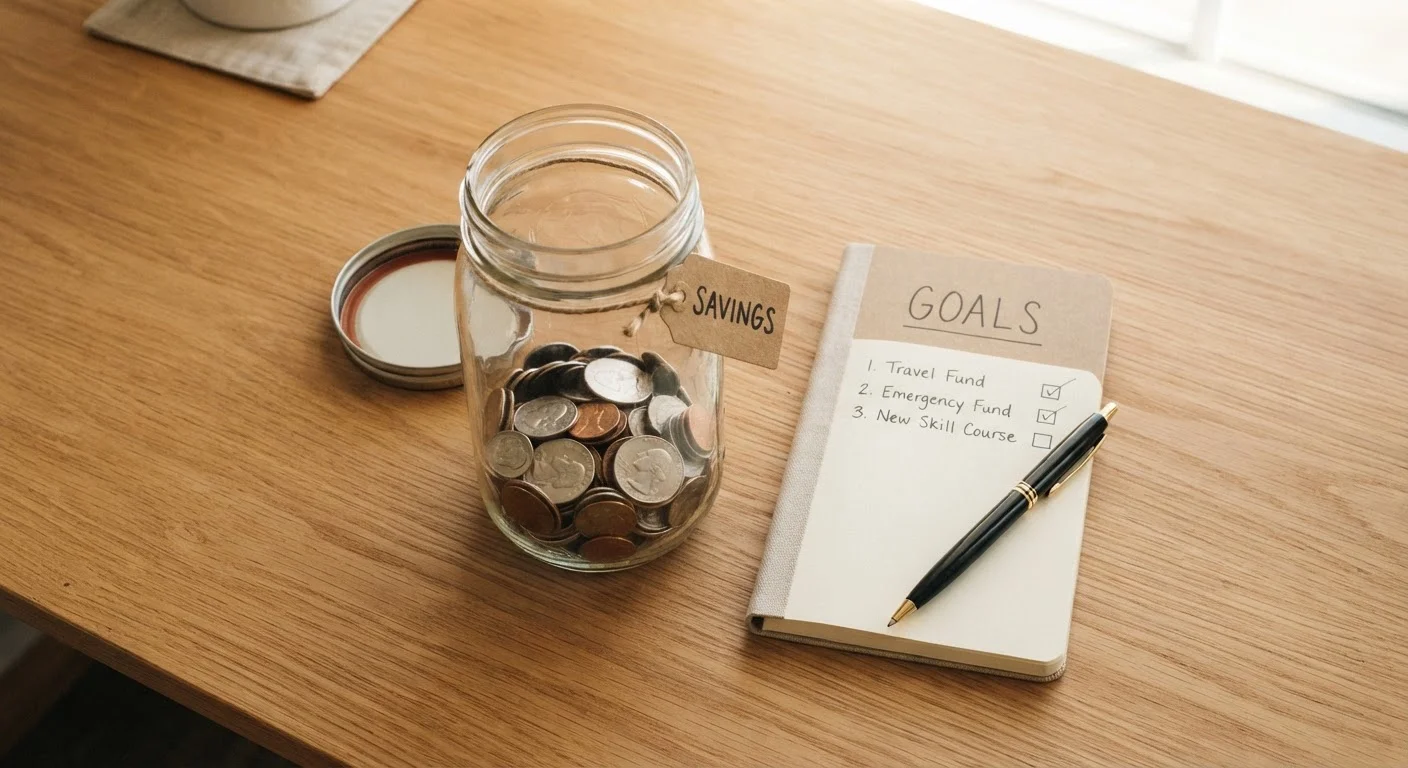
Key Takeaways
- Saving is a learnable habit, not an innate trait - anyone can build it systematically.
- Automating transfers removes reliance on willpower and makes saving more consistent.
- Starting with a small, specific goal is more effective than aiming for a vague large amount.
- Keeping savings in a separate account reduces the temptation to spend them.
- Regular check-ins help you adjust your habit as income and expenses change.
What you will need
Why Saving Feels Hard - and Why That's Normal
Many people assume that consistent savers are simply more disciplined or more financially comfortable. In reality, saving is a designed behavior - it works best when the environment is set up to make it easy, not when it depends on daily willpower. The challenge isn't character; it's structure.
Several forces work against saving by default. Spending is immediate and satisfying; saving is abstract and delayed. Most bank accounts mix spending and savings money together. And without a clear goal, there's no emotional pull toward protecting a balance.
Understanding these friction points makes it easier to design around them. The steps below address each one directly.
This Is General Information, Not Advice
This article provides general financial education only and is not personalized financial, investment, or tax advice. Everyone's financial situation is different. Consult a licensed financial adviser or certified financial planner before making significant changes to your finances.
What You'll Need Before You Start
Getting your savings habit off the ground doesn't require special tools or a minimum income level. You'll need a few basics in place:
What you will need
If you're also working on your broader budget, our Budgeting Basics hub has foundational resources that pair well with the steps below.
Dedicated savings account
Holds your savings separately from spending money, reducing the temptation to dip into it.
Automatic transfer feature
Schedules recurring transfers from checking to savings so saving happens without manual effort.
Budgeting worksheet or app
Helps you identify how much you can realistically set aside each pay period.
Written savings goal
A clearly stated target amount and timeline keeps your motivation concrete and trackable.
Step-by-Step: Building Your Savings Habit
Follow these steps in order. Each one removes a specific barrier that causes savings habits to stall or collapse.
Define a specific, near-term savings goal
Before deciding how much to save, decide what you're saving for. Vague intentions like "save more money" rarely stick. A concrete goal - such as building a $500 emergency buffer, saving for a planned expense, or reaching one month's essential expenses - gives you a target to work toward and a clear finish line.
Write the goal down with a dollar amount and a timeframe. This single step dramatically increases follow-through.
Audit your current income and expenses
You can't determine a realistic savings amount without first understanding your cash flow. Review your take-home pay and list your recurring monthly expenses - housing, utilities, food, transportation, subscriptions, and debt payments. The gap between income and essential expenses is your maximum available savings.
If you haven't tracked your spending before, our beginner's budgeting guide walks through this process step by step.
Set a fixed, modest savings amount
Choose a fixed dollar amount - not a percentage to calculate each time - that you'll move to savings every pay period. Start conservatively: an amount that feels almost too easy is fine. The goal at this stage is to make saving a non-negotiable line item in your budget, not to maximize the dollar figure.
You can always increase the amount once the habit is established.
Open a separate savings account
Keeping savings in the same account as your everyday spending makes it too easy to erode the balance. Open a dedicated savings account - ideally at a different institution or sub-account that isn't visible on your primary banking screen. Out of sight genuinely does mean out of mind for most people.
When evaluating account options, it's worth understanding how account types differ. Our overview of high-yield vs. traditional savings accounts explains the key distinctions.
Automate the transfer
Set up an automatic recurring transfer from your checking account to your savings account on the same day you receive each paycheck - or the day after. Automation removes the decision from your hands entirely. You won't have to remember, negotiate with yourself, or find the motivation. The money moves before you have a chance to spend it.
This is often called "paying yourself first" and is one of the most well-supported behavioral strategies for consistent saving.
Review and adjust monthly
Once a month, spend five minutes checking your savings progress. Are transfers going through? Have your expenses changed? Did you reach a milestone? A brief regular review keeps you aware of your habit and gives you a natural moment to increase your contribution when your financial picture improves.
For a deeper look at the behaviors that make financial habits sustainable, see our article on budgeting habits that actually stick.
Small Amounts Compound Into Real Progress
Even saving $25 a month builds a meaningful habit - and a meaningful balance over time. The psychological momentum of seeing a growing account can make it easier to increase your contribution later. Consistency over a long period tends to outperform sporadic large deposits.
Avoid Saving at the Expense of High-Interest Debt
If you carry high-interest debt - such as credit card balances - aggressively saving while ignoring that debt can cost you more in interest than your savings earn. It's worth understanding the trade-off and possibly speaking with a financial professional about the right balance for your situation.
After the Habit Is Established: What Comes Next
Once saving feels automatic - typically after two to three months of consistent transfers - you're ready to think about what comes next. Two priorities are worth considering in order:
- Build an emergency fund. Most financial educators recommend working toward three to six months of essential expenses in accessible savings. Our article on emergency fund sizing and storage covers the general principles behind this target.
- Understand the difference between saving and investing. Once you have a stable savings base, learning how investing differs - and when it might make sense - is a natural next step. See The Difference Between Saving and Investing for a plain-language overview.
Be aware of habits that can quietly undermine progress over time. Our companion piece on early saving mistakes is worth reading once your habit is underway.
This article is for general informational and educational purposes only. It does not constitute personalized financial, investment, or tax advice. Consult a qualified financial professional for guidance specific to your situation.