

Key Takeaways
- Enrichment activities that involve you directly strengthen the human-pet bond alongside mental stimulation.
- Simple, low-cost activities like scent games and hand-feeding can be as effective as elaborate setups.
- Consistency matters more than duration - short daily sessions build trust and routine.
- Matching activities to your pet's species and personality prevents frustration and keeps engagement high.
- Shared enrichment teaches pets to look to you as a source of fun, security, and reward.
Why the Best Enrichment Involves You
Most enrichment advice focuses on objects - puzzles, toys, foraging mats - and those tools genuinely help. But the most powerful enrichment ingredient is often overlooked: your presence. When you actively participate in an activity alongside your pet, you're not just keeping them busy; you're becoming part of what makes life interesting for them.
Research in animal behavior consistently shows that social bonds between pets and their owners influence stress levels, confidence, and overall well-being. Mental stimulation is an essential pillar of pet wellness, but stimulation delivered through interaction with a trusted person adds a layer of emotional nourishment that solo activities simply cannot replicate.
The seven activities below are chosen specifically because they accomplish both goals simultaneously: they challenge your pet's mind and body while building the kind of relationship that makes your animal feel genuinely secure. None require expensive equipment, and most can be adapted across species.
Start With What Your Pet Already Enjoys
The easiest way to begin joint enrichment is to take an activity your pet already gravitates toward - chasing, sniffing, solving - and insert yourself as the activator rather than the observer. This creates immediate engagement without a learning curve. As your pet connects the activity to your presence, you can gradually introduce new variations to keep their interest growing.
Seven Enrichment Activities That Build Your Bond
Hand-Feeding During Training Sessions
Using your pet's regular meal as training currency is one of the highest-return activities available. Rather than filling a bowl and walking away, portion out kibble or appropriate treats and use them to work through basic cues, introduce new behaviors, or practice calm greetings. Every piece of food becomes a communication moment.
For dogs and cats alike, hand-feeding builds the association that good things come directly from you - not from a stationary bowl. This is foundational for recall reliability in dogs and for reducing food-related anxiety in cats. Keep sessions short (three to five minutes) and end while your pet is still eager.
Hand-feeding turns every meal into a trust-building conversation between you and your pet.
Cooperative Scent Games
Nose work is one of the most mentally tiring activities you can offer a dog, and it becomes a bonding exercise when you're the one hiding the target scent and reading your dog's body language together. Start by hiding a high-value treat under one of three cups and letting your dog find it while you watch closely and mark the correct choice with praise.
As your dog's confidence grows, you can graduate to hiding scent targets in different rooms or containers. Home-based scent work requires no special equipment and can be tailored to any home layout. Your dog learns to search for you as the game-setter, which strengthens their orientation toward you.
When you set the game, your dog learns to look to you as the source of every rewarding challenge.
Interactive Foraging and Mealtime Puzzles - Together
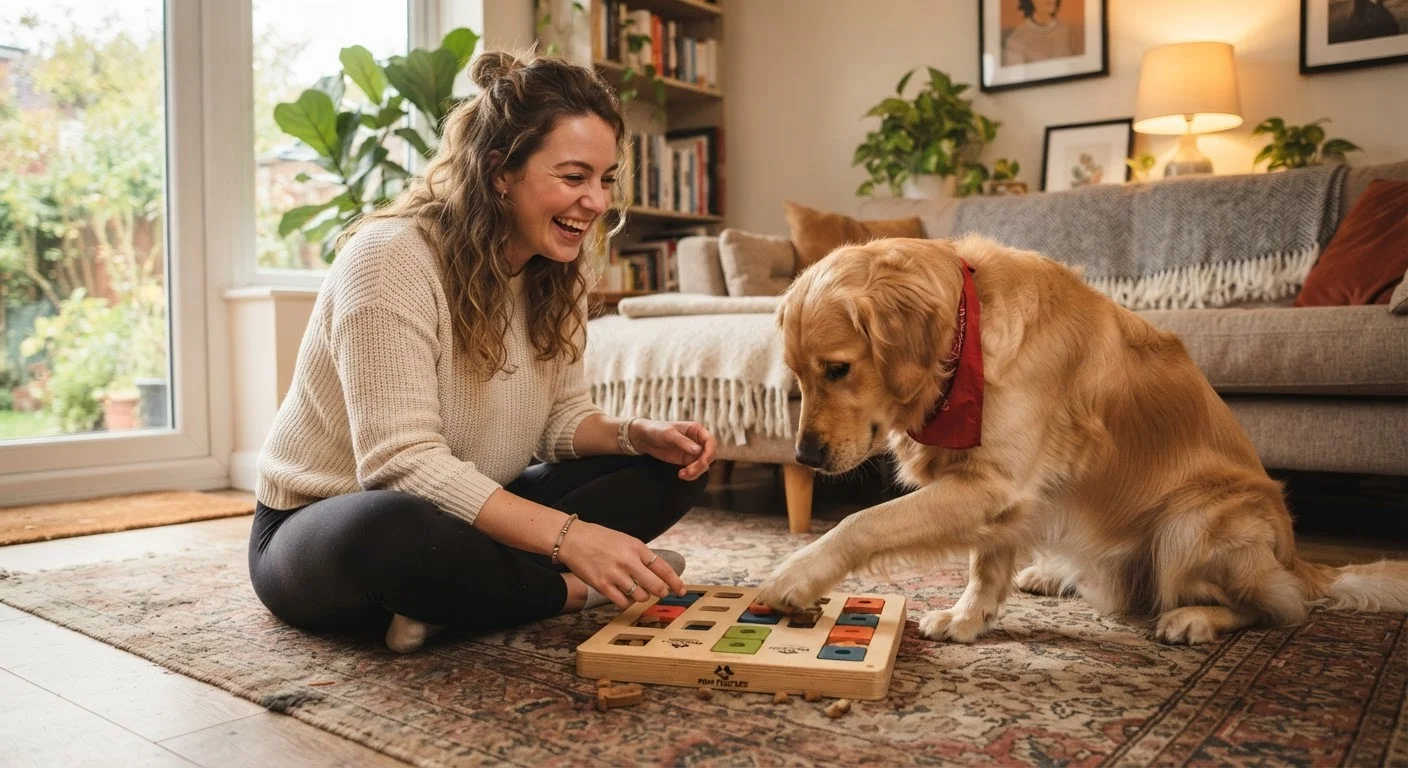
Food puzzles and scatter feeding are excellent solo enrichment tools, but sitting nearby and narrating or encouraging your pet through a puzzle shifts the activity from independent to collaborative. Your calm presence reduces frustration when the difficulty is higher, and your verbal encouragement becomes a meaningful cue that they're on the right track.
Mealtime enrichment strategies like scatter feeding and slow feeders work across species. Pair them with your active observation - notice what your pet finds challenging, adjust difficulty accordingly, and you'll learn more about your individual animal's problem-solving style than any single behavioral assessment could reveal.
Sitting with your pet through a puzzle session turns solo foraging into a shared discovery experience.
Species-Matched Play With You as the Activator
Play looks different across species, and matching the activity to your pet's natural behavioral repertoire is critical. Cats thrive with wand toys that mimic prey movement - and that require your active participation to function. Rabbits and guinea pigs respond well to obstacle courses you rearrange and introduce. Birds often engage most when a trusted person models interaction with a novel object first.
For a deeper breakdown of what each species needs from play, species-specific enrichment strategies offer practical guidance. The key principle: when your pet's play instincts are activated by you, you become associated with positive arousal and reward - a powerful bond-building mechanism.
Species-appropriate play activated by your presence builds associations between you and genuine joy.
Exploration Walks With a Pet-Directed Pace
For dogs especially, a walk that lets them stop, sniff, and investigate on their own schedule is far more enriching than a brisk, structured march. These are often called "sniff walks" or "decompression walks," and they work because they honor your dog's sensory priorities rather than overriding them.
Your role is to follow their lead - pause when they pause, give loose-leash slack, and resist the urge to pull them away from a compelling scent. This practice communicates trust and respect, which are foundational to a strong bond. For pets who spend most of their time indoors, combining this with thoughtful outdoor enrichment maximizes the benefit of time outside.
Letting your dog set the pace on a walk signals trust - and trust is the currency of every strong bond.
Trick Training as a Two-Way Conversation
Teaching a new trick is not about performance - it's a structured conversation where your pet learns to read your signals and you learn to read their readiness and stress signals. This mutual decoding is deeply bonding. Choose one small, achievable behavior and shape it incrementally using positive reinforcement, ending each session before your pet loses enthusiasm.
The learning process itself - not just the finished trick - is where the bond deepens. Your pet discovers that focusing on you produces clear, predictable rewards, which builds the attentiveness and orientation toward owners that behaviorists describe as a sign of a secure attachment relationship.
The act of learning together - not the finished trick - is where genuine attentiveness and trust develop.
Calm Shared Rest and Gentle Handling Practice
Not every enrichment activity needs to be high-energy. Structured calm time - where you sit quietly with your pet and practice gentle handling such as slow ear checks, paw holds, or relaxed brushing - builds tolerance for veterinary handling while communicating safety. This is especially valuable for pets who become anxious during medical care.
Pair each handling touch with something your pet genuinely enjoys: a food reward, a favorite scratch spot, or simply a calm, reassuring voice. Over time, these sessions teach your pet that being handled by you is predictable and pleasant - a form of everyday wellness practice that pays off at every vet visit.
Calm handling practice is enrichment that teaches your pet the world - and you - are safe and predictable.
Active vs. Passive Enrichment: Know the Difference
The activities in this list fall into the "active enrichment" category - they require your direct involvement. Passive enrichment, such as window perches, long-lasting chews, or foraging toys left out while you're away, serves a different but equally valid purpose. Understanding how the two approaches complement each other helps you plan a fuller enrichment schedule. See passive vs. active enrichment for a side-by-side comparison.
Making It a Sustainable Habit
The activities above work best when they become part of a predictable routine rather than occasional novelty. Even ten focused minutes per day - where your phone is away and your attention is fully on your pet - can produce noticeable improvements in behavior, responsiveness, and emotional closeness over weeks.
If you're unsure how to build variety without creating overwhelm, a structured weekly enrichment plan can help you rotate activities thoughtfully. And if you ever notice your pet disengaging or showing signs of stress during a session, that's useful feedback - common enrichment pitfalls are worth reviewing so you can adjust your approach.
The bond you build through shared enrichment pays dividends well beyond playtime. Pets who associate their owners with positive, engaging experiences tend to be calmer, more responsive, and more resilient across all aspects of daily life.
This article is for general informational purposes only. For guidance specific to your pet's health, behavior, or dietary needs, consult a licensed veterinarian or certified animal behaviorist.