

Key Takeaways
- Variety across the week prevents boredom and reduces stress-related behaviors in pets.
- Balancing active and passive enrichment makes the plan sustainable for busy owners.
- You do not need special equipment - most enrichment uses everyday household items.
- Matching activities to your pet's species and energy level produces better outcomes.
- Rotating activity types weekly keeps your pet's environment feeling fresh and stimulating.
Summary
22 items · 20-40 minutes to plan; activities spread across 7 days
Why a Weekly Enrichment Plan Works Better Than Improvising
Most pet owners want to provide great enrichment - the challenge is consistency. When activities are left to chance, pets often receive stimulation in bursts followed by long stretches of inactivity, which can contribute to anxiety, destructive behavior, and boredom. A simple weekly plan solves this by spreading variety across all seven days without demanding excessive time from you.
Before mapping out activities, it helps to understand what enrichment actually accomplishes. As explored in our overview of mental stimulation and pet wellness, cognitive engagement is as important as physical exercise for long-term animal health. A well-rounded week should touch on sensory exploration, problem-solving, social interaction, and physical movement - in proportions that fit your pet's species, age, and temperament.
The checklist below is designed to be adapted, not followed rigidly. Use it as a framework to audit what you are already doing and identify any gaps.
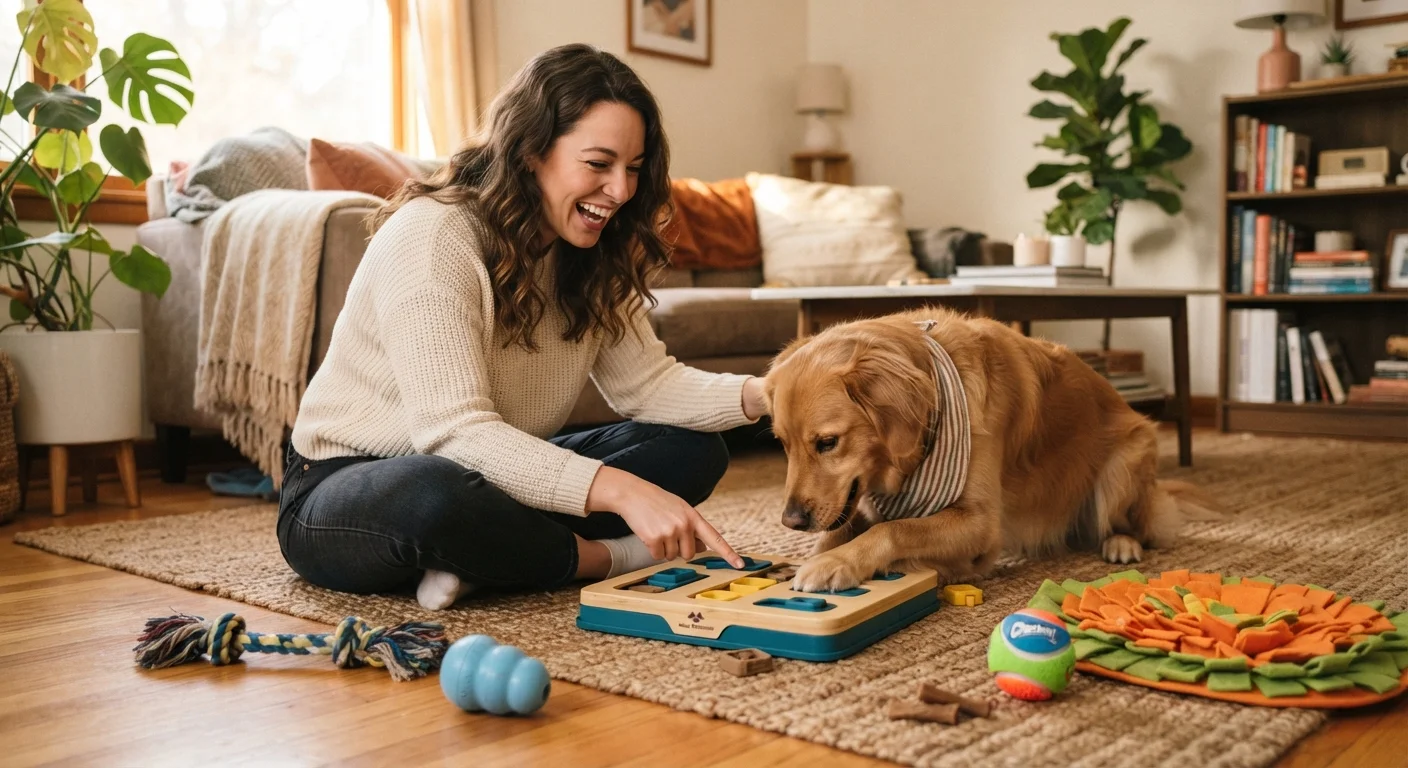
Snuffle mat or scatter feeding surface
Provides nose-work and foraging enrichment that satisfies natural scavenging instincts.
Puzzle feeder or Kong-style toy
Delivers cognitive challenge by requiring problem-solving to access food rewards.
Training treats (small, soft pieces)
Enables short, positive-reinforcement training sessions throughout the week.
Weekly planner or notes app
Helps you map out and track enrichment activities across all seven days.
Interactive wand or fetch toy
Supports physical play sessions that also serve as bonding time with your pet.
Novel safe chew or foraging material
Introduces new textures and scents to prevent habituation to existing enrichment items.
Your 7-Day Enrichment Checklist
Work through these items at the start of each week. You do not need to complete every category every single day - the goal is meaningful variety across the seven-day period. For guidance on matching specific activities to your animal, see our species-specific enrichment strategies.
Planning & Preparation
Sensory & Foraging Activities
Cognitive & Problem-Solving
Physical Movement
Social & Human-Bonding Time
Weekly Review
More Is Not Always Better
Packing too many novel activities into a single day can overstimulate some pets, particularly those that are anxious, senior, or recovering from illness. Aim for one or two focused sessions per day rather than a rapid-fire sequence of new experiences. If your pet shows signs of stress - excessive panting, hiding, pacing, or refusing food - scale back the intensity and consult your veterinarian.
If you find yourself short on time mid-week, passive enrichment options - like a window perch, a food-stuffed toy, or a safely hidden scatter feed - can fill gaps without requiring your direct participation.
Keeping It Sustainable and Enjoyable
The most effective enrichment plans are the ones owners actually stick with. A few strategies help prevent the plan from becoming a chore:
- Batch your prep. On Sunday, stuff a few puzzle feeders, cut up training treats, and gather any materials you will need. Five minutes of prep prevents scrambling on a Tuesday evening.
- Double up on bonding. Many activities that stimulate your pet also strengthen your relationship. Our guide to enrichment as quality time highlights ideas that serve both goals simultaneously.
- Rotate your activity library. Keep a short list of 10-15 activities your pet enjoys and cycle through them every two to three weeks. This prevents habituation - the tendency for animals to lose interest in predictable stimuli.
- Mix indoor and outdoor. Weather and schedules will sometimes force indoor-only days, which is completely fine. For a deeper look at how to balance both environments, see indoor vs. outdoor enrichment.
Safety Comes Before Enrichment
Always verify that any item used for enrichment - toys, chews, DIY materials, or novel foods - is safe for your specific pet's species, size, and health status. Some enrichment items pose choking, toxicity, or obstruction risks if used unsupervised or with the wrong animal. When in doubt, ask your veterinarian before introducing something new.
Finally, watch your pet's response. Signs of genuine engagement - relaxed body language after the activity, eager approach when you bring out familiar items, reduced restlessness - are your clearest indicators that the plan is working. Adjust freely based on what you observe.
This article provides general pet care information and is not a substitute for advice from a licensed veterinarian. Consult your vet with any concerns about your pet's health or behavior.