

Key Takeaways
- Raw diets are not currently endorsed by major veterinary nutrition bodies due to documented health and safety risks.
- Some owners report benefits like improved coat condition, but controlled clinical evidence for most claims remains limited.
- Bacterial contamination - including Salmonella and Listeria - poses documented risks to both dogs and their human households.
- Nutritional imbalances are common in home-prepared raw diets unless formulated by a board-certified veterinary nutritionist.
- Puppies, senior dogs, and immunocompromised pets face the highest risks from raw feeding.
Higher protein and fat digestibility in some studies
Certain peer-reviewed comparisons have found raw diets yielded higher apparent digestibility coefficients for protein and fat than extruded kibble, though results vary by formulation and study design.
Improved stool quality reported by many owners
Smaller, firmer stools are a consistently reported owner observation, likely reflecting higher digestibility and lower fiber content, though this has not been uniformly confirmed in controlled trials.
High palatability for picky eaters
Raw meat's aroma and texture tend to increase acceptance in dogs who refuse or show low interest in processed foods, which can benefit animals with poor appetite.
Potential for highly tailored ingredient selection
A professionally formulated raw diet can be customized to exclude specific proteins or ingredients, which may benefit dogs with confirmed food sensitivities - provided a veterinary nutritionist oversees the formulation.
Documented bacterial contamination risk
Multiple studies have confirmed the presence of Salmonella, Listeria, and E. coli in commercially sold raw dog foods. Infected dogs can shed these pathogens asymptomatically, posing a zoonotic risk to human household members.
Frequent nutritional imbalances in home-prepared diets
Peer-reviewed analysis of home-formulated raw recipes has found widespread deficiencies in calcium, phosphorus, zinc, and fat-soluble vitamins - gaps that can cause serious long-term health consequences.
Bone ingestion carries injury risk
Raw bones can fracture teeth, splinter internally after partial digestion, or cause gastrointestinal obstruction. These are documented veterinary emergency presentations, not theoretical concerns.
Not recommended for vulnerable life stages
Veterinary nutritionists specifically caution against raw feeding in puppies, pregnant or lactating dogs, and immunocompromised animals, where the risks of pathogen exposure and nutrient imbalance are amplified.
Requires rigorous food-handling and storage practices
Cross-contamination during raw diet preparation is a genuine household hygiene risk. Safe handling requires dedicated equipment, strict temperature controls, and thorough surface sanitation after every meal preparation.
Limited regulatory oversight for commercial raw products
Unlike conventional pet foods, commercial raw diets occupy a less standardized regulatory space, and quality control - including pathogen testing - varies significantly between manufacturers.
Our Verdict
The current body of veterinary research does not support raw feeding as a broadly safe or nutritionally reliable practice for most dogs. While some proposed benefits have anecdotal support, the documented risks - particularly bacterial contamination and nutritional imbalance - are real and well-substantiated. Owners who choose raw feeding should work closely with a board-certified veterinary nutritionist and follow rigorous food-handling protocols.
Best suited to healthy adult dogs whose owners are committed to professional nutritional oversight, strict hygiene practices, and regular veterinary monitoring.
What Is a Raw Diet for Dogs?
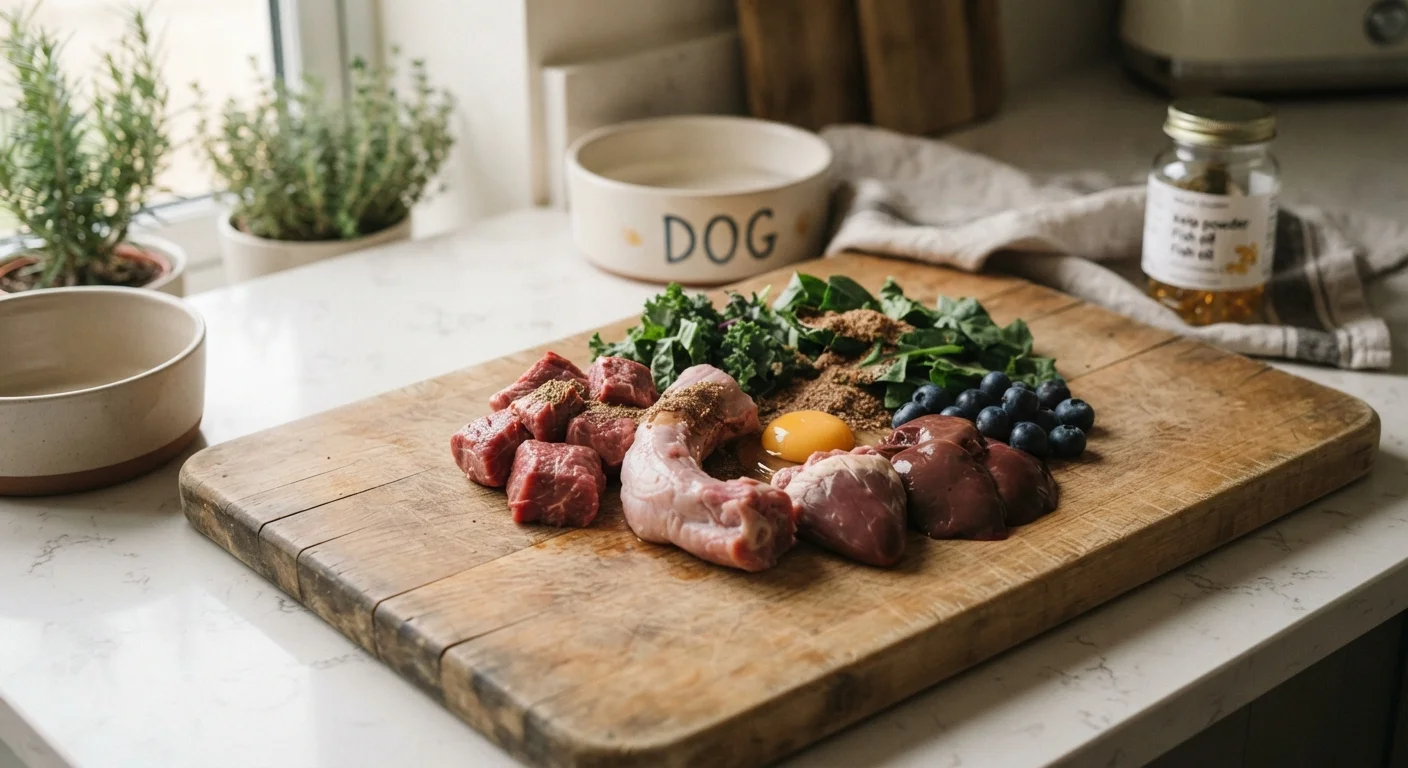
Raw diets - often called BARF (Biologically Appropriate Raw Food) or RMB (Raw Meaty Bones) diets - typically include uncooked muscle meat, organ meat, raw bones, eggs, and sometimes fruits or vegetables. The underlying premise is that dogs evolved eating prey animals and therefore thrive on unprocessed, minimally altered food.
These diets may be home-prepared or sourced from commercial raw pet food manufacturers. The nutritional profiles and safety standards vary enormously between these two approaches. For context on how to interpret what's actually in any pet food - raw or otherwise - see reading pet food labels.
Raw vs. Commercial Raw: An Important Distinction
Home-prepared raw diets and commercially manufactured raw pet foods are not equivalent products. Commercial raw foods are subject to some regulatory oversight and may undergo high-pressure processing (HPP) to reduce pathogen load. Home-prepared diets carry greater risk of nutritional imbalance and contamination unless professionally formulated. When evaluating raw feeding claims or research, it matters significantly which category is being discussed.
What the Potential Advantages Look Like
Proponents point to a range of reported improvements in dogs fed raw diets. Some of the most commonly cited include shinier coats, smaller and firmer stools, higher palatability, and improved energy levels. A subset of peer-reviewed studies has found higher digestibility of protein and fat in some raw formulations compared to equivalent kibble, though study conditions and populations vary considerably.
Higher protein and fat digestibility in some studies
Certain peer-reviewed comparisons have found raw diets yielded higher apparent digestibility coefficients for protein and fat than extruded kibble, though results vary by formulation and study design.
Improved stool quality reported by many owners
Smaller, firmer stools are a consistently reported owner observation, likely reflecting higher digestibility and lower fiber content, though this has not been uniformly confirmed in controlled trials.
High palatability for picky eaters
Raw meat's aroma and texture tend to increase acceptance in dogs who refuse or show low interest in processed foods, which can benefit animals with poor appetite.
Potential for highly tailored ingredient selection
A professionally formulated raw diet can be customized to exclude specific proteins or ingredients, which may benefit dogs with confirmed food sensitivities - provided a veterinary nutritionist oversees the formulation.
It is important to distinguish owner-reported outcomes from controlled clinical findings. Most of the positive evidence base is observational or anecdotal rather than the product of blinded, controlled trials with large sample populations.
Documented Risks and Concerns
Major veterinary organizations - including the American Veterinary Medical Association (AVMA) and the American Animal Hospital Association (AAHA) - formally discourage raw feeding, citing a consistent body of evidence around contamination and nutritional adequacy.
Documented bacterial contamination risk
Multiple studies have confirmed the presence of Salmonella, Listeria, and E. coli in commercially sold raw dog foods. Infected dogs can shed these pathogens asymptomatically, posing a zoonotic risk to human household members.
Frequent nutritional imbalances in home-prepared diets
Peer-reviewed analysis of home-formulated raw recipes has found widespread deficiencies in calcium, phosphorus, zinc, and fat-soluble vitamins - gaps that can cause serious long-term health consequences.
Bone ingestion carries injury risk
Raw bones can fracture teeth, splinter internally after partial digestion, or cause gastrointestinal obstruction. These are documented veterinary emergency presentations, not theoretical concerns.
Not recommended for vulnerable life stages
Veterinary nutritionists specifically caution against raw feeding in puppies, pregnant or lactating dogs, and immunocompromised animals, where the risks of pathogen exposure and nutrient imbalance are amplified.
Requires rigorous food-handling and storage practices
Cross-contamination during raw diet preparation is a genuine household hygiene risk. Safe handling requires dedicated equipment, strict temperature controls, and thorough surface sanitation after every meal preparation.
Limited regulatory oversight for commercial raw products
Unlike conventional pet foods, commercial raw diets occupy a less standardized regulatory space, and quality control - including pathogen testing - varies significantly between manufacturers.
Studies have repeatedly detected pathogens such as Salmonella, Listeria monocytogenes, and E. coli in commercially produced raw pet foods. These bacteria can shed in a dog's feces even when the animal shows no symptoms, creating household transmission risks - particularly for children, elderly individuals, and immunocompromised family members.
Nutritional imbalances are another well-documented concern. Research published in peer-reviewed journals has found that a significant proportion of home-prepared raw diets are deficient in critical nutrients including calcium, phosphorus, and essential vitamins. This mirrors findings for home-cooked diets generally - a topic explored in homemade pet food nutrient balancing.
Life-Stage Considerations
A dog's vulnerability to raw diet risks is not uniform across its life. Puppies have immature immune systems and rapidly developing skeletal structures that are particularly sensitive to both pathogen exposure and nutrient imbalances. Excess calcium or an incorrect calcium-to-phosphorus ratio - common in unformulated raw diets - can cause developmental orthopedic disease in large-breed puppies.
Senior dogs and those with chronic conditions such as kidney disease, liver dysfunction, or cancer-related immune suppression face elevated risk from foodborne pathogens. For a broader view of how nutritional needs shift throughout a dog's life, pet nutrition across life stages offers evidence-grounded guidance.
~74%
Home-prepared raw recipes with nutritional deficiencies
A study published in the Journal of Nutritional Science found that approximately 74% of home-formulated raw diets for dogs contained at least one nutritional imbalance when evaluated against established guidelines.
Up to 21%
Commercial raw foods testing positive for Salmonella
FDA surveillance sampling of commercially available raw pet food products found Salmonella contamination in up to 21% of samples tested across multiple testing periods.
This article is for informational purposes only and does not constitute veterinary or medical advice. Always consult a licensed veterinarian or board-certified veterinary nutritionist before making significant changes to your pet's diet.