

Key Takeaways
- Ingredients are listed by pre-cooking weight, which can significantly overstate water-heavy ingredients like fresh meat.
- Ingredient splitting is a legal tactic that pushes individual components lower on the list than their combined weight warrants.
- Marketing terms like 'natural,' 'premium,' and 'holistic' have little to no regulatory definition on pet food labels.
- The guaranteed analysis panel provides more objective nutritional data than the ingredient list alone.
- AAFCO nutritional adequacy statements are the most reliable indicator of whether a food meets baseline dietary standards.
What you will need
Why Ingredient Lists Can Mislead Even Careful Readers
Dog food labeling in the United States is regulated by a combination of AAFCO guidelines and FDA oversight - but those rules govern structure, not clarity. The system ensures ingredients are listed, named consistently, and ordered by weight. It does not prevent manufacturers from using legal tactics that obscure the nutritional reality of a product.
Ingredient splitting, water-weight ordering, and loosely defined marketing terms are all permitted within current regulations. That is not a reason to distrust every label - most commercial dog foods that carry a complete AAFCO nutritional adequacy statement do meet baseline standards. It is, however, a reason to look past the front of the bag and read the full label systematically.
Understanding these structural quirks does not require a nutrition degree. It requires knowing which rules apply, where to find the most reliable information on the label, and which terms are meaningful versus decorative. The steps below walk through that process in order.
What you will need
Step-by-Step: Reading the Label Without Being Misled
AAFCO Official Publication or Website
Provides the regulatory definitions behind ingredient names and nutritional adequacy statements used on US pet food labels.
Veterinary Nutritionist Consultation
Offers personalized dietary evaluation for dogs with complex health needs or life-stage-specific requirements.
Understand How Ingredients Are Ordered
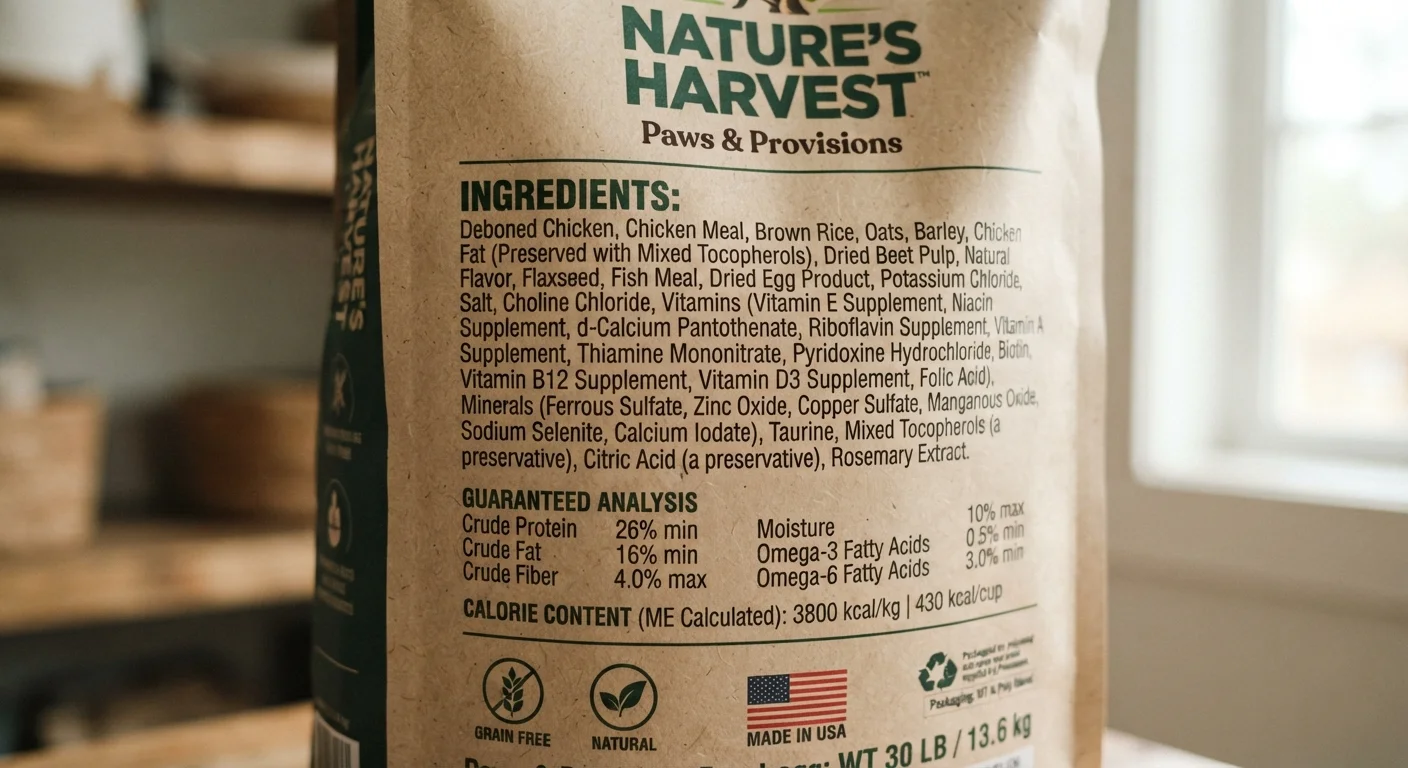
In the United States, the AAFCO requires that ingredients be listed in descending order by pre-cooking weight. This means the heaviest ingredient before processing appears first. Fresh chicken, for example, is roughly 70-75% water by weight - so it can appear at the top of a list even if its contribution of dry protein is modest after cooking. This does not make the food low-quality, but it does mean ingredient position alone is an incomplete signal.
Recognize Ingredient Splitting
Ingredient splitting occurs when a single component is divided into multiple sub-forms to reduce each sub-form's apparent weight. For example, a label might list ground corn, corn gluten meal, and corn bran as three separate entries. Individually, each falls lower on the list than a combined 'corn' ingredient would. This is legal and common, but it can make a carbohydrate-heavy food appear more protein-forward than it actually is. When you see multiple forms of the same ingredient, mentally combine them to estimate their true collective rank.
Decode Common Marketing Terms
Terms like premium, holistic, human-grade, and gourmet carry no standardized regulatory definition under AAFCO or FDA rules as applied to pet food. Natural does have a limited AAFCO definition - it generally prohibits synthetic ingredients - but it says nothing about nutritional quality or sourcing standards. Be equally cautious with front-of-pack claims like 'rich in protein' or 'supports immune health,' which are rarely accompanied by quantitative evidence on the label itself. For a broader look at how marketing language can mislead, see our article on decoding misleading product claims.
Identify the AAFCO Nutritional Adequacy Statement
The AAFCO nutritional adequacy statement is one of the most meaningful pieces of text on any pet food package. It will state either that the product was formulated to meet AAFCO nutrient profiles for a specific life stage, or that it was tested through feeding trials. Look for language specifying whether the food is appropriate for growth (puppies), maintenance (adults), all life stages, or is intended for supplemental or intermittent feeding only. A food labeled for 'all life stages' must meet the more demanding puppy nutrient profile. Foods intended for supplemental feeding should not be used as a sole diet.
Evaluate Preservatives and Additives
Preservatives are necessary in any shelf-stable food and are not inherently harmful. AAFCO and FDA regulate which preservatives are permitted. Synthetic preservatives such as BHA, BHT, and ethoxyquin are approved for use at specific levels. Natural alternatives like mixed tocopherols (vitamin E) and rosemary extract are also common but typically have shorter shelf lives. If a label lists a preservative you do not recognize, you can cross-reference it against the FDA's list of substances generally recognized as safe (GRAS) for animal feed. Artificial colors and flavors listed on pet food labels are generally added for human appeal, not canine preference.
Use the Full Label Holistically
No single element of a dog food label tells the whole story. Cross-reference the ingredient list with the guaranteed analysis panel for macronutrient ratios, and confirm the AAFCO statement matches your dog's life stage. If the ingredient list is the story's characters, the guaranteed analysis is its plot. Our companion guide explains what pet food labels are really telling you when you read the full nutrition panel together. For dogs with diagnosed health conditions, weight concerns, or unusual dietary needs, bring the label to a veterinarian rather than relying on label interpretation alone.
Grain-Free Labels Deserve Extra Scrutiny
The FDA has been investigating a potential link between grain-free diets - particularly those high in legumes, lentils, or potatoes - and dilated cardiomyopathy (DCM) in dogs. The research is ongoing and causation has not been established, but it is an active area of concern. See our overview of the grain-free and DCM investigation for a balanced breakdown of what is currently known.
Cross-Check the Guaranteed Analysis Panel
The ingredient list tells you what's in the food, but the guaranteed analysis panel tells you how much of each macronutrient is present. Use both together for a fuller picture. Our guide on what the guaranteed analysis panel actually tells you explains how to interpret crude protein, fat, and fiber figures accurately.
Labels Do Not Replace Veterinary Guidance
This article is general educational information about how to read dog food labels - it is not veterinary or dietary advice for your specific dog. Nutritional needs vary by breed, age, health status, and activity level. Always consult a licensed veterinarian or board-certified veterinary nutritionist before making significant changes to your dog's diet, especially if your dog has a health condition.
Putting It All Together
Reading a dog food ingredient list well is less about memorizing every ingredient name and more about knowing the structural rules that govern how labels are built. Ingredient order reflects pre-cooking weight, not post-digestion contribution. Marketing language on the front of a package reflects branding strategy, not regulatory standards. The AAFCO nutritional adequacy statement and the guaranteed analysis panel are the most objective tools available to you on any label.
If you want to go deeper on how product language can create misleading impressions across categories, the principles covered in our guide to interpreting product specifications objectively apply broadly beyond pet food. And for dogs on raw or non-conventional diets, our article on what the evidence currently supports for raw feeding provides a balanced look at what veterinary research shows.
This article is for general informational purposes only and does not constitute veterinary or dietary advice. Consult a licensed veterinarian for guidance specific to your dog's health and nutritional needs.