

Key Takeaways
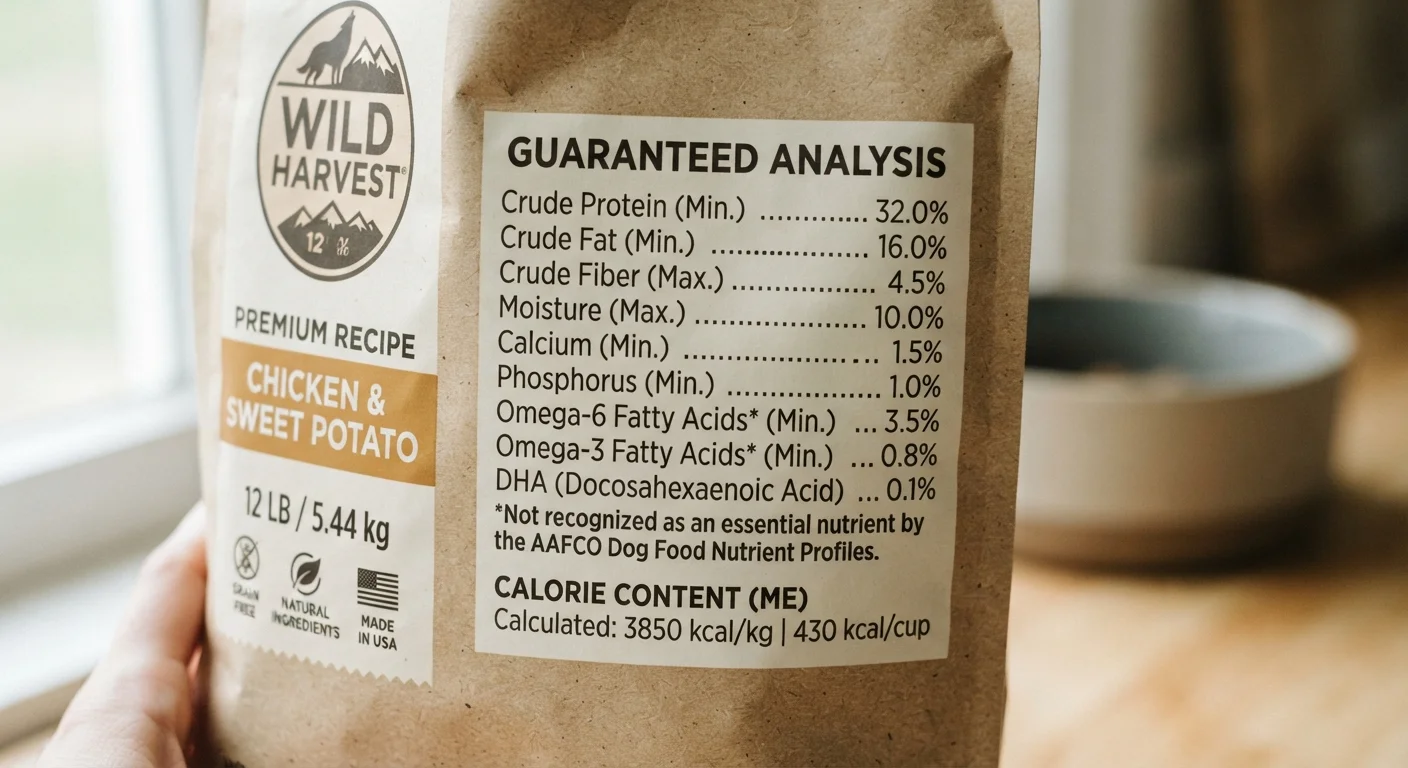
- The guaranteed analysis panel lists crude protein, crude fat, crude fiber, and moisture at minimum or maximum levels - not exact amounts.
- Values are reported as-fed, so comparing wet and dry foods requires converting to a dry matter basis.
- Crude protein and fat percentages indicate quantity, not the quality or digestibility of those nutrients.
- Fiber and moisture maximums are upper limits, not targets, and serve different roles in digestion.
- AAFCO nutritional adequacy statements - not the guaranteed analysis alone - confirm whether a food meets established dietary standards.
- Always consult a veterinarian to determine how guaranteed analysis figures apply to your specific pet's life stage and health needs.
Guaranteed Analysis Panel
The guaranteed analysis panel is a mandatory section on every US pet food label that lists minimum or maximum percentages for key nutrients - typically crude protein, crude fat, crude fiber, and moisture. It gives pet owners a standardized snapshot of a food's nutrient composition, though the word 'guaranteed' refers to regulatory minimums and maximums, not an exact measurement of what's inside every bag or can.
Guaranteed analysis values are expressed on an 'as-fed' basis, meaning they include the food's moisture content, which can significantly affect how nutrients compare across wet and dry formats.
Why the Guaranteed Analysis Panel Exists
Every commercial pet food sold in the United States is required by the Association of American Feed Control Officials (AAFCO) and state feed regulations to display a guaranteed analysis panel. The panel exists to give consumers a consistent, comparable nutritional snapshot across every brand and format - from premium refrigerated rolls to economy-priced dry kibble.
At minimum, the panel must display four values: crude protein (minimum), crude fat (minimum), crude fiber (maximum), and moisture (maximum). Some manufacturers voluntarily add figures for ash, omega fatty acids, taurine, or specific vitamins and minerals. The presence of these extras can be informative, but the core four are where most comparisons start.
Regulators use this panel as a compliance tool. If a product claims to be high-protein, the guaranteed analysis must reflect a protein minimum consistent with that claim. Understanding the regulatory purpose helps explain both what the panel can and cannot tell you as a consumer.
Breaking Down Each Nutrient Listed
Crude Protein (minimum): This figure estimates total nitrogen in the food and converts it to a protein equivalent. It tells you how much protein-type material is present as a floor - the actual amount may be higher. It says nothing about digestibility or the completeness of essential amino acids. Protein quality and digestibility are separate considerations that the panel cannot capture.
Crude Fat (minimum): Fat is similarly estimated using a solvent extraction method. The minimum tells you the lowest fat level you should expect. Fat density matters for energy content - foods higher in fat are more calorie-dense per gram, which is relevant for weight management.
Crude Fiber (maximum): Fiber is expressed as a maximum. This value covers insoluble fiber but may underestimate total dietary fiber, including fermentable (prebiotic) fibers that support gut health. A low fiber maximum does not necessarily mean a food is fiber-poor in the ways that matter most.
Moisture (maximum): Moisture is the water content ceiling. Wet foods routinely list 75-82% moisture; dry kibble typically shows 10-12%. This difference dramatically affects how other nutrient percentages appear, which is why direct comparisons between formats require a dry matter conversion.
78-82%
Typical moisture in wet/canned pet foods
AAFCO model regulations classify wet pet food by moisture content, which directly dilutes all as-fed nutrient percentages shown on the guaranteed analysis panel.
4
Minimum required nutrients on the panel
US regulations require crude protein, crude fat, crude fiber, and moisture to appear on every commercial pet food label sold domestically.
~36%
Dry matter protein from an 8% as-fed wet food
Converting an 8% as-fed crude protein figure (from a food with 78% moisture) to dry matter basis yields approximately 36% - a common illustration of why format matters when comparing labels.
Dry Matter Basis: The Key to Apples-to-Apples Comparisons
Because water dilutes every other nutrient percentage in a food, as-fed figures can be misleading when comparing a canned food to a dry food. A wet food listing 8% crude protein as-fed may actually deliver more protein per calorie than a dry food showing 26% - once moisture is removed from the math.
To convert to a dry matter basis, subtract the moisture percentage from 100 to get the dry matter percentage, then divide the nutrient's as-fed value by that dry matter figure and multiply by 100. For example: a wet food with 78% moisture has 22% dry matter. Its 8% as-fed crude protein becomes approximately 36% on a dry matter basis - well above many dry foods.
How to Do the Dry Matter Conversion
Subtract the food's moisture percentage from 100 to find the dry matter percentage. Then divide the nutrient's as-fed value by that dry matter figure and multiply by 100. Example: 8% crude protein ÷ 22% dry matter × 100 = ~36% dry matter protein. This simple math makes wet-to-dry comparisons meaningful.
This conversion is especially important when evaluating foods for cats, who obtain much of their hydration from food, or for pets with kidney or urinary conditions where moisture intake matters. Consult your veterinarian about the right format and nutrient targets for your pet's specific life stage and health status.
What the Guaranteed Analysis Cannot Tell You
The panel is a starting point, not a complete nutritional picture. Several critical factors fall outside its scope:
- Digestibility: Two foods can share identical crude protein percentages yet differ substantially in how much protein a pet actually absorbs. Digestibility data is rarely published on labels.
- Ingredient quality: The panel cannot distinguish whether protein comes from whole muscle meat or less digestible nitrogen sources. For that context, the ingredient list is essential - see our guide on reading pet food ingredient lists.
- Caloric density: Guaranteed analysis figures are not calorie counts. A food's metabolizable energy depends on the digestibility and ratio of all macronutrients combined.
- Micronutrients: Vitamins, minerals, and trace elements are generally not shown in the core panel. The AAFCO nutritional adequacy statement is a better indicator of whether these needs are met for a given life stage.
If your pet shows signs that their diet may not be fully meeting their needs - such as a dull coat, low energy, or irregular digestion - the guaranteed analysis is unlikely to explain why on its own. Learn what physical and behavioral signals may point to a nutritional gap, and bring those observations to your veterinarian.
This article provides general educational information about pet food labeling and is not a substitute for personalized veterinary nutrition advice. Consult a licensed veterinarian for guidance tailored to your individual pet's health, age, and dietary needs.