

Key Takeaways
- Dark patterns are intentional design choices built into checkout flows to increase spending.
- Pre-ticked boxes, fake urgency timers, and hidden opt-outs are among the most common tactics.
- Slowing down at checkout is the most effective defense against these techniques.
- Regulators in the U.S. and abroad are increasingly scrutinizing dark patterns as deceptive practices.
- Recognizing the pattern is the first step to not falling for it.
Dark Patterns
Dark patterns are user interface design techniques that nudge or trick people into doing things they didn't intend - like signing up for a subscription, paying for add-ons, or sharing more data than necessary. They are deliberate design choices, not accidents. The term was coined by UX designer Harry Brignull around 2010 and has since become widely studied by consumer protection researchers.
Regulators including the FTC and the EU's consumer protection bodies have begun treating certain dark patterns as potentially deceptive trade practices subject to enforcement action.
What Dark Patterns Look Like at Checkout
By the time you reach a checkout screen, a retailer has often already deployed several design techniques aimed at increasing your final bill. These aren't bugs - they're intentional friction points and nudges built by professional designers whose metrics include revenue per session.
The most widely documented checkout dark patterns include:
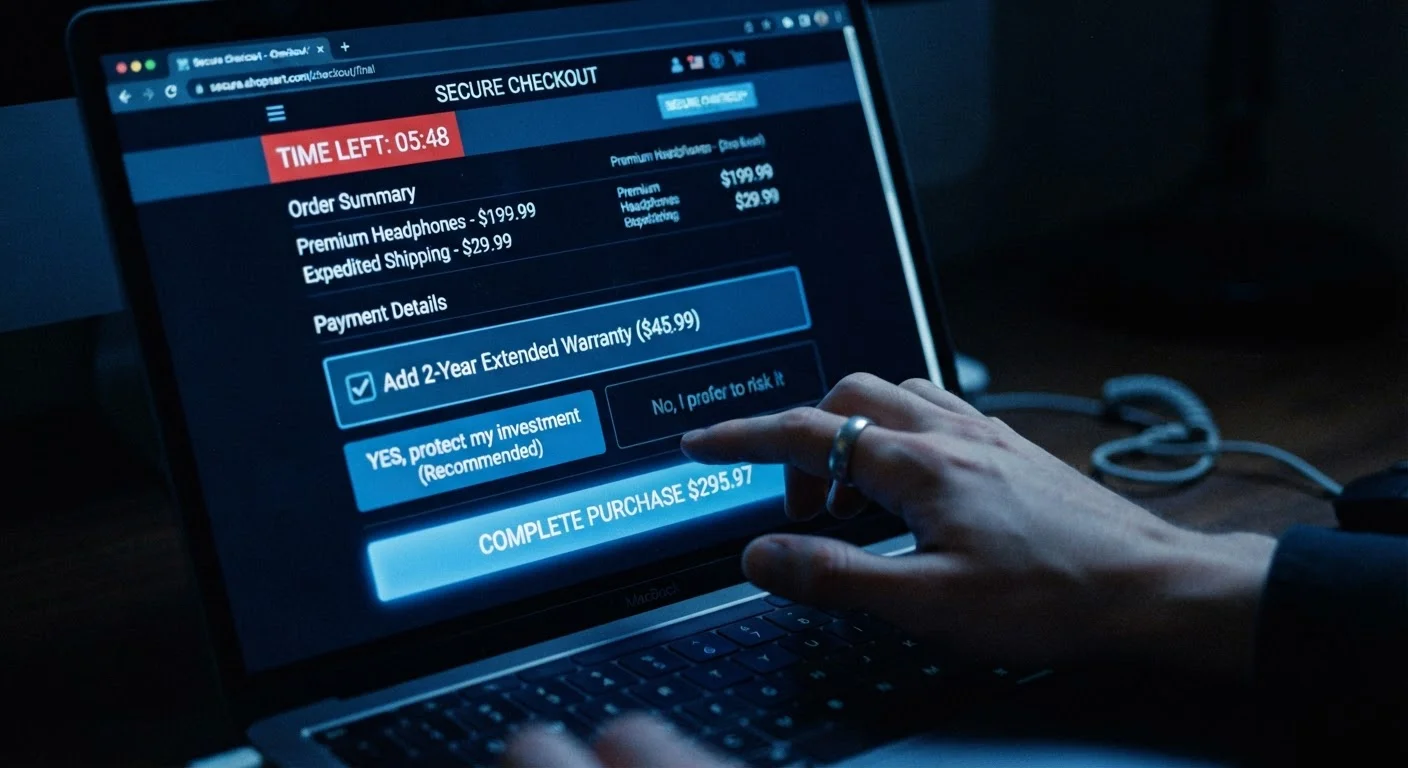
- Pre-ticked add-ons: Insurance, expedited shipping, or extended warranties that arrive already selected in a checkbox. You have to actively uncheck them to avoid the charge.
- Confusing opt-outs: Subscription opt-outs written in small text or framed as a double negative - "Uncheck this box if you do not wish to not receive..." - that make it genuinely difficult to understand what you're agreeing to.
- Fake countdown timers: Clocks that appear to show a price expiring in minutes, creating urgency. As explored in why urgency messaging clouds your judgment, this emotional pressure is a known driver of impulsive decisions.
- Hidden fees revealed late: Taxes, processing fees, or mandatory charges disclosed only on the final confirmation screen, after you've already invested time in the process.
Slow Down at the Final Step
The most effective counter to dark patterns is deliberate pacing. Before clicking any final 'Place Order' button, scroll back to the top of the checkout summary and read it fresh. This takes under a minute and is the single step most likely to catch unwanted additions before they become charges you need to dispute.
These patterns are effective precisely because checkout is a moment of cognitive fatigue - you've already made the decision to buy and want the process to be over. Designers exploit that impatience.
The Psychology Behind Why They Work
Dark patterns aren't random. They exploit well-documented cognitive tendencies. Default bias - the human tendency to stick with pre-selected options - is what makes pre-ticked boxes so effective. Changing a default requires active effort, and most people don't expend it.
Loss aversion plays a role too. When a countdown timer suggests a price is about to rise, the fear of losing a deal often overrides careful evaluation. This connects directly to anchoring effects - the original "higher" price shown in strikethrough format makes the current price feel like a bargain even when it isn't. Anchoring and pricing psychology operates throughout the shopping funnel, not just at checkout.
~29%
Of reviewed shopping sites used dark patterns
A 2022 FTC staff report examining online shopping found dark patterns present in roughly 29% of the 642 websites reviewed.
200+
Dark pattern types documented by researchers
Academic and UX research communities have catalogued over 200 distinct dark pattern variants across digital interfaces as of recent surveys.
Understanding that these responses are normal - and deliberately triggered - removes some of their power. When you recognize the mechanism, you can consciously override it.
A Practical Checkout Defense Strategy
Awareness alone isn't enough if you're moving quickly. A few concrete habits make a measurable difference:
- Treat each checkout screen as a new document to read. Don't click "Continue" until you've scanned every line, including fine print near buttons.
- Audit your cart total at each step. If the number changes between screens without explanation, something was added - find it before proceeding.
- Look for the quiet opt-outs. Subscription offers and mailing list sign-ups are frequently buried in the billing address or payment section, not where you'd expect them.
- Verify order summaries against what you intended to buy. Before entering payment information, confirm the item list matches your expectations. A separate review of the return policy at this stage can also protect you if something goes wrong.
If a checkout flow feels confusing or manipulative, that friction may be intentional. Slowing down is the correct response, not speeding up.
Free Shipping Thresholds Can Also Obscure Costs
Minimum order requirements tied to 'free' shipping offers can quietly encourage spending beyond your intent - a related dynamic worth understanding. See when 'free shipping' isn't really free for a fuller picture of how shipping costs are structured and presented.
What Regulators Are Doing - and What Remains Your Responsibility
Regulatory pressure on dark patterns has increased. The FTC has issued guidance and brought enforcement actions against companies using deceptive subscription enrollment practices. The EU's Digital Services Act and consumer protection frameworks name specific dark pattern types as prohibited. Several U.S. states, including California, have enacted or are advancing legislation targeting manipulative design.
But enforcement is uneven and slow relative to how fast new patterns emerge. The practical reality is that most shoppers will encounter dark patterns long before any regulatory action addresses them. Self-protection remains the most reliable near-term defense.
If you notice suspicious charges after a checkout, documenting what you saw and disputing the charge with your card issuer is a legitimate recourse. You can also submit complaints to the FTC, which uses complaint data to identify enforcement priorities.
Being a more deliberate shopper extends beyond checkout. Warning signs in product listings and pre-purchase thinking habits are equally important layers of consumer awareness. Dark patterns are one part of a broader ecosystem of techniques designed to reduce your deliberation - knowing they exist is a meaningful advantage.