

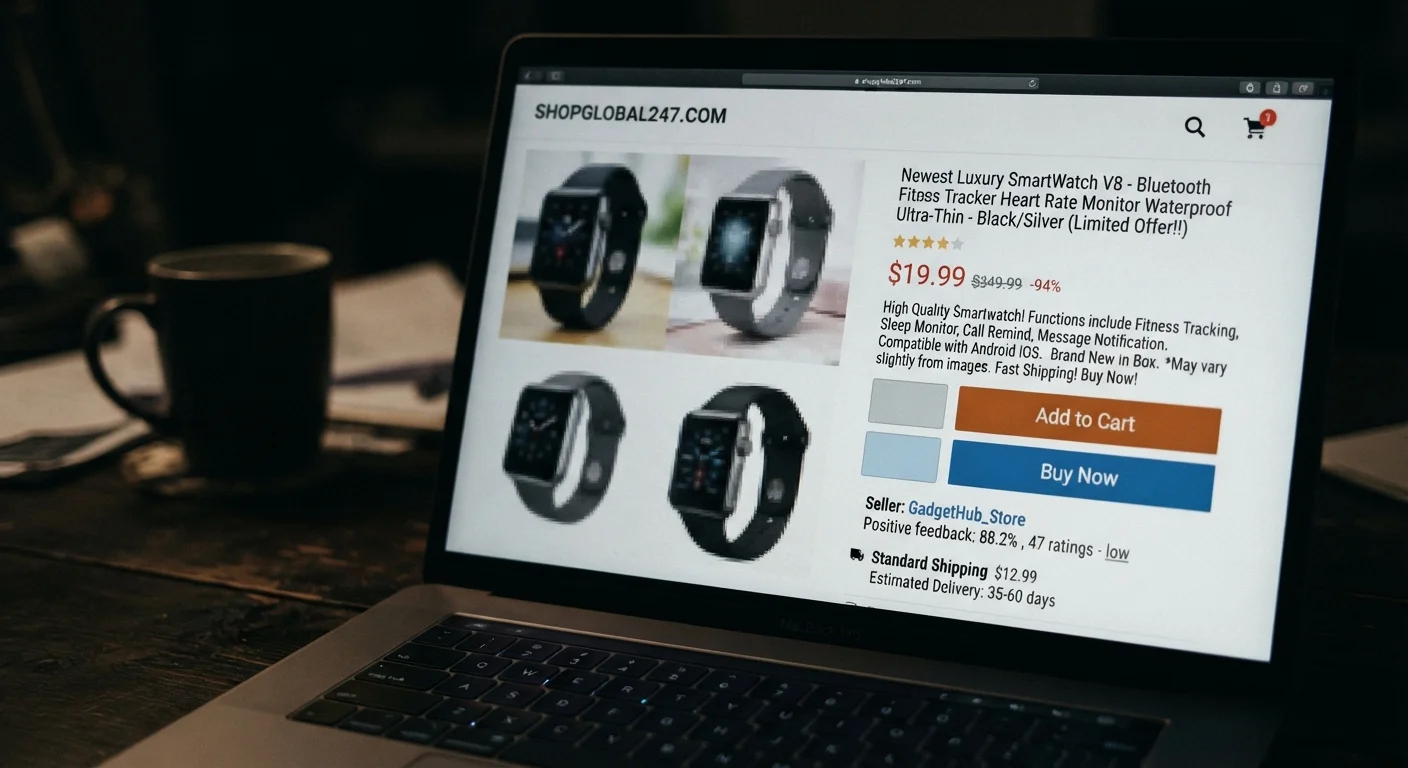
Key Takeaways
- Generic stock photos and missing brand details are among the clearest signs a listing may be unreliable.
- Vague or incomplete specifications often indicate a seller is hiding quality limitations.
- Prices far below comparable items warrant extra scrutiny, not automatic excitement.
- Review patterns - not just scores - reveal whether feedback is genuine or manipulated.
- Seller identity and return policy details are critical pieces of information often buried or omitted.
Summary
18 items · 15-30 minutes
Why Listings Mislead - and How to Catch It
Online product listings are controlled entirely by the seller. That means what you see - photos, descriptions, specifications, reviews - is a curated presentation, not a neutral record. Most sellers are straightforward, but enough are not that a quick audit before purchase is worth the time.
The warning signs below fall into patterns. A single red flag might mean nothing; several appearing together on the same listing should prompt real pause. Use this checklist before committing to any purchase, especially from sellers you haven't bought from before.
For a deeper look at what numbers in a spec sheet actually reveal, see how to interpret product specifications. And if you're evaluating items you can't inspect physically, this pre-purchase checklist covers dimensions, materials, and return options in detail.
Images and Visual Presentation
Product Description and Specifications
Seller and Brand Identity
Pricing and Hidden Costs
Reviews and Ratings
What to Do When You Spot the Signals
Finding one or more of these warning signs doesn't mean you must walk away - it means you need more information before you buy. Start by searching the product model number or description independently to see if the same item appears under different brand names or at wildly different prices elsewhere. That kind of price dispersion often points to a generic product being repositioned under multiple labels.
Don't Rely on the Listing Alone
Sellers control every element of their own product pages. A polished layout, confident language, and a high star rating can all be constructed independently of actual product quality. Make it a habit to verify at least two or three claims in the listing against external sources before purchasing, especially for higher-value items.
Check the seller's overall history, not just the listing. Marketplace platforms typically show seller ratings and join dates - a seller with hundreds of listings but only a few months of history and a small number of reviews is worth treating cautiously.
Review the return policy before adding anything to your cart. Restocking fees and narrow return windows can turn a disappointing purchase into a costly one. And if the total price seems suspiciously attractive, read about hidden costs that inflate a product's true price - shipping, handling, and required accessories often close the gap quickly.
For guidance on evaluating reviews critically, see why star ratings don't always reflect quality. And if you're concerned the product might not be what it claims to be, understanding counterfeit and gray market goods explains the real risks involved.
Sponsored Reviews Can Look Like Independent Ones
Paid placements and affiliate-driven content are increasingly hard to distinguish from genuine editorial coverage. Before trusting a review source you haven't used before, check whether it discloses commercial relationships. Understanding the difference between sponsored and independent reviews is a practical skill worth developing before you start researching any significant purchase.