

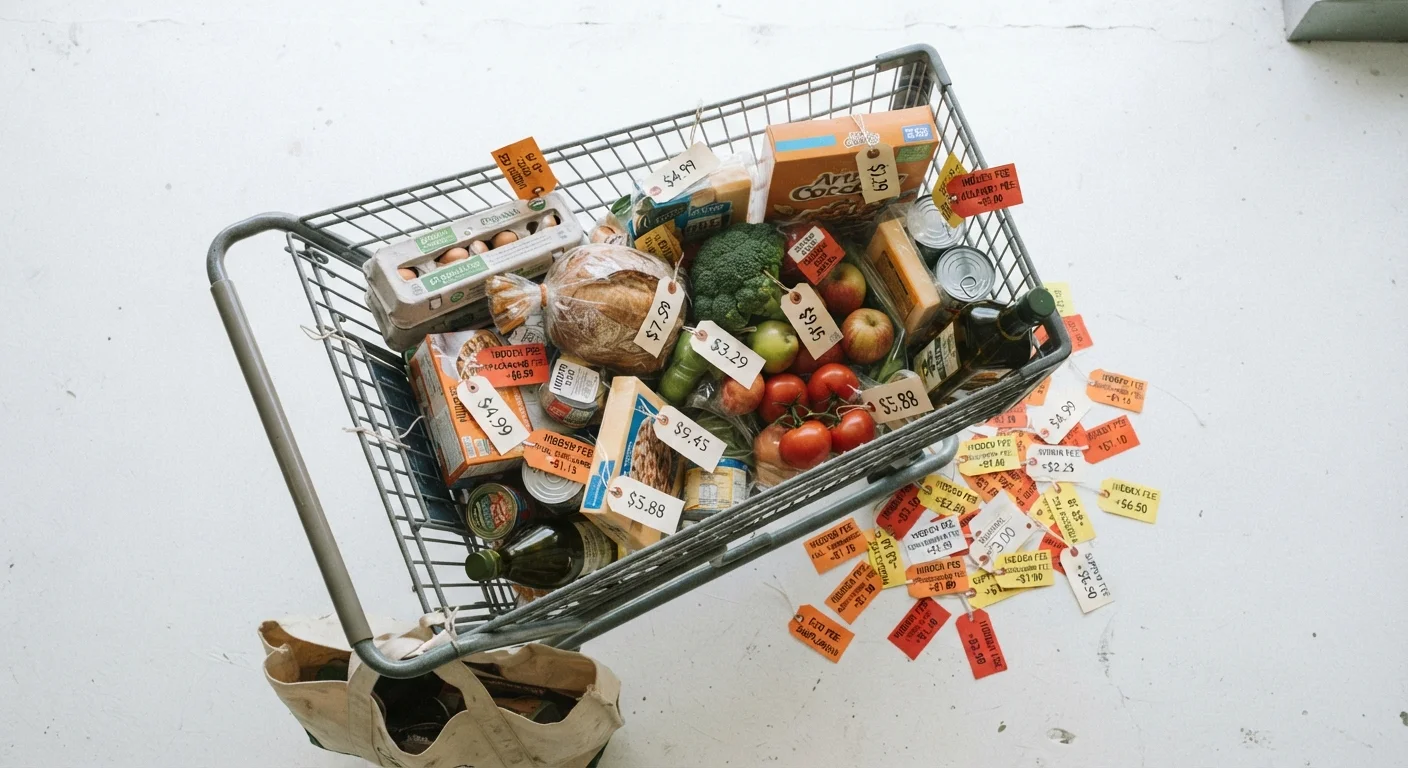
Key Takeaways
- The advertised price of a product rarely reflects what you'll actually pay in total.
- Shipping, subscriptions, consumables, and disposal fees are among the most common hidden costs.
- Comparing total cost of ownership - not just sticker price - leads to smarter purchasing decisions.
- Some hidden costs are disclosed in fine print; others only become apparent after purchase.
- Asking the right questions before buying can surface costs that retailers don't volunteer upfront.
Hidden Costs
Hidden costs are fees, charges, or ongoing expenses that aren't included in a product's advertised price but add to what you ultimately pay. They can appear at checkout, after purchase, or over the life of a product. Common forms include shipping fees, mandatory subscriptions, installation charges, and disposal or recycling fees.
In consumer economics, the full price of a purchase is sometimes referred to as 'total cost of ownership' (TCO) - a framework that accounts for acquisition price plus all downstream costs over a product's useful life.
Why the Advertised Price Is Just the Starting Point
Retailers compete fiercely on the numbers consumers see first - the headline price on a product listing or advertisement. But that number is often engineered to look as low as possible, while legitimate additional costs are disclosed elsewhere, in smaller print, or not until checkout. The result is that many purchases end up costing noticeably more than the shopper anticipated.
This isn't always deliberate deception. Some costs are genuinely hard to predict at the time of listing - shipping varies by location, for instance. But others are structural features of a pricing model that benefits the seller. Understanding the difference between the two helps you shop more defensively.
For a broader look at how low prices can obscure long-term expenses, see why the cheapest option often costs the most over time.
47%
Shoppers who abandoned carts due to unexpected fees
According to the Baymard Institute's large-scale checkout usability research, extra costs such as shipping, taxes, and fees are the leading reason shoppers abandon online carts.
$219
Average annual U.S. subscription spend per consumer
Research from C+R Research found that consumers frequently underestimate their total subscription spending, often by a significant margin.
2-3x
Lifetime cost multiple over sticker price for some product categories
Consumer advocates and product analysts have noted that for consumable-dependent products - printers, razors, capsule coffee makers - the total ownership cost over two to three years can be two to three times the purchase price.
The Most Common Hidden Costs to Watch For
Knowing which cost categories to check for puts you ahead of most shoppers. Here are the ones that catch consumers most often:
- Shipping and handling fees: Even when listed as 'free,' shipping costs are frequently baked into item prices or tied to minimum order thresholds. When 'free shipping' isn't really free explains the mechanics in detail.
- Consumables and replacement parts: Printers, razors, coffee machines, and water filters all follow a model where the hardware is inexpensive but the ongoing supplies are not. Calculate the annual cost of consumables before comparing hardware prices.
- Mandatory subscriptions: Some products - smart home devices, fitness equipment, security cameras - require a paid service plan to unlock their core features. These recurring charges can exceed the device cost within a year or two.
- Installation and setup fees: Furniture, appliances, and electronics sometimes carry separate charges for delivery-and-setup service, which may not be optional depending on the item's size or complexity.
- Disposal and recycling fees: Certain categories carry statutory or retailer-imposed fees for end-of-life disposal. These are common with electronics and large appliances and vary by state.
- Return shipping costs: A 'free returns' policy often applies only to certain item types or conditions. Returning a large or heavy item can be expensive if the policy doesn't cover it.
Do a Quick 'True Price' Check at Checkout
Before completing any online purchase, screenshot or note the product's listed price, then compare it to the final checkout total. If there's a meaningful gap, identify what added to it - shipping, fees, service plans, or tax - and decide whether those additions change your assessment of the deal. This two-minute habit catches most hidden costs before they become post-purchase surprises.
Red Flags in Product Listings That Signal Hidden Costs Ahead
Some listings contain signals worth examining before you add to cart. Vague pricing language such as 'starting at' or 'as low as' almost always means the price you see is not the price most buyers will pay. Similarly, products described as 'compatible with' a service plan or 'subscription required for full functionality' are disclosing an ongoing cost in the most understated way possible.
Missing or incomplete specification information can also be a signal - not just of quality concerns, but of a product that may require proprietary accessories or consumables sold separately. Signals that a product listing may not be what it seems covers the broader pattern of low-quality or misleading listings.
Before purchasing, it's also worth thinking through the questions that are easy to overlook. Questions shoppers forget to ask before buying addresses warranty terms, return windows, and other details that often determine a purchase's real value.
Building a True-Price Habit Before You Buy
The most practical defence against hidden costs is a short mental checklist applied before any significant purchase. Ask: What does delivery actually cost for my location? Does this product require a subscription, proprietary consumables, or a service plan? What does returning it cost if it doesn't work out? Are there disposal fees I'll encounter at end of life?
For product categories where usage volume matters - bulk staples, paper goods, cleaning supplies - buying in bulk: when it saves money and when it doesn't adds another layer of cost analysis worth reading before committing to larger quantities.
The Smart Budget Buying hub and Product Research Tips hub both offer frameworks for evaluating purchases more systematically - useful starting points for shoppers who want to build these habits across categories.
None of this requires becoming a suspicious shopper who second-guesses every transaction. It simply means treating the advertised price as an opening number rather than a final answer - and taking two minutes to verify what the full number actually is before you commit.
“The true price of a product is what you pay over its entire useful life - not what's on the tag. Smart shoppers learn to read past the listing.”
— Consumer Financial Protection Bureau, U.S. federal consumer financial protection agency