Key Takeaways
- Bulk buying saves money on non-perishables and high-turnover household items you use consistently.
- Perishables, trend-sensitive items, and products with short shelf lives rarely justify bulk quantities.
- The unit price - not the sticker price - determines whether a bulk deal is actually cheaper.
- Storage space, cash flow, and household size all affect whether bulk buying is practical for you.
Lower cost per unit on stable items
Bulk packages of non-perishables reliably reduce the per-unit cost, sometimes by 20-40% compared to standard retail packaging. The savings are most durable when the product has a long shelf life and consistent demand.
Fewer shopping trips over time
Stocking up reduces the frequency of restocking runs, which saves both time and the small incidental costs - fuel, parking, impulse purchases - that accumulate across multiple trips.
Protection against price increases
Buying a larger supply at today's price insulates you from near-term price increases on goods subject to inflation or supply fluctuation.
Reduces risk of running out
For household essentials, having a generous supply on hand eliminates emergency last-minute purchases, which often happen at less competitive prices.
Waste risk on perishables is high
Fresh or short-dated goods bought in bulk frequently expire before full consumption, turning the apparent unit-price saving into an actual net loss once wasted product is counted.
Large upfront cash commitment
Bulk purchases require spending significantly more money at once, which can strain household cash flow - particularly when multiple categories are bought in the same shopping trip.
Storage requirements are often underestimated
Bulk quantities take up meaningful physical space. Without adequate storage, items may be stored improperly, leading to spoilage, damage, or items simply being forgotten.
Locked in if product disappoints or changes
A formula change, quality issue, or simple change in preference leaves you holding a large quantity of a product you no longer want - with limited options to recover value.
Unit price isn't always lower in bulk
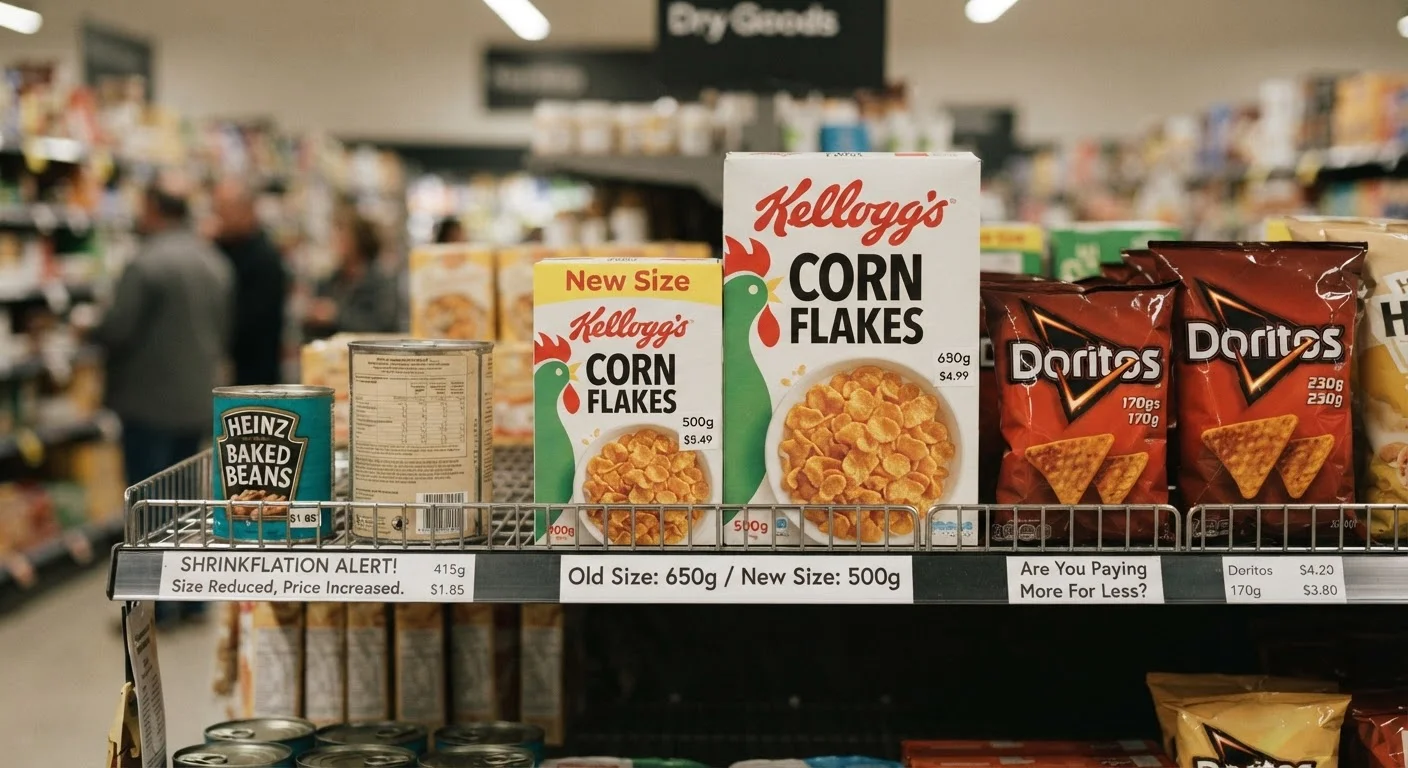
Warehouse clubs and bulk formats don't automatically offer the lowest unit price on every item. Without checking standard retail pricing, shoppers may assume savings that aren't actually there.
Our Verdict
Bulk buying is a genuinely effective cost-reduction strategy when applied to the right categories - stable, non-perishable goods you consume at a predictable rate. It becomes a money-losing habit when shoppers apply it indiscriminately to perishables, novelty items, or products that may change before they're used up. The savings are real, but so are the pitfalls.
Households with adequate storage, consistent consumption patterns, and the discipline to compare unit prices before loading up the cart.
What Bulk Buying Actually Promises
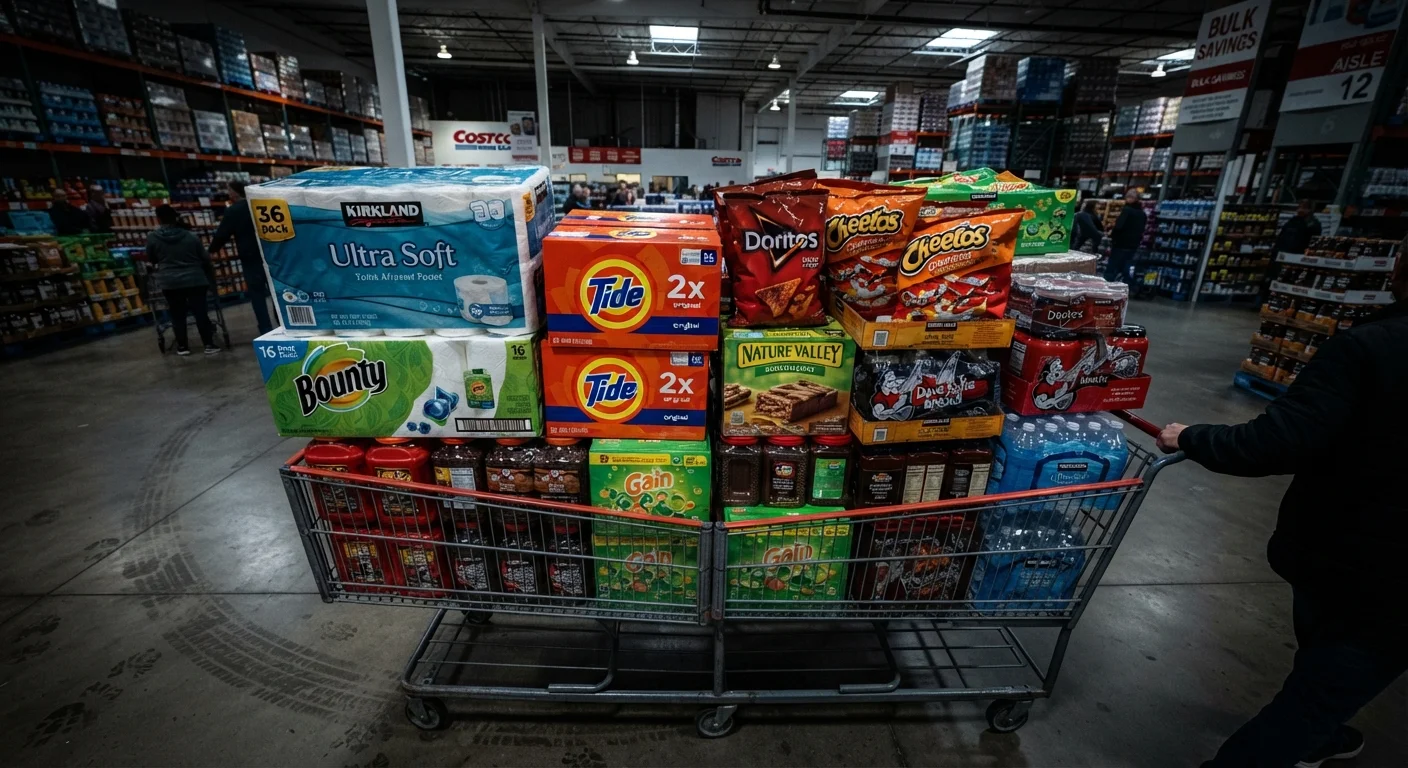
The premise is straightforward: buying more units at once lowers the cost per unit. Warehouse clubs and large-format retailers have built entire business models around this logic, and for specific product categories, the math genuinely holds up.
But bulk buying carries an implicit assumption - that you'll use everything you buy before it expires, degrades, or becomes irrelevant. When that assumption breaks down, the apparent discount evaporates. Understanding where bulk buying works requires separating the unit price savings from the total purchase outcome.
The unit price is the single most useful number for evaluating any bulk purchase. If a 48-count package costs $12 and a 12-count costs $4, the bulk price per unit is $0.25 versus $0.33 - a real saving. But only if you use all 48.
When Bulk Buying Works in Your Favor
Lower cost per unit on stable items
Bulk packages of non-perishables reliably reduce the per-unit cost, sometimes by 20-40% compared to standard retail packaging. The savings are most durable when the product has a long shelf life and consistent demand.
Fewer shopping trips over time
Stocking up reduces the frequency of restocking runs, which saves both time and the small incidental costs - fuel, parking, impulse purchases - that accumulate across multiple trips.
Protection against price increases
Buying a larger supply at today's price insulates you from near-term price increases on goods subject to inflation or supply fluctuation.
Reduces risk of running out
For household essentials, having a generous supply on hand eliminates emergency last-minute purchases, which often happen at less competitive prices.
Bulk buying consistently pays off in a handful of well-defined situations. The common thread: predictable consumption, long shelf life, and no meaningful risk that the product will go unused or become obsolete.
- Non-perishable household staples - paper products, laundry detergent, dish soap, and cleaning supplies have indefinite or very long shelf lives and consistent demand in almost any household.
- Pantry basics with long shelf life - dried pasta, canned goods, rice, and similar items rarely go bad within a normal buying cycle and are consumed regularly enough to justify larger quantities.
- Items you know you'll use - if you go through a particular product weekly, buying a six-month supply upfront removes the risk of waste entirely.
Timing can amplify bulk savings further. Pairing a bulk purchase with a sale cycle - explored in more depth in off-season buying strategy - can compound the discount meaningfully.
When Bulk Buying Costs You More
Waste risk on perishables is high
Fresh or short-dated goods bought in bulk frequently expire before full consumption, turning the apparent unit-price saving into an actual net loss once wasted product is counted.
Large upfront cash commitment
Bulk purchases require spending significantly more money at once, which can strain household cash flow - particularly when multiple categories are bought in the same shopping trip.
Storage requirements are often underestimated
Bulk quantities take up meaningful physical space. Without adequate storage, items may be stored improperly, leading to spoilage, damage, or items simply being forgotten.
Locked in if product disappoints or changes
A formula change, quality issue, or simple change in preference leaves you holding a large quantity of a product you no longer want - with limited options to recover value.
Unit price isn't always lower in bulk
Warehouse clubs and bulk formats don't automatically offer the lowest unit price on every item. Without checking standard retail pricing, shoppers may assume savings that aren't actually there.
The scenarios where bulk buying quietly loses money are less obvious - which is precisely why they catch shoppers off guard. Several patterns reliably undermine the savings case:
- Perishables and short-dated goods - produce, dairy, bread, and fresh proteins have hard expiration timelines. Unless your household consumption rate is high enough to clear inventory in time, waste negates the unit price savings.
- Products you're trying for the first time - committing to a 90-count supply of something you've never used is a significant risk. If you dislike it or it doesn't work as expected, you're stuck with the remainder.
- Items sensitive to formula or design changes - manufacturers periodically change recipes, formulations, or product designs. Buying a year's supply locks you into the current version regardless of what changes.
It's also worth noting that bulk buying often requires large upfront cash outlay. Even when the unit economics are favorable, tying up household cash in inventory has an opportunity cost - money committed to a warehouse trip isn't available for other needs. See how hidden costs inflate apparent deals for a broader look at this dynamic.
The Practical Checklist Before You Buy in Bulk
Store Brands in Bulk: A Double Opportunity
Warehouse clubs carry a significant proportion of store-brand or private-label products, which can amplify the savings case. Research on store-brand versus name-brand quality suggests the gap is smaller than many shoppers assume - particularly for pantry staples, cleaning supplies, and paper goods. See what the research shows about store brands for more context. Pairing private-label selection with bulk quantities compounds the per-unit cost advantage - though the same rules about shelf life and consumption rate still apply.
Before committing to any large-quantity purchase, running through a short set of questions significantly improves the odds that the purchase actually delivers value. Consider the following:
- What is the unit price? Compare it explicitly against the standard package size at another store - warehouse pricing isn't always cheaper per unit.
- What is the realistic shelf life? Factor in not just the printed expiration date, but how quickly your household actually goes through the item.
- Do you have adequate storage? Bulk quantities require physical space. Cramped storage leads to forgotten inventory, spillage, and waste.
- Is this a product you've used before and will continue to use? Novelty items and impulse buys are particularly poor candidates for bulk quantities.
- What's the return policy? Some warehouse retailers offer strong return windows - a factor worth checking before committing. The questions shoppers forget to ask often include return terms.
Applying the price-per-use framework alongside unit price analysis gives a more complete picture - especially for household goods that get used over months rather than days.
~$65B
Annual U.S. warehouse club retail sales
U.S. warehouse club and supercenter formats represent tens of billions in annual consumer spending, reflecting widespread adoption of bulk-buying as a household strategy.
~30-40%
Typical unit-price reduction on non-perishables
Consumer price analyses of warehouse clubs versus standard grocery stores suggest non-perishable staples are commonly 30-40% cheaper per unit - though category and region vary.
~$1,500
Estimated annual food waste per U.S. household
The USDA has estimated that U.S. households waste a significant portion of the food they purchase, a dynamic that bulk buying of perishables can worsen if consumption rates don't match purchase volume.