Key Takeaways
- Total cost of ownership includes purchase price, maintenance, replacement, and energy use - not just upfront price.
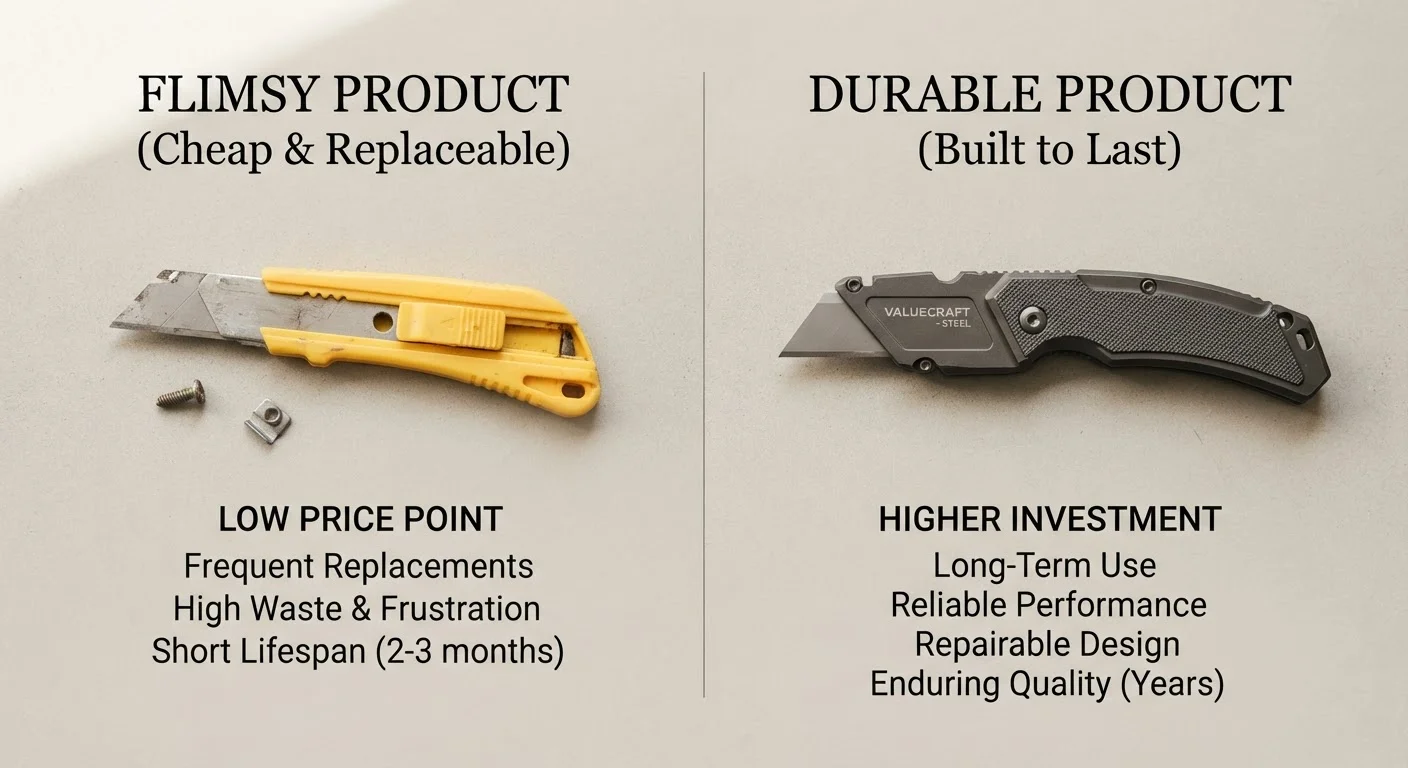
- Cheap items that fail quickly often cost more in repeat purchases than one durable alternative.
- Applying a price-per-use lens reframes what 'affordable' actually means for everyday items.
- Warranties, energy ratings, and material quality are reliable signals of long-term value.
- Not every cheap product is a bad deal - context and usage frequency matter significantly.
The Gap Between Sticker Price and True Cost
Every purchase has a visible number - the price tag - and a less visible one: the total cost of ownership, or TCO. TCO accounts for everything you'll spend on a product from purchase to disposal: the upfront cost, operating expenses, maintenance, repairs, and eventual replacement. For many everyday items, the gap between these two numbers is surprisingly wide.
This isn't a niche concept from corporate accounting. It applies equally to a pair of work boots, a washing machine, or a set of kitchen knives. When shoppers focus exclusively on the sticker price, they're making decisions with incomplete information - and that incomplete picture regularly leads to spending more, not less.
Low Price Is Not the Same as Good Value
A product's sticker price tells you only one thing: what you pay to walk out the door. Total cost of ownership - the full expense over a product's useful life - is what actually determines value. Skipping this calculation is one of the most common and costly shopping mistakes American consumers make.
Understanding where this pattern comes from - and where it catches even careful shoppers off guard - is the first step toward breaking it. The mistakes below represent the most common ways it plays out in real purchasing decisions.
Common Mistakes That Make Cheap Purchases Expensive
These errors show up across every product category, from everyday household items to major purchases like appliances and vehicles. Recognizing them in advance is far less costly than learning them through experience.
Comparing only the upfront purchase price when choosing between two similar products.
Why it happens: Purchase price is the most visible number in any shopping decision. Costs that come later - repairs, energy consumption, replacement - are invisible at the point of sale.
Replacing cheap items repeatedly instead of investing once in a durable alternative.
Why it happens: Budget constraints feel most urgent in the moment. It's psychologically easier to spend $15 now than $60 now, even if the $60 item lasts five times as long.
Ignoring energy efficiency ratings on appliances and electronics in favor of a lower purchase price.
Why it happens: Energy costs are diffuse - they show up on a utility bill weeks later and are rarely mentally connected back to a specific appliance purchase.
Dismissing warranty terms and return policies as fine print that doesn't matter.
Why it happens: Shoppers are often in decision-closing mode at checkout and don't want to slow down to read documentation. Warranty length feels abstract until something breaks.
Assuming that buying cheap is always the wrong call, leading to overspending on quality you don't need.
Why it happens: Once people learn about total cost of ownership, they sometimes overcorrect and spend more than necessary on items they'll rarely use.
For a specific example of how these dynamics play out at scale, our guide to the true cost of owning a car in America breaks down how purchase price compares to insurance, fuel, maintenance, and depreciation over time. The same logic applies to far smaller decisions.
Building a Smarter Buying Framework
The goal isn't to always buy the most expensive option - it's to buy the option with the lowest total cost relative to your actual needs. A few practical habits make this much easier:
- Estimate lifespan before purchase. Manufacturer specs, consumer review patterns, and material quality are reasonable proxies when you can't test an item yourself.
- Factor in operating costs. For anything with ongoing expenses - energy use, consumables, subscription requirements - add those to your comparison math. Our guide to hidden costs covers the most frequently overlooked ones.
- Use the price-per-use lens. Divide the total anticipated cost by the number of times you'll realistically use the item. For high-frequency purchases, small quality improvements often pay off quickly.
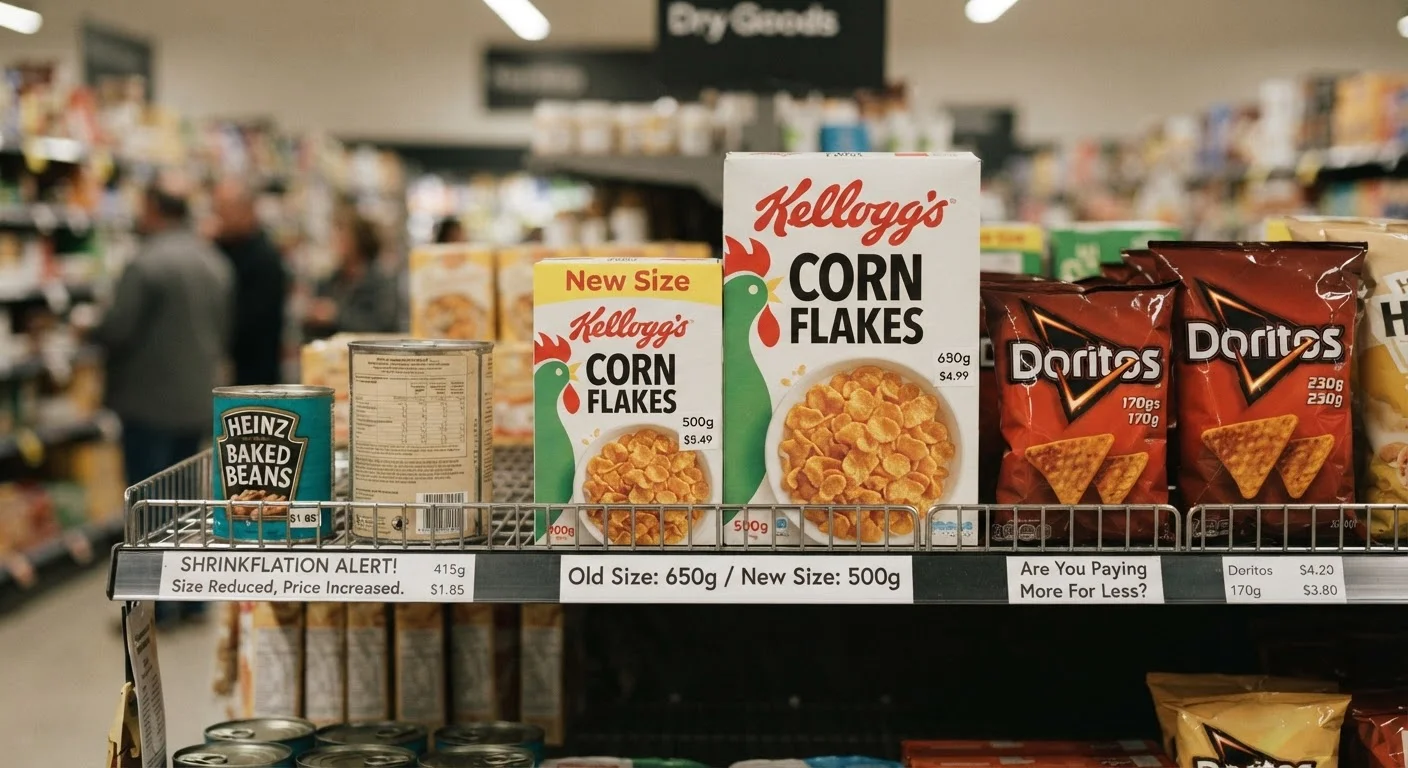
- Check unit price for consumables. On store shelves, unit price is the fastest way to compare true cost across different package sizes.
None of this requires complex math. It requires one extra step: asking not just what something costs today, but what it will cost you over the time you own it.
3-5x
Replacement cost multiplier for low-quality goods
Consumer product research consistently finds that replacing a cheap item two to four times negates any upfront savings compared to a single durable purchase.
$150-$300
Estimated annual energy cost difference between efficient and inefficient appliances
According to the U.S. Department of Energy, the difference in annual operating costs between an energy-efficient and a standard appliance can reach several hundred dollars depending on the product category and usage.
This article is for general informational purposes only and does not constitute financial or purchasing advice tailored to your individual circumstances. Consult appropriate professionals for major financial decisions.