

Key Takeaways
- A high star rating alone is not reliable evidence of product quality without examining the volume and content of reviews.
- Fake, incentivized, and review-gated feedback are documented problems on major retail platforms.
- Rating distribution - the breakdown of 1- through 5-star scores - often reveals more than the average alone.
- Small sample sizes can produce artificially high or low scores that don't reflect broad consumer experience.
- Written reviews with specific detail are generally more informative than the numeric score above them.
Star Rating Inflation
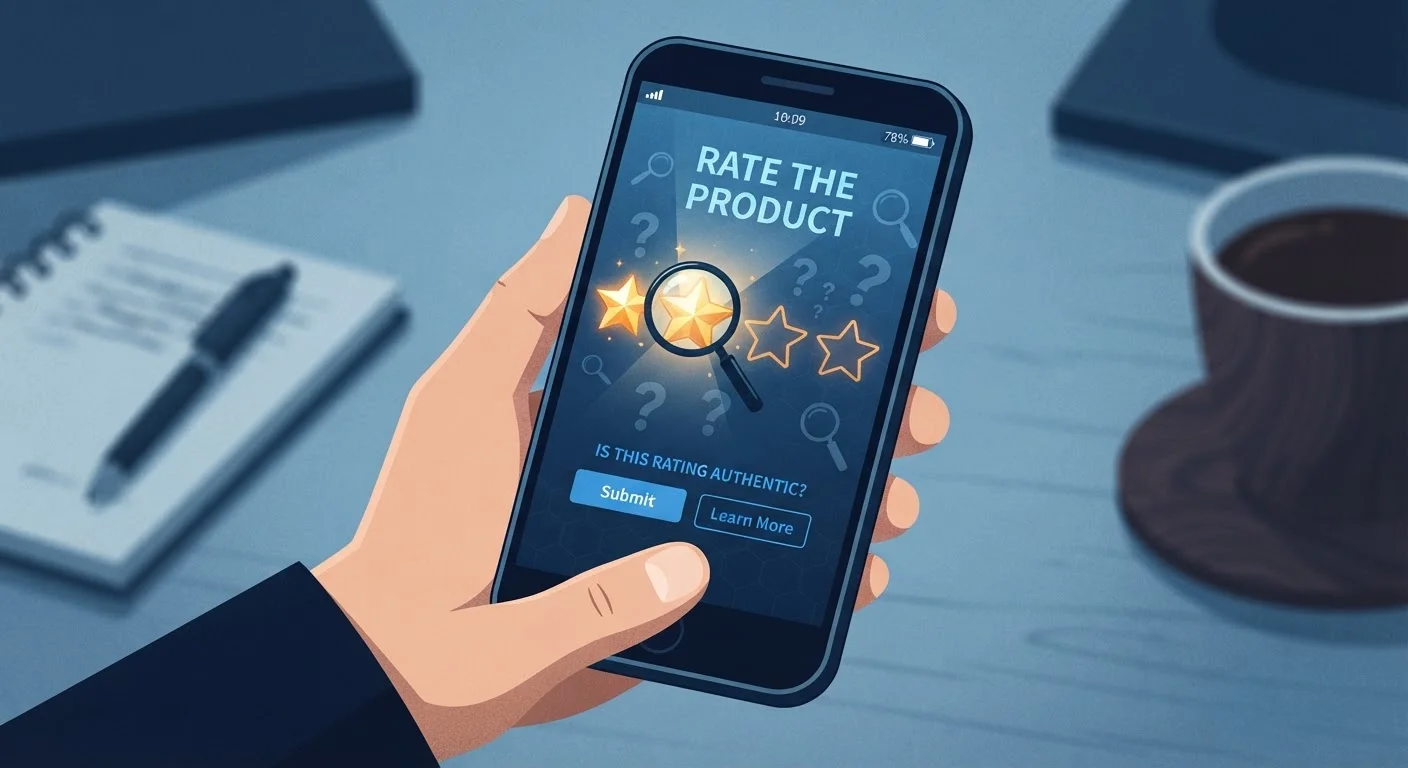
Star rating inflation occurs when a product's aggregate score - the number of stars displayed on a retail or review platform - is higher than its actual quality warrants. This can happen through manufactured reviews, incentivized feedback, rating manipulation, or simply because very few people have left scores. The result is a number that looks authoritative but reflects something other than genuine consumer experience.
Platforms typically display a Bayesian average or weighted mean that blends actual reviews with a prior estimate, meaning a product with only a handful of reviews can display a deceptively high score even before real buyers weigh in.
What Star Ratings Actually Measure
When you see 4.5 stars beneath a product name, the number feels like a shortcut to confidence. In reality, it measures something narrower: the average of submitted numerical scores on that particular platform, at that particular moment. It says nothing about who submitted those scores, how many there are, or whether those reviewers had any meaningful experience with the product.
Rating systems were designed to aggregate consumer sentiment efficiently. That goal is legitimate - but the infrastructure has been stress-tested by bad actors, platform incentives, and statistical quirks that make the displayed number far less reliable than it appears. Understanding what sits behind that score is the first step toward using it intelligently.
For a broader look at how review credibility works, see what separates credible reviews from manufactured ones.
The Three Biggest Reasons Ratings Mislead
1. Fake and incentivized reviews. Paid review schemes - where sellers compensate buyers in exchange for positive feedback - are a documented problem across major retail platforms. Even when platforms crack down, the inflated scores left behind often remain visible. The Federal Trade Commission has taken enforcement action against sellers and review brokers for deceptive practices, but the scale of the problem means many manipulated ratings persist in the marketplace.
2. Review gating. Some sellers invite only customers who signal satisfaction to leave a review, while quietly discouraging or ignoring unhappy buyers. The result is a pool of feedback that skews positive not because the product is genuinely good, but because the negative voices were never asked to speak. This practice violates the policies of several major platforms, but enforcement is inconsistent.
3. Small sample sizes. A product with 11 reviews and a 4.7-star average looks more impressive than a product with 3,000 reviews and a 4.2-star average - even though the latter's score is almost certainly more representative of actual consumer experience. A handful of enthusiastic early buyers, friends of the seller, or incentivized testers can easily push a low-review-count product to the top of search results.
42%
Share of Amazon reviews flagged as suspicious
A 2021 analysis by Which?, a UK consumer organization, found that approximately 42% of reviews sampled across certain product categories showed markers of inauthenticity - though figures vary by category and platform.
~50+
Reviews needed for a statistically meaningful average
Consumer research and statistical guidance generally indicate that aggregate scores become more representative of actual quality once a product accumulates at least 50 independent, unrelated reviews.
30%
Consumers who always check star ratings before buying
Surveys by the Spiegel Research Center and others consistently show a large majority of online shoppers consult ratings, making rating integrity a significant consumer protection issue.
How to Read a Rating Distribution Instead of Just the Average
The single number displayed prominently is an average - and averages can obscure as much as they reveal. Most platforms allow you to click through and view the full rating breakdown: the percentage of reviews at each star level from 1 to 5. This histogram is often more informative than the summary score.
Look specifically for a bimodal distribution - meaning a large share of 5-star ratings and a significant cluster of 1- or 2-star ratings, with few reviews in between. This pattern often indicates a product with real quality issues that a vocal minority experienced, while the average remains high because positive reviewers outnumber them. It can also suggest review manipulation, where artificial 5-star scores bury legitimate complaints.
A healthy rating distribution typically shows a gradual curve - most reviews clustering near the top, with a modest tail toward lower scores. Unusually "clean" distributions - where nearly every review is 5 stars - can actually be a flag worth investigating further.
Check the Rating Breakdown Before the Average
On most platforms, clicking or tapping the star rating opens a histogram showing how reviews are distributed across all five levels. Scan for unusually high concentrations of either 5-star or 1-star reviews - and look for whether the negative reviews mention specific, recurring issues. This takes about 30 seconds and tells you far more than the average alone.
Written Reviews Tell a Different Story
The numeric score is a summary; the written review is the evidence. A reviewer who describes specific failure modes, mentions how long they used the product before forming an opinion, or explains the context of their use case is providing information that a star cannot convey. Prioritize detailed, specific written reviews - especially critical ones - over the aggregate score.
Pay attention to recurring themes in negative reviews. If multiple independent reviewers mention the same flaw - a zipper that breaks, a battery that drains faster than advertised, a sizing issue - that pattern is more meaningful than any single complaint. Conversely, a cluster of vague positive reviews that use similar phrasing or fail to describe the product specifically should prompt skepticism.
For a deeper look at how to use both scores and written feedback together, see star ratings vs. written reviews. And if you want to go further in evaluating listings before you buy, warning signs in product listings covers additional red flags worth knowing.
Building a More Reliable Research Habit
Star ratings aren't useless - they're just incomplete. Used alongside other signals, they can still be a reasonable starting filter. The goal isn't to distrust every score but to treat it as one data point among several rather than a verdict in itself.
Cross-referencing ratings across multiple platforms, seeking out independent editorial sources with transparent review methodology, and paying attention to the volume and recency of reviews all improve your ability to interpret what you're seeing. A product rated 4.2 stars across thousands of reviews on multiple independent platforms is telling a more consistent story than one rated 4.8 stars based on 14 reviews on a single site.
Understanding how misleading product claims work more broadly is also worth your time - see how to decode misleading product claims and how to spot sponsored content vs. independent reviews for complementary context. For a full toolkit, the Product Research Tips hub brings together the key frameworks for evaluating any purchase.