

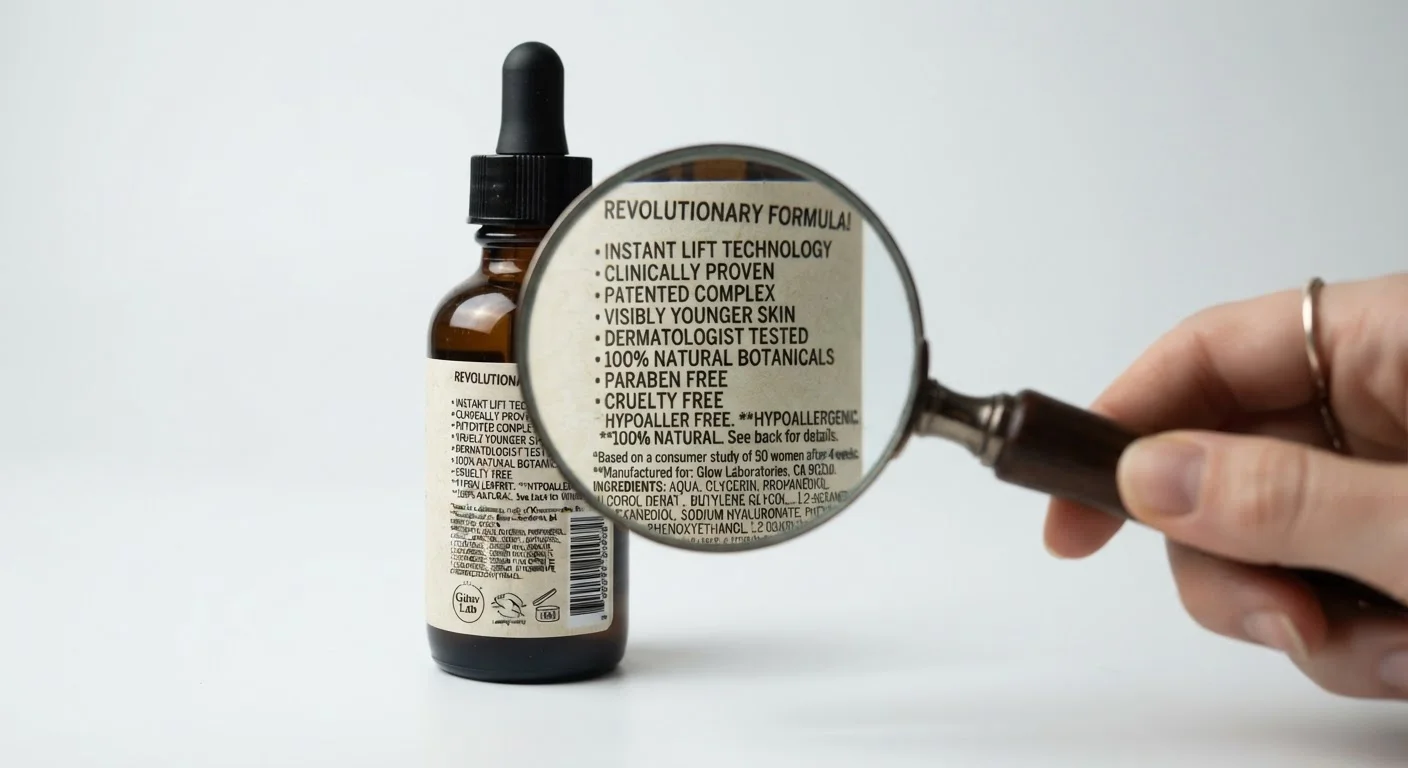
Why These Phrases Keep Appearing
Marketing language isn't accidental. Phrases like "clinically tested," "all-natural," and "up to 3x more effective" are carefully chosen because they create a strong impression while technically remaining defensible. For shoppers, the result is a persistent gap between what a claim feels like and what it actually guarantees.
Understanding this gap is one of the most practical skills a consumer can develop. It applies to supplements, skincare, household cleaners, pet food, electronics accessories, and virtually every product category. See our glossary of marketing terms that mean less than they sound for a category-by-category breakdown.
A Field Guide to the Most Common Misleading Structures
Most misleading claims fall into a handful of recognizable patterns. Spotting the pattern is faster than evaluating every word from scratch.
The Qualifier Buried in Small Print
"Loses up to 10 lbs" or "saves up to 40%" uses "up to" to anchor the headline number while the fine print reveals conditions most buyers won't meet. The FTC has issued guidance on qualifying claims, but enforcement is uneven and consumers are typically the first line of defense.
The Credential Without a Standard
"Dermatologist recommended" and "vet approved" sound like endorsements from a professional body. They are not. A single professional's opinion - compensated or not - is sufficient to make the claim in many contexts. For deeper context on who actually funds product testing, see the difference between independent testing and brand-sponsored studies.
The Study That Proves Very Little
"Clinically tested" or "scientifically proven" often references internal or industry-sponsored research with small sample sizes, no control group, or undisclosed methodology. For how certification labels and seals fit into this picture, see making sense of product labels and seals.
This Is General Consumer Education
The patterns described here apply across many product categories - food, supplements, personal care, household goods, and electronics. If you are making health-related product decisions, consult a qualified healthcare professional. For financial decisions, consult a licensed adviser. This article does not constitute medical, legal, or financial advice.
Where to Look When the Label Isn't Enough
When front-of-package language raises questions, a few consistent habits can help you find more reliable signal.
- Check the back panel or full ingredient list. Front-of-package claims are marketing; ingredient lists and Supplement Facts panels are regulated. Why popular supplements don't always deliver what the label implies walks through how label loopholes work in that category specifically.
- Look for independent certifications. A seal from a recognized third-party testing organization carries more weight than a brand's self-awarded badge. Not all seals are equal - learn which seals are independently verified.
- Read the full specification sheet. Marketing copy summarizes; specifications detail. Our guide to what product specifications actually tell you explains which numbers to trust and which are often cherry-picked.
- Evaluate reviews critically. Even 4.5-star averages can reflect rating inflation or small sample sizes. See why star ratings don't always mean quality for a structured approach.
For a broader look at listing-level red flags, signals that a product listing may not be what it seems covers what to watch before you even reach the label.