
Understanding the Difference Between Independent Testing and Brand-Sponsored Studies

Key Takeaways
- Who paid for a study is often as important as what the study found.
- Brand-sponsored research isn't automatically invalid, but it deserves additional scrutiny.
- Independent third-party testing labs have no financial incentive to favor any product.
- Look for published methodology, sample size, and conflict-of-interest disclosures before trusting a study.
- Phrases like 'clinically tested' or 'studies show' reveal nothing about who ran the test or how.
- Peer-reviewed, independently replicated findings carry far more weight than a single sponsor-funded result.
Independent Testing vs. Brand-Sponsored Studies
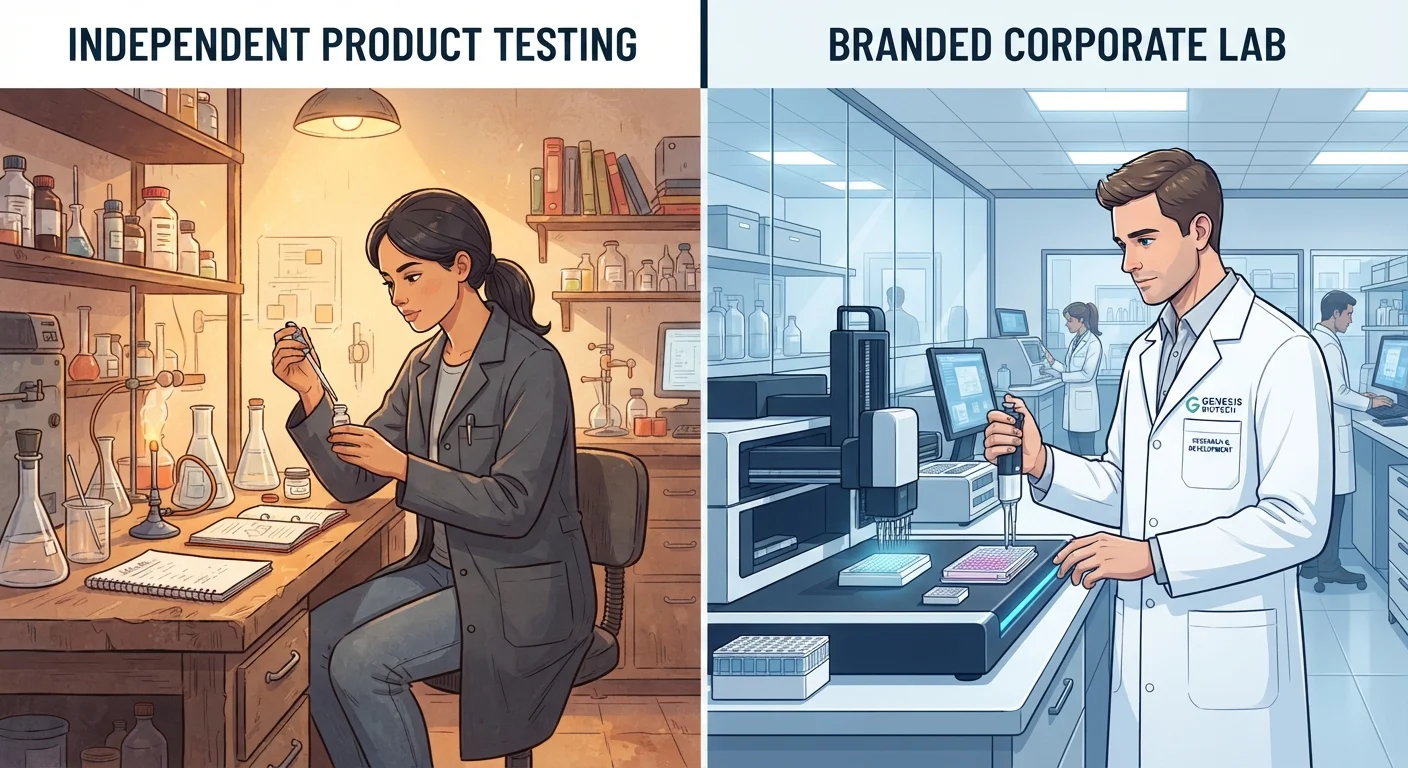
Independent testing is research conducted by a laboratory, institution, or organization with no financial stake in the outcome. Brand-sponsored studies are funded - and sometimes designed - by the company that makes the product being evaluated. The key difference is who controls the methodology, what gets published, and who stands to gain from the results.
Funding bias is a documented phenomenon in peer-reviewed literature: studies funded by industry sponsors are statistically more likely to produce results favorable to the sponsor's product, even when individual researchers act in good faith.
Why Funding Source Changes Everything
When a brand advertises that its product is "clinically proven" or "tested by experts," those phrases say nothing about independence. The central question - who paid for the test? - is almost never answered in the ad itself.
Research consistently shows that industry-funded studies produce sponsor-favorable results at rates significantly higher than independently funded equivalents. This isn't always deliberate fraud. Subtler mechanisms are at work: sponsors may choose outcome metrics that favor their product, select flattering comparison products, or simply not publish results that disappoint. The term for the latter is publication bias - the tendency for unflattering findings to quietly disappear.
For everyday shopping decisions, this means a product's own marketing materials - however scientific they look - are the weakest possible source of evidence. Misleading product claims often rely on exactly this kind of sponsored evidence dressed up in scientific-sounding language.
~3.4x
Odds of favorable outcomes in industry-funded studies
A meta-analysis published in PLOS Medicine found industry-sponsored drug and device studies were approximately 3.4 times more likely to reach conclusions favorable to the sponsor than independently funded research.
50%+
Studies with undisclosed conflicts of interest
Research published in the BMJ has found that a substantial proportion of published clinical studies do not fully disclose all financial relationships between authors and industry sponsors.
How to Tell the Two Apart
Reading past the headline of any study or test result requires asking four concrete questions:
- Who commissioned it? The funding source should be disclosed openly. If it isn't, that omission is itself informative.
- Who ran it? An independent laboratory, academic institution, or nonprofit testing organization has different incentives than a lab under contract with the brand.
- Was the methodology published? Credible tests describe sample sizes, controls, measurement methods, and limitations. Vague summaries should raise flags.
- Has anyone else replicated it? A single study - even a good one - is weaker evidence than multiple independent teams reaching the same conclusion.
Independent certifications can help, but not all seals carry equal weight. Our guide on product labels and certifications explains which third-party seals involve genuine external verification.
Quick Disclosure Check for Any Study
Scroll to the bottom of any research paper or test summary and look for a 'Conflict of Interest' or 'Funding' section. If neither exists, treat the findings with extra caution. Legitimate independent research almost always names who paid for it - because transparency is part of the credibility.
Real-World Patterns to Watch For
Brand-sponsored research tends to appear in recognizable patterns once you know what to look for.
None of these patterns mean a product fails to work - they mean the evidence for it is weaker than it appears. When you encounter them, seek corroborating evidence from sources with no commercial stake in the answer. Nonprofit consumer testing organizations and government safety bodies are good starting points.
For a broader framework on evaluating product claims, see the Avoiding Buyer Pitfalls hub, which covers common research traps alongside this topic.
Putting It Into Practice
The goal isn't to distrust all research - it's to calibrate your trust appropriately. Brand-sponsored data can still be informative; it simply demands more cross-checking. A few practical habits make a meaningful difference:
- Search for the product name alongside terms like "independent test" or "third-party review" rather than relying on the brand's own links.
- Check whether reviews disclosing conflicts of interest align with those that don't - divergence is a signal worth noting.
- Use trustworthy product review criteria to filter out paid praise from genuinely useful consumer feedback.
- Watch for sponsored content disguised as editorial coverage - it's more common than most readers realize.
Developing these habits takes a few extra minutes up front but significantly reduces the chance of paying a premium for a product whose main advantage is a well-funded marketing study.
This article is for general informational and educational purposes only and does not constitute professional advice of any kind.