
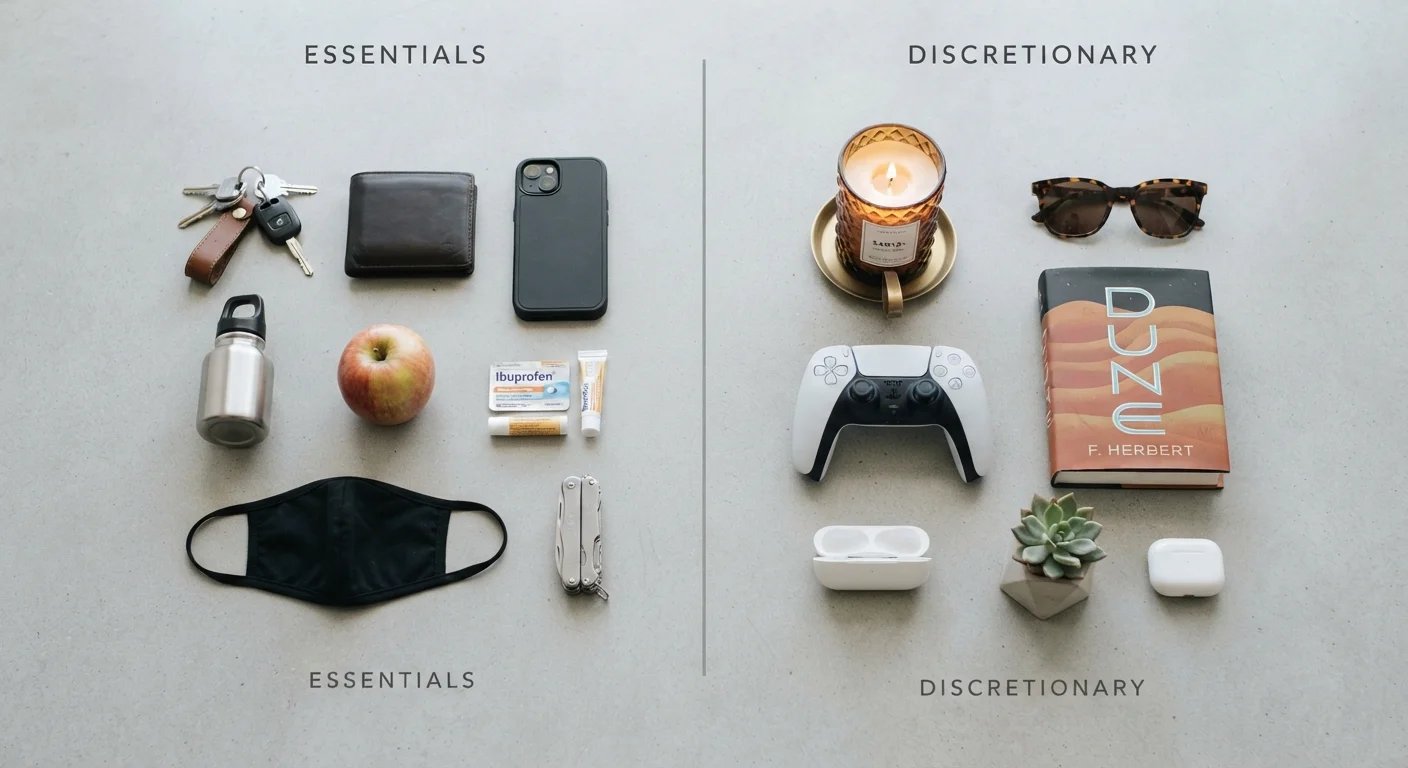
Key Takeaways
- Needs are items required for basic health, safety, and functioning; wants enhance comfort or enjoyment.
- Context matters - the same item can be a need for one person and a want for another.
- Emotional reasoning often disguises wants as needs at the point of purchase.
- A simple delay test can help distinguish genuine necessity from impulse.
- Recognizing gray-area items is more useful than demanding a perfect binary split.
Needs vs. Wants
A need is something required for basic health, safety, or functioning - food, shelter, medicine, transportation to work. A want is something that improves comfort or enjoyment but isn't strictly necessary for survival or stability. The distinction matters most when budgeting, because treating wants as needs can quietly erode financial health.
In behavioral economics, the line between needs and wants is further complicated by the concept of "relative deprivation" - social and contextual pressures that cause people to perceive certain non-essentials as necessities.
Why the Distinction Matters
Most spending decisions aren't made in a vacuum of pure logic. They happen quickly, under social pressure, during moments of stress or excitement - and the framing we apply in that moment shapes the outcome. When shoppers automatically label a purchase a "need," it tends to bypass further scrutiny. That's where the real cost accumulates.
Understanding the difference between a need and a want isn't about restricting yourself. It's about creating a moment of clarity before money leaves your account. Shoppers who practice this kind of pre-purchase awareness tend to feel more in control of their finances and experience less buyer's remorse. For a deeper look at the mindset behind deliberate purchasing, see intentional spending basics.
33%
Adults with no emergency savings
According to Bankrate's annual emergency savings survey, roughly one-third of U.S. adults report having no dedicated emergency fund, often attributing it to spending patterns rather than income alone.
18%
Monthly income spent on non-essentials
Consumer Expenditure Survey data from the U.S. Bureau of Labor Statistics shows that entertainment, personal care, and similar discretionary categories collectively represent a significant share of average household budgets.
What Actually Qualifies as a Need
A genuine need is something whose absence creates a real, concrete problem - not just discomfort or inconvenience. The clearest examples cluster around a few categories:
- Health and safety: Food, water, prescribed medications, shelter, basic clothing for the climate
- Functional obligations: Transportation to work, tools required for your job, childcare during work hours
- Legal requirements: Auto insurance, required safety equipment, housing costs
Notice that the definition is anchored in consequences, not cost. An expensive item can be a genuine need; an inexpensive item can still be a want. The price tag is irrelevant to the classification.
Try the "Level of Need" Question
Instead of asking "Do I need this?" try asking "What level of this do I actually need?" You may genuinely need new work shoes, but not the premium version. Separating the core need from the add-ons attached to it often reveals where real savings are hiding. This framing sidesteps the all-or-nothing trap and leads to more nuanced, satisfying decisions.
The Gray Area Is Real - and Worth Respecting
Most shopping decisions don't land neatly in either column. High-speed internet is a want if you're retired and use it recreationally; it's closer to a need if your income depends on remote work. A gym membership is a luxury for some and a medically advisable investment for someone managing blood pressure or a mobility issue. Ergonomic office furniture is optional for some and essential for someone with a repetitive strain injury.
Rather than forcing every item into a binary, it's more useful to ask: "What level of this item do I actually need?" You may genuinely need a car, but do you need the upgraded trim with heated seats? You may need work clothing, but does it have to be the premium option? Separating the core need from the want-layer on top is often where real savings are found.
Practical Tools for Drawing the Line
A few thinking habits consistently help shoppers make the distinction more reliably:
- The delay test: Wait 24-48 hours before purchasing anything non-essential. Genuine needs rarely disappear overnight; wants often lose urgency quickly.
- The substitution question: Is there something you already own that could serve this function adequately? If yes, the new purchase is likely a want.
- The consequence check: Write out what actually happens if you don't buy it. Vague discomfort points to a want; specific, concrete harm points to a need.
- The budget-category test: Budgeting frameworks like the 50/30/20 rule explicitly assign categories to spending - running an item through one of these frameworks forces honest categorization.
Before checking out on any non-essential purchase, running through a structured checklist can catch impulse decisions before they happen. See before you add it to your cart for a practical pre-purchase review.
“The ability to discipline yourself to delay gratification in the short term in order to enjoy greater rewards in the long term is the indispensable prerequisite for success.”
— Brian Tracy, Author and lecturer on personal finance and self-development
When the Classification Changes Your Decision
Correctly identifying a purchase as a want doesn't mean you shouldn't buy it - it means you're buying it with clear eyes. The goal is informed choice, not deprivation. Where this exercise pays off most is in catching the quiet drift: the monthly subscriptions that were once deliberate wants but have become invisible, the habit purchases that were never examined, the upgrades that exceeded the actual need.
Reviewing your spending through the lens of the avoiding buyer pitfalls framework can surface patterns you wouldn't otherwise notice. And if you want to apply this thinking to your broader budget structure, comparing budgeting methods can help you find the system that fits your lifestyle.
This article is for general informational purposes only and does not constitute financial advice. For guidance tailored to your personal financial situation, consult a qualified financial professional.