

Key Takeaways
- Use after-tax income - not gross pay - as your starting number when applying this rule.
- Needs include rent, utilities, groceries, and minimum debt payments - not lifestyle upgrades.
- Wants cover discretionary spending like dining out, subscriptions, and entertainment.
- The 20% savings bucket should address both an emergency fund and long-term goals.
- The rule is a flexible guideline, not a rigid formula - adjust percentages to fit your situation.
- Higher-cost-of-living areas may require shifting more than 50% toward needs temporarily.
The 50/30/20 Rule
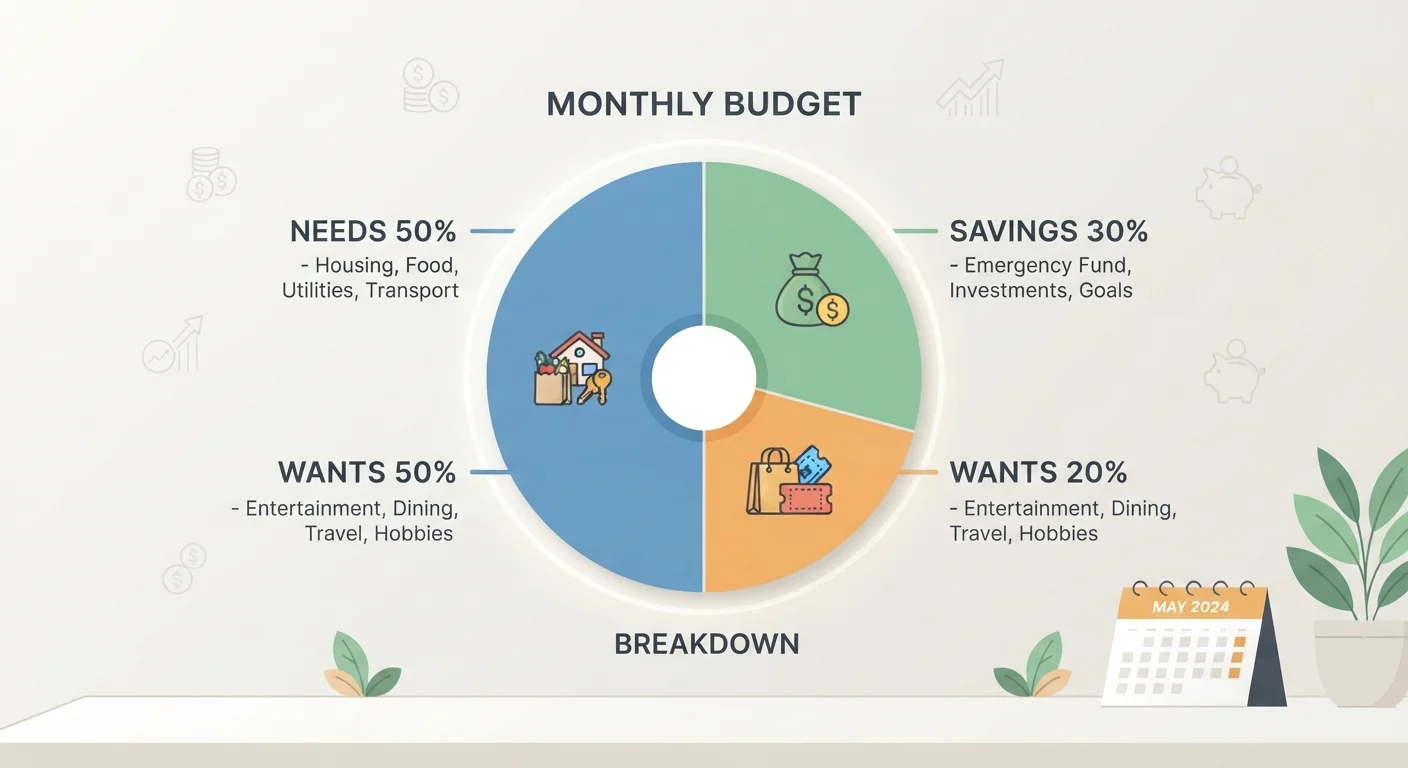
The 50/30/20 rule is a budgeting framework that divides your after-tax income into three categories: 50% for needs, 30% for wants, and 20% for savings and debt repayment. It gives you a simple percentage-based target for each dollar you earn, so you don't have to track every transaction in detail. The goal is a sustainable balance between covering essentials, enjoying life, and building financial security.
The rule was popularized by Senator Elizabeth Warren and her daughter Amelia Warren Tyagi in the book 'All Your Worth' (2005). It uses after-tax (net) income, not gross income, as the calculation base.
Where the Rule Comes From
The 50/30/20 framework was introduced to mainstream audiences through the book All Your Worth (2005), which argued that most household financial stress traces back to an imbalance between fixed costs and income. The core idea was straightforward: if you consistently spend more than half your take-home pay on unavoidable bills, any financial shock - a job loss, a medical bill, a car repair - can topple the whole system.
The rule isn't a law, and no single percentage works perfectly for every household. But it gives beginners a concrete starting point. If you've never made a structured budget before, our plain-language budgeting guide walks you through the fundamentals before you apply any framework.
“The secret to financial success isn't how much you earn - it's how you divide what you earn. A balanced money plan protects you in hard times and lets you enjoy good times without guilt.”
— Elizabeth Warren & Amelia Warren Tyagi, Authors of 'All Your Worth: The Ultimate Lifetime Money Plan'
Breaking Down Each Category
50% - Needs
This bucket covers expenses you must pay to maintain a basic standard of living. Common examples include rent or mortgage, utilities, groceries, health insurance premiums, minimum loan payments, and transportation costs for getting to work. The key test: could you eliminate this expense without serious harm? If not, it's a need.
One common mistake is inflating this category. A gym membership or a streaming service might feel essential, but they're wants. Distinguishing needs from wants is a skill worth developing - the line isn't always obvious.
30% - Wants
Wants are choices that improve quality of life but aren't required for survival or financial obligation. Think dining out, entertainment, travel, hobby spending, and non-essential subscriptions. This isn't money you should feel guilty spending - it's intentionally built into the framework to make the budget livable long-term.
20% - Savings and Debt Repayment
This slice does the most financial work. It should cover building an emergency fund, contributing to retirement accounts, and making extra payments on high-interest debt. The order of priority depends on your situation, but most financial educators suggest establishing a small emergency fund before aggressively paying down debt.
57%
Americans living paycheck to paycheck
According to PYMNTS Intelligence and LendingClub research, a majority of U.S. consumers report having little to no monthly cushion after expenses.
$1,000
Emergency savings many households lack
Bankrate's annual emergency savings report has consistently found that a significant share of Americans could not cover a $1,000 unexpected expense from savings alone.
Applying the Rule to a Real Paycheck
Suppose your monthly take-home pay is $4,000. Here's how the split looks:
| Category | Percentage | Monthly Amount |
|---|---|---|
| Needs | 50% | $2,000 |
| Wants | 30% | $1,200 |
| Savings & Debt | 20% | $800 |
Start by adding up your fixed monthly obligations - rent, car payment, insurance, minimum debt payments - and see where they land relative to your $2,000 needs ceiling. If your fixed costs already exceed $2,000, focus on reducing them before expanding other categories. For a structured approach to organizing these numbers each month, see our monthly budget setup checklist.
Automate Your 20% First
Set up an automatic transfer to your savings or retirement account on the day your paycheck arrives. When savings move before you can spend them, the 20% target becomes far easier to hit consistently. Even a small automatic transfer builds the habit and the balance over time.
If the 50/30/20 rule doesn't feel like a natural fit, you're not locked in. Our comparison of popular budgeting methods can help you find an approach that matches your habits and goals.
This article is for general informational and educational purposes only and does not constitute personalized financial or investment advice. Consult a licensed financial professional before making decisions based on your individual circumstances.