

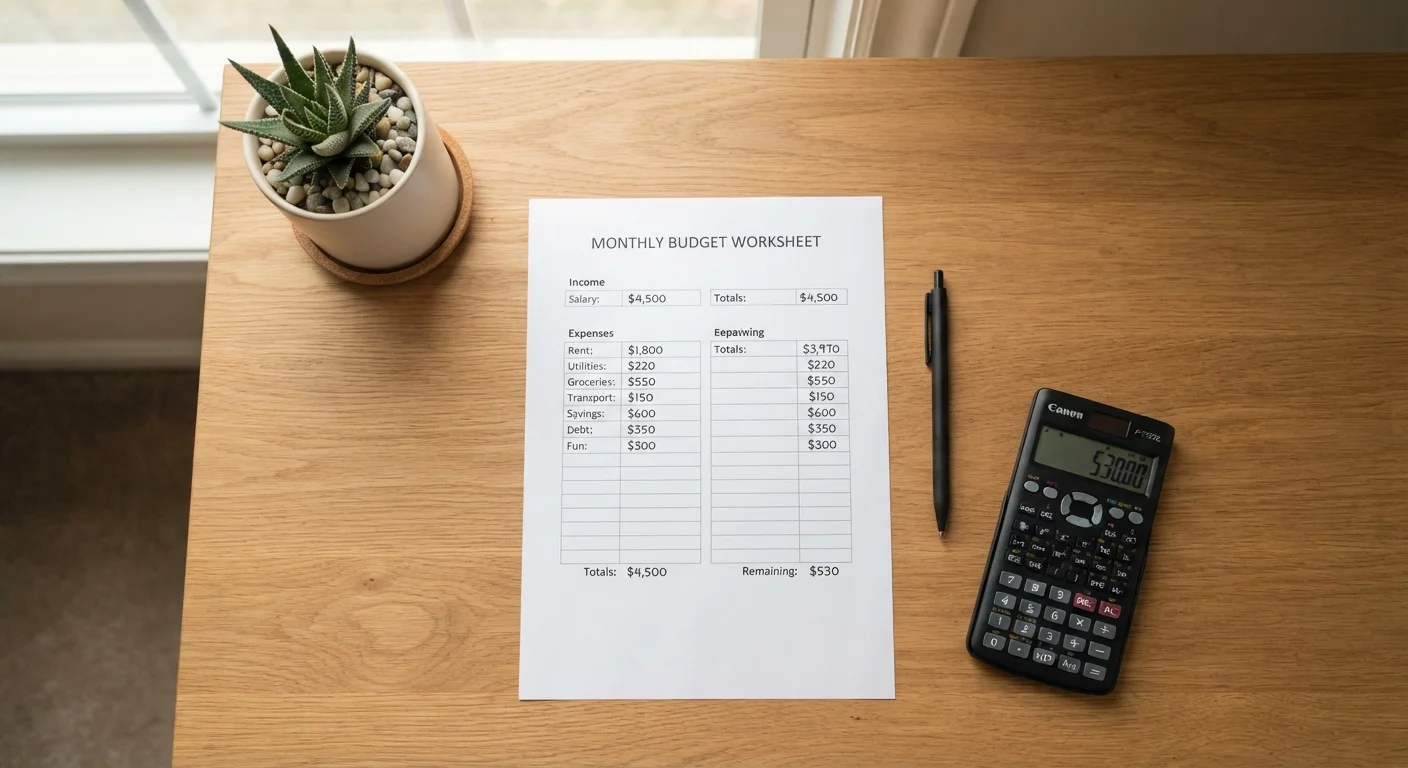
Key Takeaways
- Confirming your take-home income is the essential first step before assigning a single dollar.
- Separating fixed from variable expenses makes your spending limits more realistic and sustainable.
- Every budget needs a savings line - treat it as a non-negotiable expense, not an afterthought.
- Reviewing last month's actual spending against your plan reveals where adjustments are needed.
- Irregular but predictable costs (annual fees, car registration) belong in every monthly plan.
Summary
20 items · 30-60 minutes
Why a Monthly Reset Matters
A budget is not a document you create once and file away. It is a living plan that needs to be refreshed each month because your income, bills, and priorities shift. Skipping the monthly reset is one of the most common reasons a budget stops working - costs change, spending habits drift, and the original numbers quietly stop reflecting reality.
If you are new to budgeting altogether, the plain-language budgeting guide walks through every foundational concept before you start. If you already have a system, this checklist helps you apply it consistently each month - from verifying income to locking in spending limits before day one of the new cycle.
Work through this checklist in one sitting, ideally a day or two before the month begins. The goal is to enter each new month with a written, intentional plan rather than a rough mental estimate.
Spreadsheet (Google Sheets or Excel)
Build and maintain a monthly budget template with full control over categories and formulas.
Budgeting App
Automatically import bank transactions and track spending against category limits in real time.
Recent Pay Stubs or Bank Statements
Verify accurate net income figures and confirm actual spending from the prior month.
List of Recurring Bills
Serve as a reference for all fixed expenses including due dates and exact amounts.
The Full Monthly Budget Checklist
The checklist below is organised into four logical stages: income confirmation, expense categorisation, savings and debt allocation, and a close-out review of the prior month. Complete them in order - each stage builds on the last.
Income Confirmation
Expense Categorisation
Savings and Debt Allocation
Prior-Month Close-Out Review
Savings Must Be a Line Item, Not a Leftover
One of the most consistent mistakes new budgeters make is saving whatever happens to be left at the end of the month. By that point, most months leave very little. Treat your savings contribution as a fixed expense - assign it a specific dollar amount, list it at the top of your budget, and do not move it to cover overspending in other categories. Even a modest, consistent amount builds the habit that matters most.
Not sure how to categorise your bills? Understanding fixed vs. variable expenses is essential reading before you assign spending limits. Fixed costs (rent, loan payments) stay constant; variable costs (groceries, fuel) require a spending ceiling you set each month.
Standard budget templates also tend to leave out irregular costs - car registration, annual subscriptions, school supplies - that catch people off-guard. See spending categories most budget templates miss to make sure your plan accounts for everything you actually spend.
Choosing and Maintaining Your Tracking Method
Your checklist is only as useful as the system keeping track of it. Two reliable options exist: a spreadsheet and a dedicated budgeting app. Each works - they just suit different habits. A spreadsheet gives you full control and visibility; an app automates transaction imports and sends alerts. Compare the practical trade-offs before committing to one approach.
Don't Skip the Prior-Month Review
Many budgeters set a plan at the start of the month and never look back. Without reviewing what actually happened - where you went over, where you came in under - you repeat the same gaps month after month. The close-out review is what transforms budgeting from a wishful document into a working system.
If your income varies from month to month - because you freelance, work on commission, or pick up gig work - your monthly reset looks slightly different. Rather than confirming a fixed paycheck, you will be estimating conservatively based on your recent earnings floor. Budgeting on an irregular income covers strategies designed for that situation.
Once your budget is consistently balanced and your emergency fund is in place, you may be ready to think about investing. Use the financial readiness checklist to gauge whether the foundational work is done before putting money into the market.
This article provides general financial information for educational purposes only and is not personalised financial, tax, or legal advice. Consult a licensed financial professional regarding decisions specific to your situation.