

Key Takeaways
- Concealers match your skin tone to mask imperfections; color correctors use opposite hues to cancel out discoloration.
- Color correctors are applied before foundation, while concealer typically goes on after.
- Most people only need a color corrector for specific, persistent concerns that concealer alone cannot fully neutralize.
- Using both products together - corrector first, then concealer - gives the most complete coverage.
- Shade selection matters: the wrong corrector shade can make skin look muddier rather than clearer.
Option A
Concealer
The all-purpose skin-tone equalizer.
Best for: Covering blemishes, dark circles, and general discoloration to create a uniform, polished finish.
Option B
Color Corrector
The targeted pre-makeup problem solver.
Best for: Neutralizing specific, stubborn undertones - like deep purple bruising or persistent redness - before foundation is applied.
If you want one versatile product for everyday coverage
Concealer
Concealer matches your skin tone and blends seamlessly for general use, making it the more practical daily staple for most people.
If you struggle with deep purple under-eye circles or persistent redness that concealer doesn't fully hide
Color Corrector
A targeted color corrector neutralizes the underlying hue before you apply anything else, dramatically improving how well coverage sits on top.
If you want the most complete, long-lasting coverage possible
Color Corrector
Using a corrector underneath concealer reduces the amount of product you need and helps coverage look more natural and less cakey throughout the day.
If you are new to makeup and want a simple starting routine
Concealer
Concealer is the more forgiving, intuitive product. Mastering color theory for correctors takes practice and is best explored once you have your basics down.
What Each Product Actually Does
Concealer and color corrector are both used to address skin imperfections, but they accomplish this in fundamentally different ways. Understanding the distinction helps you avoid using the wrong tool for the job - or layering products unnecessarily.
Concealer works by matching or closely approximating your skin tone. It deposits pigment over an area to make it look like the surrounding skin. Think of it as camouflage: the imperfection is still there, but it's visually buried under a layer that blends in.
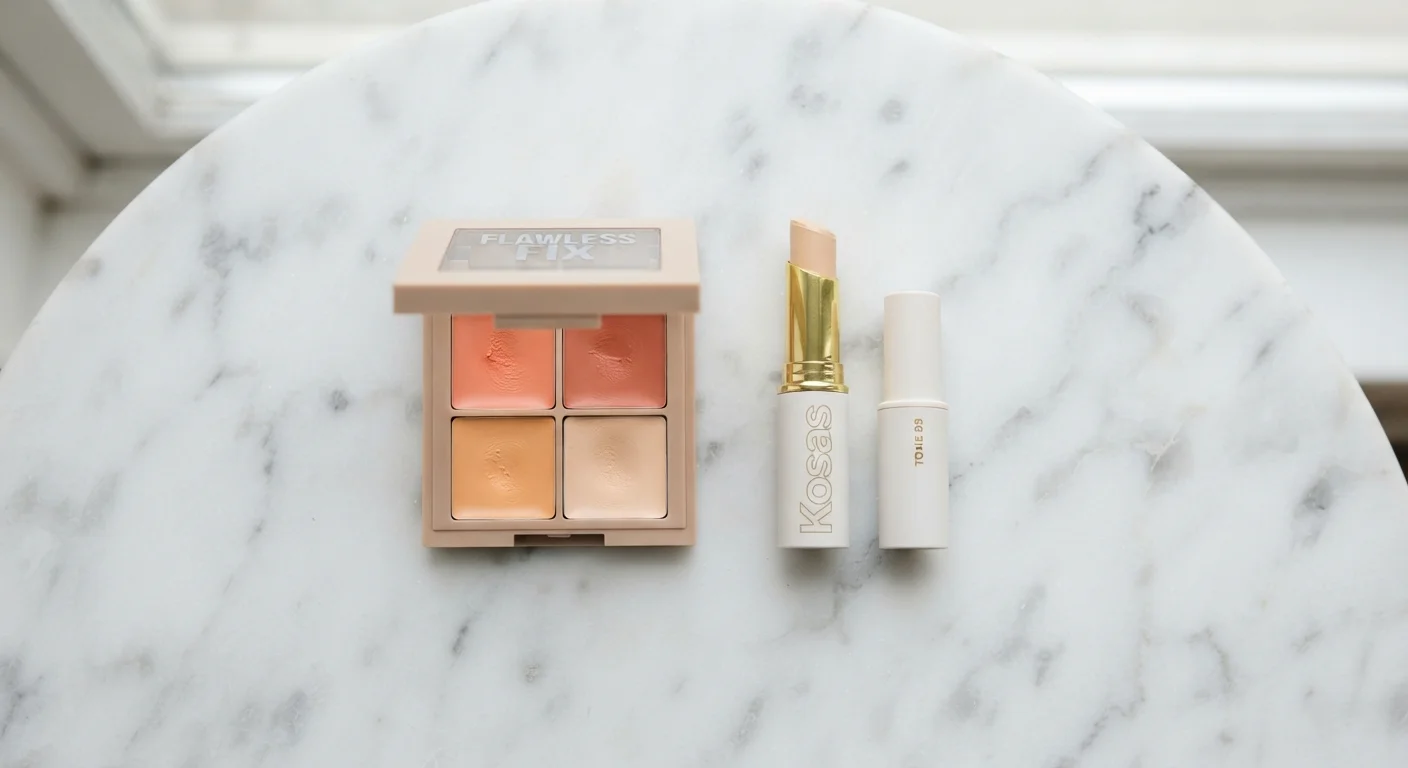
Color corrector works on color theory principles. Because opposite colors on the color wheel cancel each other out, a green corrector neutralizes redness, a peach or orange corrector counteracts dark purple or blue tones, and lavender corrects sallow or yellowish patches. The corrector doesn't conceal - it chemically neutralizes the unwanted hue so that concealer or foundation can lay on top cleanly.
If you're still building your makeup knowledge from the ground up, this beginner's guide to core makeup products explains the broader role each product plays in a full routine.
| Criterion | Concealer | Color Corrector |
|---|---|---|
| Primary function | Covers and camouflages imperfections | Neutralizes unwanted undertones |
| How it works | Matches or approximates skin tone | Uses opposite color wheel hues |
| Application order | After foundation or color corrector | Before foundation and concealer |
| Shade selection | Match to your skin tone | Match to the concern (green, peach, lavender) |
| Who needs it | Nearly everyone in a makeup routine | Those with specific, stubborn discoloration |
| Learning curve | Relatively straightforward | Requires understanding of color theory |
When to Use One, the Other, or Both
For most everyday concerns - a blemish, mild dark circles, minor uneven tone - concealer alone is sufficient. It's a one-step solution that most skin types can navigate without adding complexity.
Color corrector earns its place when concealer consistently falls short. The most common scenarios include:
- Deep bluish or purple under-eye circles (common in deeper skin tones): A peach or orange corrector neutralizes the blue-violet cast before concealer goes on top.
- Persistent facial redness from rosacea or post-blemish marks: A light green corrector reduces visible redness so foundation doesn't appear pinkish or blotchy.
- Hyperpigmentation with warm undertones: A lavender corrector can brighten areas that read excessively yellow or sallow.
The key is sequence. Color corrector goes on first - over moisturizer or primer, before foundation - then concealer is applied on top once the corrector has set. Applying concealer before a corrector defeats the purpose entirely.
~70%
Adults reporting visible under-eye circles
Dermatological surveys consistently find periorbital hyperpigmentation is one of the most common cosmetic concerns across all skin tones.
3 core hues
Most-used color corrector shades
Green (redness), peach/orange (dark circles), and lavender (sallowness) cover the majority of everyday color-correcting scenarios.
When comparing your full base makeup routine, it's also worth considering how your foundation choice affects this layering process. See our comparison of tinted moisturizer and foundation for context on how base products interact with correctors and concealers.
A Note on Skin Tone and Corrector Shade
Color corrector shade selection is not one-size-fits-all. Deeper skin tones typically require richer, more saturated correctors - for example, a deep orange rather than a light peach for under-eye circles - to achieve visible neutralization. Using a shade designed for fair skin on medium or deep tones often produces little to no effect. If you're unsure where to start, a makeup artist or beauty counter professional can help you identify the right corrector shade for your specific undertone.