

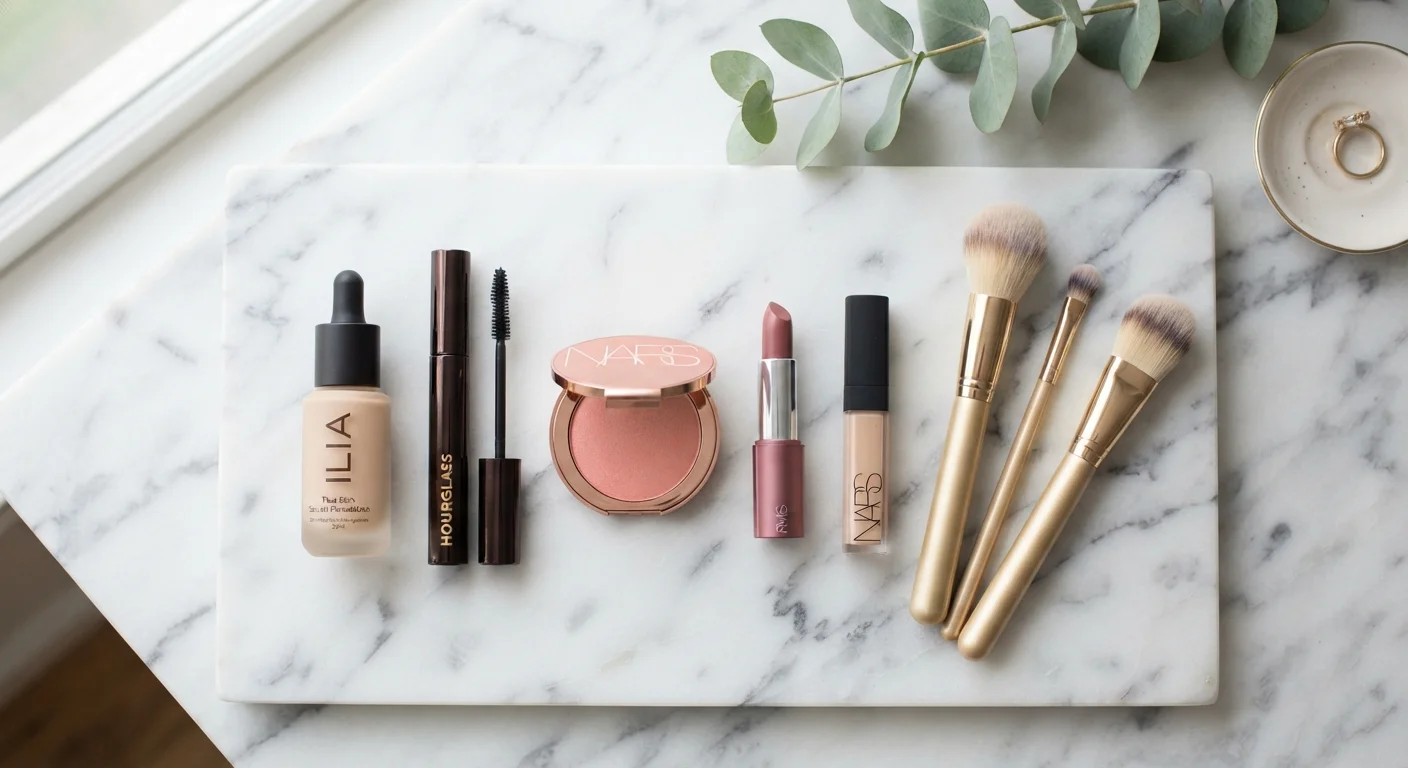
Key Takeaways
- You don't need every makeup product - a small set of core items covers the vast majority of everyday looks.
- Each product category has a distinct function; knowing that function helps you decide what you actually need.
- Complexion products (primer, foundation, concealer) create a smooth, even base for everything else.
- Setting products are what keep makeup in place throughout the day.
- Skincare applied before makeup directly affects how well it wears - the two routines are connected.
- Start with two or three products and expand only when you have a specific gap to fill.
Start here
Why Understanding Products Matters Before You Shop
Next
Complexion Products: Building an Even Base
Then
Eye and Brow Products: Defining Your Features
Continue
Cheek and Lip Products: Adding Color and Dimension
Almost there
Setting and Finishing Products: Making It Last
Bring it together
Building Your Routine Step by Step
Why Understanding Products Matters Before You Shop
Walking into a beauty aisle for the first time can feel like being handed a menu in a language you've never seen. There are dozens of product types, hundreds of shades, and almost no signage that explains what anything actually does. The result? Most beginners either buy too much or choose the wrong things for their needs.
The smarter approach is to understand function before you shop. When you know what a product is designed to do, you can quickly assess whether you need it - and make a more confident choice when you do. This guide breaks down the major makeup categories by their core purpose, not by brand or trend.
Before starting any makeup routine, it also helps to have a basic skincare foundation in place. See our guide to building a first skincare routine if you're starting from zero on that front as well. Healthy, well-moisturized skin also gives makeup a better surface to work with.
Coverage
How much of the skin's natural color and texture a product conceals. Ranges from sheer (very little) to full (hides most imperfections).
Finish
The surface appearance a product leaves - matte means no shine, satin is a subtle glow, and dewy looks more luminous and skin-like.
Setting
Using a powder or spray to lock makeup in place so it doesn't shift, crease, or fade throughout the day.
Primer
A product applied before foundation to smooth skin texture, minimize pores, and help makeup adhere and last longer.
Blending
Working a product into the skin so there are no harsh edges or lines - the process that makes makeup look natural rather than applied.
Undertone
The underlying color cast of your skin - warm (yellow/peach), cool (pink/blue), or neutral - which affects which foundation and concealer shades will match you most accurately.
Complexion Products: Building an Even Base
Complexion products are the foundation (literally and figuratively) of most makeup routines. They work together to create a smooth, even canvas across the face.
- Primer: Applied after moisturizer and before foundation, primer fills fine lines and pores and helps makeup adhere to skin longer. Not everyone needs it, but it makes a noticeable difference for those with oily skin or longer wear needs.
- Foundation: The workhorse of complexion makeup. Foundation evens skin tone across the entire face. It comes in a wide range of finishes - matte, satin, dewy - and coverage levels from sheer to full. Tinted moisturizers offer lighter coverage for those who prefer a more natural look.
- Concealer: More pigmented than foundation, concealer targets specific areas - dark circles, blemishes, redness. It's often applied after foundation to touch up spots that still show through.
- Color corrector: An optional step for specific concerns. Green correctors neutralize redness; peach or orange tones counteract dark circles on deeper skin tones. Most beginners won't need these right away.
Match Foundation to Your Neck, Not Your Wrist
The most common beginner mistake in choosing foundation shade is testing it on the wrist or hand, which is often a different tone than the face and neck. Swatch potential shades along the jawline and check the match in natural light. The right shade should disappear into the skin - not appear lighter or darker.
Eye and Brow Products: Defining Your Features
Eye makeup has more product types than any other category, which can be intimidating. Focus on what each tool is actually for rather than trying to collect them all.
- Mascara: Coats and darkens lashes to make eyes appear larger and more defined. It's one of the most impactful single products in any beginner's kit. For tips on why mascara sometimes doesn't perform as expected, see our guide to preventing mascara smudging.
- Eyeliner: Defines the lash line. Pencil liners are easiest for beginners; liquid liners offer precision but require practice. Not essential for a basic look.
- Eyeshadow: Adds color and depth to the eyelid. Neutral palettes with matte and shimmer shades are the most versatile starting point.
- Brow products: Pencils, gels, or powders that fill in and shape eyebrows. Well-groomed brows frame the face significantly, making brow products a high-impact, low-effort addition to a routine.
Cheek and Lip Products: Adding Color and Dimension
Cheek and lip products are where most beginners have the most fun - they're forgiving, blendable, and immediately transformative.
- Blush: Applied to the apples or upper cheekbones to add color and a healthy glow. Powder blushes are easiest to apply and blend for beginners; cream blushes give a more natural finish but require a bit more technique.
- Bronzer: Adds warmth and the impression of a sun-kissed look. Applied lightly to the areas where the sun would naturally hit - forehead, cheekbones, and nose bridge. Easy to over-apply, so start with less.
- Highlighter: Reflects light on high points of the face (cheekbone tops, brow bone, cupid's bow). An optional step that adds dimension.
- Lip products: Lip balm provides hydration; tinted lip balms add subtle color. Lipstick gives fuller coverage and a defined look. Lip liner helps define the shape and prevent color from bleeding. Lip gloss adds shine over or in place of lipstick.
Cream vs. Powder Formulas: A Quick Guide
As a general rule, cream formulas tend to suit drier skin types because they don't emphasize dryness or flakiness. Powder formulas typically work better for oily or combination skin because they absorb excess oil. That said, skin is individual - these are starting guidelines, not strict rules. If you're unsure, understanding your skin type first can make product selection significantly easier.
Setting and Finishing Products: Making It Last
Setting products are what separate a look that holds for two hours from one that holds all day. They're often skipped by beginners - but they make a real difference.
- Setting powder: A translucent or tinted powder pressed or dusted over foundation to absorb oil and lock makeup in place. Especially useful for oily or combination skin types.
- Setting spray: A fine mist applied over completed makeup to meld layers together and extend wear. It also gives a more natural, skin-like finish than powder alone.
- Makeup remover / micellar water: Technically a finishing product for the end of the day. Thorough removal is important for skin health - leftover makeup can contribute to clogged pores and irritation overnight.
The order in which you apply all of these products matters more than most beginners realize. Our article on skincare before makeup and application order goes deeper on how sequencing affects your final result.
Never Skip Makeup Removal at Night
Leaving makeup on overnight - especially foundation and eye products - can contribute to clogged pores, irritation, and in the case of mascara, potential lash breakage. Micellar water, cleansing balms, or gentle makeup-removing cleansers are all effective options. This is one step that directly affects your skin health, not just your makeup results.
Building Your Routine Step by Step
The most effective beginner strategy is to start narrow and build deliberately. A three-product routine that you apply with confidence will always outperform a ten-product routine that feels overwhelming.
A practical starting framework:
- Moisturize and let skincare absorb fully before applying anything else.
- Apply foundation or tinted moisturizer across the face, blending outward.
- Use concealer to spot-treat any areas that need extra coverage.
- Apply mascara.
- Add a single cheek or lip product for a pop of color.
- Finish with setting powder or setting spray if desired.
From there, add products one at a time only when you identify a specific gap - a product you reach for but don't have. That approach keeps your kit manageable and your spending intentional. Our product research tips hub can also help you evaluate any product more critically before committing.
Makeup is a skill - one that improves with practice and patience. Knowing what each product does is the clearest possible starting point.