

Key Takeaways
- Skincare always goes before makeup - products treat skin while makeup sits on top.
- Within skincare, apply thinner formulas first and thicker ones last.
- Sunscreen is the final skincare step, applied before primer or foundation.
- Skipping or reordering steps can reduce product effectiveness and shorten makeup wear time.
- Letting each layer absorb briefly before the next helps avoid pilling and patchy application.
Skincare-to-Makeup Layering Order
Skincare-to-makeup layering order refers to the deliberate sequence in which you apply skincare products before putting on makeup. The general principle: skincare goes on first to treat and protect skin, and makeup goes on last to color and finish. Getting this sequence right affects how well both categories of products perform.
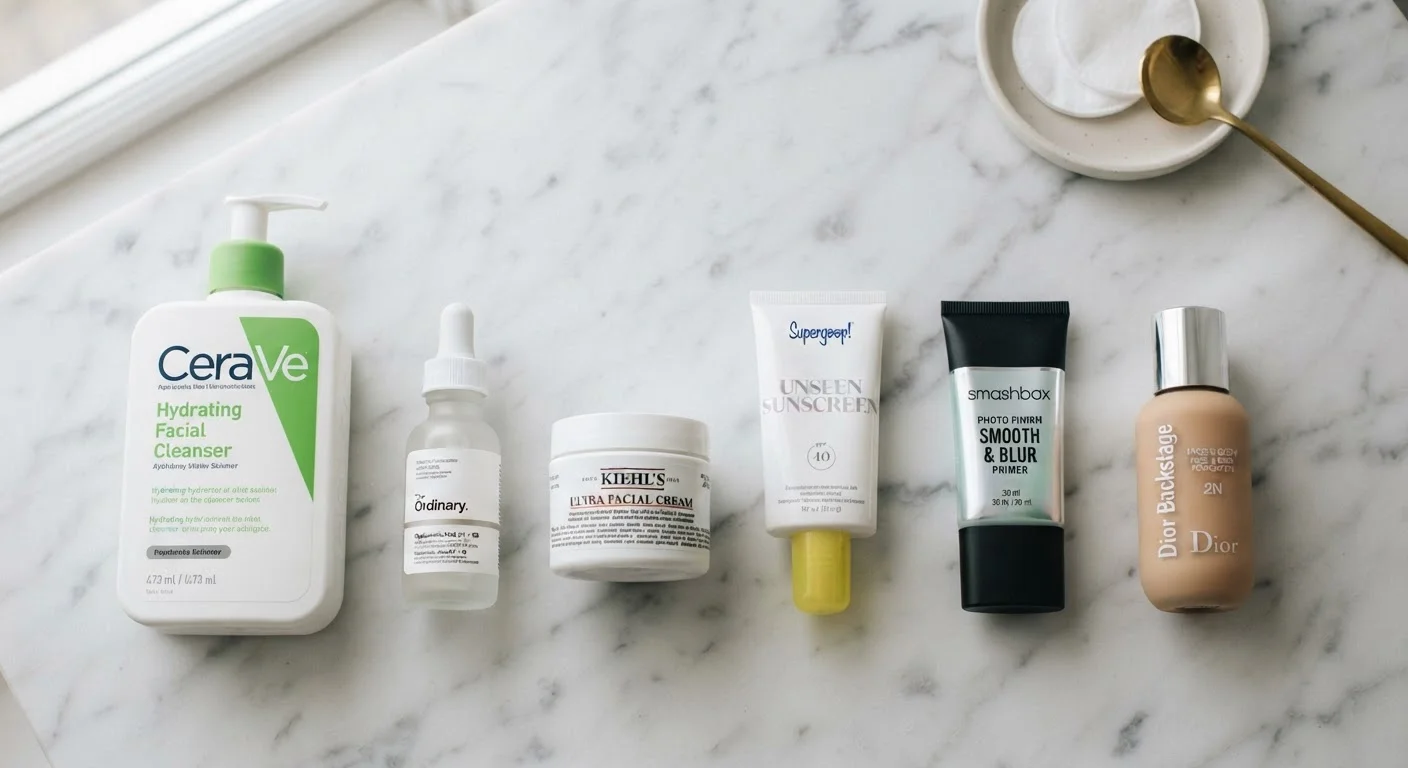
Products are typically applied from thinnest to thickest consistency within the skincare phase, with broad-spectrum sunscreen applied as the final skincare step before any makeup - including primer - begins.
Why Sequence Is a Functional Issue, Not Just a Beauty Rule
Most people assume product order is a matter of convention - something professionals follow but that doesn't make a measurable difference at home. In practice, the sequence you use determines whether your skincare ingredients reach your skin at all, and whether your makeup adheres, lasts, and looks the way it's supposed to.
Skincare products - serums, moisturizers, actives - are engineered to penetrate the outer skin barrier. Makeup products are engineered to sit on top of it. When you reverse that order, you're essentially putting a film between your skin and the products meant to treat it. The active ingredients in serums and moisturizers can't work as intended if they're applied over a layer of foundation or primer.
There's also a practical finish consideration. Skin that's well-hydrated and prepped accepts makeup more evenly. Dry or improperly prepped skin causes foundation to cling to texture, migrate into fine lines, or break up within hours. The sequence isn't arbitrary - it reflects how the products are actually formulated to function. For a deeper look at how skincare products work together before makeup even enters the picture, see layering skincare products without canceling them out.
The Correct Order, Step by Step
The overarching principle within the skincare phase is to move from thinnest to thickest consistency. Thinner, water-based formulas absorb fastest and create the foundation for the more occlusive products that follow.
~2 min
Recommended wait time after sunscreen before applying primer
Dermatologists generally suggest allowing sunscreen to fully absorb before layering any makeup product on top to avoid disrupting the protective film.
Thin → Thick
Correct product consistency sequence within skincare
The thin-to-thick rule is a widely cited dermatology guideline for maximizing absorption and minimizing product interference during skincare layering.
- Cleanser - Removes overnight buildup or leftover products so subsequent steps absorb properly.
- Toner or essence - Lightweight, often hydrating layers applied to damp or just-dried skin.
- Serums and treatments - Targeted actives like vitamin C, hyaluronic acid, or niacinamide. Apply thinnest first if using multiple. For guidance on which actives can be combined, active ingredients that don't play well together is worth reading before building this step.
- Eye cream - Generally applied before moisturizer so it isn't diluted or moved by a heavier cream on top.
- Moisturizer - Seals in earlier layers and maintains the skin barrier.
- Sunscreen - Always the final skincare step. It needs to sit on top, not under, other products to form an effective barrier. Applying it before moisturizer disrupts the protective film it's meant to create.
Once sunscreen has absorbed - give it roughly two minutes - the makeup phase begins: primer if used, then base (foundation or tinted moisturizer), concealer, powder, and color products. That full makeup sequence is covered in building a minimal makeup routine that still looks polished.
Give Sunscreen the Most Time to Set
Of all the skincare steps, sunscreen benefits most from a deliberate absorption window. Allow at least two full minutes after applying sunscreen before moving to primer or any base product. This ensures the UV-filtering ingredients have settled into an even layer rather than being physically disrupted by the next application.
Common Mistakes That Undercut Both Skincare and Makeup
Even when people know the right order in theory, a few habits consistently derail results in practice.
Applying sunscreen after primer or foundation
This is among the most common sequencing errors. Sunscreen placed over makeup doesn't create a consistent film and is unlikely to provide the level of protection stated on the label. It also disrupts whatever finish the makeup has achieved. Sunscreen belongs in the skincare column, not the makeup column - applied before primer, every time.
Not allowing absorption time
Rushing through steps causes products to physically mix on the surface rather than absorbing separately. This leads to pilling - small bits of product that ball up on the skin - and an uneven base. A one-to-two-minute gap between major steps, especially after moisturizer and sunscreen, significantly reduces this.
Using incompatible textures in sequence
Silicone-based primers applied directly over heavy, water-based serums that haven't fully dried can cause separation. Similarly, layering too many occlusive products back to back creates a heavy surface that makeup slides off. Signs your skincare routine is doing more harm than good covers how to recognize when product interactions are creating problems.
Skipping moisturizer on oily skin
A common misconception is that oily skin doesn't need moisturizer. Without it, skin can overproduce oil as a compensatory response, which actually worsens shine and longevity of makeup. A lightweight, non-comedogenic moisturizer maintains the barrier without adding excess weight.
“Sunscreen should be the last step in your skincare routine and the first thing that touches your skin before makeup. Moving it into the makeup phase, or applying it over foundation, significantly compromises its ability to protect.”
— Board-Certified Dermatologist, Skin barrier and photoprotection specialist
Keeping It Simple Without Getting It Wrong
The good news is that even a stripped-back routine - cleanser, moisturizer, sunscreen, then makeup - respects the correct sequence and delivers meaningful results. You don't need a ten-step routine to get the order right; you just need to apply whatever steps you do use in the proper sequence.
If you're building a skincare routine from scratch alongside a makeup practice, building your first skincare routine from the ground up provides a clear starting framework. For readers deciding between base products, tinted moisturizer vs. foundation explains the practical differences.
The underlying logic is consistent regardless of how many products you use: treat the skin first, protect it, then apply makeup on top of a well-prepared surface. That sequence is what allows each product category to do exactly what it was designed to do.
This article is for informational purposes only and is not a substitute for professional dermatological advice. If you have specific skin concerns or conditions, consult a qualified healthcare provider.