

Key Takeaways
- Consistency with a few core products outperforms an elaborate routine used sporadically.
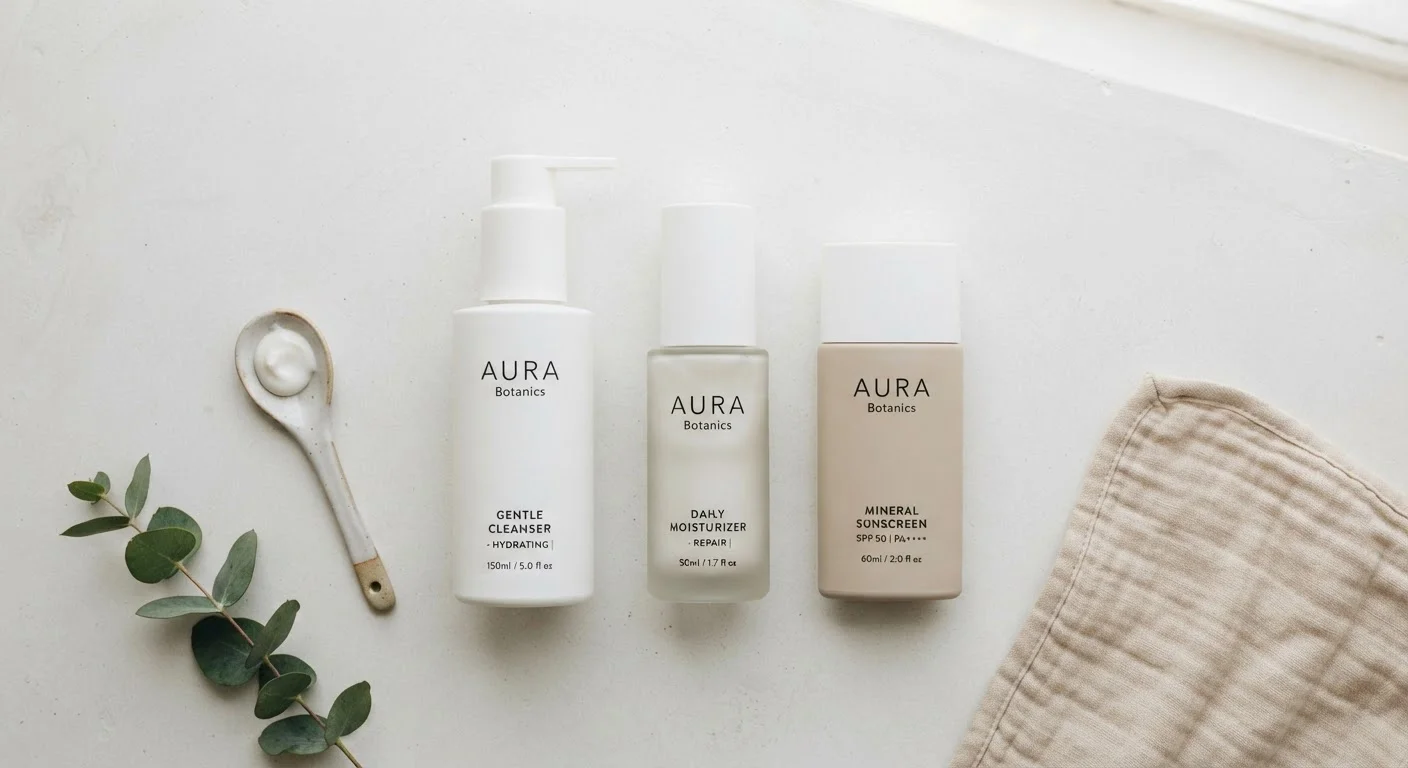
- Cleanser, moisturizer, and broad-spectrum sunscreen form the non-negotiable foundation of any routine.
- Skin type affects which formulas work best, not which steps to include.
- Product layering order matters - applying from thinnest to thickest texture preserves effectiveness.
- Adding actives like vitamin C or retinoids should come only after the basics are established.
Start here
Why a Routine Matters More Than Individual Products
Next
The Core Three: Cleanse, Moisturize, Protect
Then
Understanding Your Skin Type
Build on it
How to Layer Products Correctly
When you're ready
When to Add More Steps
Why a Routine Matters More Than Individual Products
The skincare industry is vast and often noisy. Shelves overflow with serums, essences, and treatments promising transformation - but dermatologists consistently emphasize one truth: a simple routine practiced daily beats an elaborate one used inconsistently. The goal isn't to collect products; it's to build repeatable habits that give your skin steady, cumulative support.
This matters because skin function is ongoing. It manages hydration, repairs environmental damage, and maintains a protective barrier - all continuously. Disrupting that with erratic product use, or overloading it with too many actives too soon, can do more harm than good. Before spending time researching every trending ingredient, anchor yourself in the basics. For a broader look at what keeps that barrier functioning well, see what the skin barrier needs to stay healthy.
Track Your Skin's Response
When starting any new routine, introduce one product at a time and give your skin at least two weeks before evaluating. Taking a weekly photo in the same lighting can make subtle changes easier to spot and helps you connect cause and effect if irritation occurs.
The Core Three: Cleanse, Moisturize, Protect
Every dermatologist-endorsed routine - regardless of skin type or budget - shares three non-negotiable steps.
- Cleanse: A gentle, pH-balanced cleanser removes surface debris, excess oil, and environmental pollutants without stripping the skin's natural moisture barrier. Harsh cleansers that leave skin feeling tight are typically over-drying.
- Moisturize: Even oily skin benefits from hydration. Moisturizers help maintain the skin barrier by preventing transepidermal water loss (TEWL) - the evaporation of water through the skin's outer layers. Lightweight, gel-based formulas suit oilier skin; richer creams suit drier skin.
- Protect: Broad-spectrum sunscreen rated SPF 30 or higher is the step most frequently skipped and most consistently recommended by dermatologists. UV exposure contributes to premature aging, uneven tone, and elevated skin cancer risk. It belongs in every morning routine.
If budget or time are constraints, these three steps alone constitute a complete, science-supported routine. For guidance on navigating pared-down routines thoughtfully, read our look at minimalist skincare trade-offs.
Skin barrier
The outermost layer of skin that acts as a protective shield, keeping moisture in and irritants out. Damage to it can cause dryness, sensitivity, and inflammation.
Broad-spectrum SPF
A sunscreen rating indicating the product protects against both UVA rays (which age skin) and UVB rays (which cause burning). SPF 30 or higher is widely recommended for daily use.
Non-comedogenic
A label indicating a product is formulated to avoid clogging pores, making it generally suitable for oily or acne-prone skin types.
Transepidermal water loss (TEWL)
The process by which water evaporates from the skin through the outer layers. Moisturizers help reduce TEWL, keeping skin hydrated and the barrier intact.
Retinoid
A class of vitamin A derivatives used in skincare that are widely studied for supporting cell turnover and addressing visible signs of aging. They can cause initial sensitivity, so gradual introduction is recommended.
Chemical exfoliant
An ingredient like glycolic acid or salicylic acid that dissolves the bonds between dead skin cells, helping them shed more evenly without physical scrubbing.
Understanding Your Skin Type
Skin type influences which formulas work best for you - not whether you need the core steps. The five commonly recognized skin types are:
- Normal
- Balanced oil production, few sensitivities, and minimal visible pores. Most gentle formulas work well.
- Dry
- Skin that feels tight or flaky, especially after cleansing. Look for cream-based, fragrance-free moisturizers with ingredients like ceramides, glycerin, or shea butter.
- Oily
- Enlarged pores, a shiny appearance, and tendency toward congestion or breakouts. Lightweight, non-comedogenic (won't clog pores) moisturizers and gel sunscreens tend to feel more comfortable.
- Combination
- Oilier in the T-zone (forehead, nose, chin) and drier or normal on the cheeks. May require using different products on different areas or balancing formulas.
- Sensitive
- Prone to redness, stinging, or reactions. Prioritize fragrance-free, minimal-ingredient formulas and introduce new products one at a time.
If you're unsure of your skin type, observe how your skin looks and feels about an hour after cleansing - without applying anything. That baseline gives the clearest read.
Skin Type Can Change Over Time
Factors like age, climate, hormonal shifts, and seasonal changes can all alter how your skin behaves. A routine that worked well in your twenties may need adjusting in your thirties or forties. It's worth reassessing your skin's needs periodically rather than assuming your type is fixed.
How to Layer Products Correctly
Product order isn't arbitrary - it affects how well each formula absorbs and performs. The general principle is thinnest to thickest consistency, applied to clean skin.
- Cleanser (rinse off)
- Toner or essence, if used (water-thin, absorbed quickly)
- Serum or treatment (lightweight, targeted)
- Moisturizer (seals in hydration)
- Sunscreen in the AM (always the final step in a morning routine)
Applying a thick cream before a serum can prevent the active ingredients in the serum from reaching the skin effectively. This is why sequence matters even when individual products are high quality. For a deeper dive into this principle, see how to layer skincare products without canceling them out.
When to Add More Steps
Once your core three-step routine feels established - meaning you're using it consistently, morning and evening, for at least four to six weeks - you can thoughtfully consider additional steps.
Common additions include:
- Vitamin C serum (AM): An antioxidant that may help brighten skin and provide an additional layer of protection against oxidative stress from environmental exposure.
- Retinoids (PM): Vitamin A derivatives with a strong body of research supporting their role in promoting cell turnover and addressing concerns like fine lines and uneven texture. Start slowly - typically a few nights per week - as skin adjusts.
- Exfoliation: Chemical exfoliants (AHAs like glycolic acid, BHAs like salicylic acid) remove dead skin cells and can improve texture and tone. Over-exfoliation is a common beginner mistake; once or twice a week is generally sufficient.
Introduce only one new product at a time, waiting two to three weeks before adding another. This makes it possible to identify what's working - or what's causing a reaction. Skincare is a long game; patience and consistency matter far more than product volume. Explore the Beauty Essentials hub for guidance on complementary topics like makeup and hair care as your routine evolves.
This article is for general informational purposes only and does not constitute medical or dermatological advice. If you have a skin condition, persistent irritation, or concerns about a product reaction, consult a qualified dermatologist or healthcare professional.