

Key Takeaways
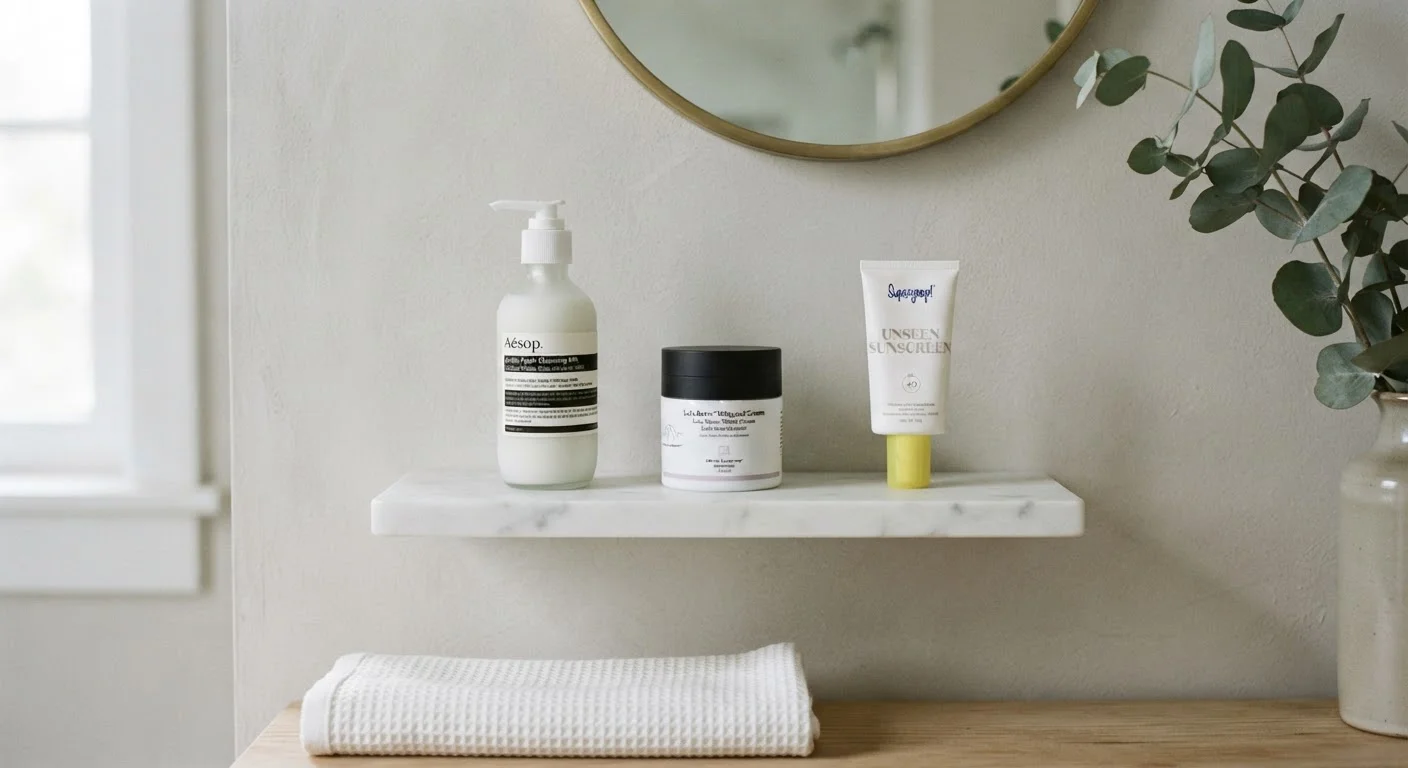
- A minimalist routine typically means a cleanser, moisturizer, and broad-spectrum sunscreen - nothing more.
- Fewer products reduce the risk of irritation and make it easier to identify what's working or causing problems.
- Paring down has real limits: some skin concerns genuinely require targeted active ingredients to address.
- Consistency with a simple routine often outperforms an inconsistent complex one.
- Minimalism isn't one-size-fits-all - skin type, age, and specific concerns should guide how simple you go.
Reduces irritation from ingredient overload
Using fewer products lowers the chance of sensitizing reactions. When the skin barrier is repeatedly exposed to multiple actives, fragrances, and preservatives, cumulative irritation becomes more likely.
Easier to identify problem ingredients
With a shorter ingredient roster, it's far simpler to isolate what's causing a breakout or reaction. A 10-step routine makes troubleshooting nearly impossible.
Lower cost over time
Fewer products mean a smaller monthly outlay. This also reduces the temptation to cycle through trendy launches before understanding what the skin actually needs - a point relevant to smart budget buying in any category.
Higher consistency and follow-through
Simpler routines are easier to maintain. Dermatologists frequently note that consistent use of a few well-chosen products outperforms sporadic application of an elaborate multi-step system.
Supports a healthier skin barrier
The skin's natural barrier thrives when given space to regulate itself. Minimizing the number of active ingredients applied daily reduces the risk of chronic low-grade disruption.
May not address targeted skin concerns
Conditions like acne, melasma, or significant fine lines often require specific actives - retinoids, niacinamide, AHAs - at consistent concentrations. A basic three-step routine generally won't deliver those results.
Can lead to under-treating important issues
The appeal of simplicity can become a reason to avoid addressing real skin concerns. Deferring treatment for something like persistent acne or sun damage has long-term consequences.
Not inherently better for all skin types
People with very dry skin, rosacea, or post-procedural skin may actually need additional emollients, barrier-repair ingredients, or prescription support that a minimal routine omits.
Misses the synergy of well-paired actives
Some ingredient combinations - vitamin C in the morning alongside SPF, or retinol paired with a ceramide moisturizer - produce measurably better outcomes together. Going minimal means forgoing these studied combinations.
Our Verdict
A minimalist skincare routine is a genuinely sound approach for many people, particularly those prone to irritation, overwhelmed by choice, or new to skincare. It removes friction and reduces the risk of over-treating skin. However, it isn't a universal solution - people managing acne, hyperpigmentation, or significant signs of aging may find that a pared-down routine alone doesn't provide the targeted support their skin needs.
Best suited to people with generally healthy, low-maintenance skin, those recovering from irritation or overuse of actives, or anyone seeking a sustainable, low-effort daily habit.
What 'Minimalist' Actually Means in Skincare
A minimalist skincare routine is generally understood as three core steps: a gentle cleanser, a moisturizer suited to your skin type, and a broad-spectrum SPF for daytime use. Some practitioners add one targeted active - a retinoid or vitamin C serum, for example - but the defining principle is that every product earns its place.
This approach has grown alongside broader cultural interest in simplification, but it also has genuine dermatological backing. Many dermatologists note that the skin barrier functions best when it isn't constantly challenged by a rotating cast of ingredients. For a deeper look at how to sequence what you do use, see how to layer skincare products without canceling them out.
Reduces irritation from ingredient overload
Using fewer products lowers the chance of sensitizing reactions. When the skin barrier is repeatedly exposed to multiple actives, fragrances, and preservatives, cumulative irritation becomes more likely.
Easier to identify problem ingredients
With a shorter ingredient roster, it's far simpler to isolate what's causing a breakout or reaction. A 10-step routine makes troubleshooting nearly impossible.
Lower cost over time
Fewer products mean a smaller monthly outlay. This also reduces the temptation to cycle through trendy launches before understanding what the skin actually needs - a point relevant to smart budget buying in any category.
Higher consistency and follow-through
Simpler routines are easier to maintain. Dermatologists frequently note that consistent use of a few well-chosen products outperforms sporadic application of an elaborate multi-step system.
Supports a healthier skin barrier
The skin's natural barrier thrives when given space to regulate itself. Minimizing the number of active ingredients applied daily reduces the risk of chronic low-grade disruption.
The Real Limitations You Should Know
Cutting back isn't without consequence. Certain skin concerns - active acne, post-inflammatory hyperpigmentation, significant texture changes - respond to specific active ingredients at therapeutic concentrations. A routine built only around a cleanser, moisturizer, and SPF may maintain baseline skin health but is unlikely to produce meaningful change in those conditions.
There's also a nuance around SPF reliance: sunscreen is non-negotiable for any routine, but a minimalist approach sometimes leads people to skip it in favor of "keeping it simple," which is a misstep. If your routine is triggering redness or breakouts rather than calming skin, the signs your routine is doing more harm than good are worth reviewing before scaling back further.
May not address targeted skin concerns
Conditions like acne, melasma, or significant fine lines often require specific actives - retinoids, niacinamide, AHAs - at consistent concentrations. A basic three-step routine generally won't deliver those results.
Can lead to under-treating important issues
The appeal of simplicity can become a reason to avoid addressing real skin concerns. Deferring treatment for something like persistent acne or sun damage has long-term consequences.
Not inherently better for all skin types
People with very dry skin, rosacea, or post-procedural skin may actually need additional emollients, barrier-repair ingredients, or prescription support that a minimal routine omits.
Misses the synergy of well-paired actives
Some ingredient combinations - vitamin C in the morning alongside SPF, or retinol paired with a ceramide moisturizer - produce measurably better outcomes together. Going minimal means forgoing these studied combinations.
Who Benefits Most - and When to Add More
Beginners, those with sensitive or reactive skin, and people who've experienced irritation from complex routines are well-suited to a minimalist approach. Research into the skin barrier consistently shows that over-exfoliating and stacking incompatible actives are among the most common causes of self-inflicted skin damage.
That said, skin needs shift over time. Hormonal changes, seasonal variation, aging, and environmental stressors can all create gaps a minimal routine doesn't fill. Rather than treating minimalism as a permanent identity, consider it a calibration tool - a way to reset and reassess before thoughtfully building a routine from the ground up with only what your skin actually needs. The principles here also apply beyond skincare: structured wellness routines carry their own trade-offs worth weighing before committing to any rigid daily schedule.
60%+
Consumers who report using more than 5 skincare products daily
According to survey data cited by dermatology researchers, a significant proportion of consumers use six or more products in their daily routine, increasing the risk of ingredient conflicts.
3 steps
Core products most dermatologists consider essential
Board-certified dermatologists widely identify a gentle cleanser, moisturizer, and broad-spectrum SPF 30+ as the non-negotiable foundation of any effective routine.
This article is for general informational purposes only and does not constitute medical or dermatological advice. Consult a qualified healthcare provider or board-certified dermatologist for concerns specific to your skin.