

Key Takeaways
- The scalp is skin, and its health directly influences the quality and growth of hair.
- Neglecting the scalp can lead to buildup, dryness, or inflammation that affects hair at the root.
- Basic scalp care involves cleansing, gentle exfoliation, and maintaining moisture balance.
- Over-washing and product buildup are two of the most common scalp disruptors.
- Consulting a dermatologist is advisable for persistent scalp conditions like seborrheic dermatitis or significant hair loss.
Scalp Care
Scalp care refers to the intentional practice of maintaining the health of the skin on your head - the environment from which every strand of hair grows. It includes cleansing, exfoliating, moisturizing, and protecting the scalp just as you would care for the skin on your face. A healthy scalp supports stronger, more resilient hair over time.
The scalp contains a higher density of sebaceous (oil) glands and hair follicles than most areas of skin, making its microbiome and barrier function especially relevant to both scalp conditions and hair growth cycles.
Why the Scalp Is the Starting Point for Hair Health
Hair doesn't exist independently of the skin it grows from. Each strand emerges from a follicle embedded in the scalp, and the condition of that environment - how clean it is, how balanced its oil production is, whether it's inflamed or healthy - has a direct bearing on what grows out of it.
This is the connection most hair routines overlook. People invest heavily in conditioners, serums, and styling tools to improve their hair, yet pay little attention to the scalp itself. Think of it this way: even the most carefully tended plant will struggle if the soil it grows in is depleted. The scalp functions in much the same way.
Understanding scalp care doesn't require a complete routine overhaul. It starts with recognizing that the scalp is skin - and applying some of the same thoughtfulness you'd bring to building a skincare routine.
100,000+
Hair follicles on the average human scalp
According to general dermatological references, the human scalp contains approximately 100,000 hair follicles, each embedded in and dependent on healthy scalp tissue.
~2-6 years
Duration of the average hair growth cycle
Each follicle cycles through growth (anagen), transition (catagen), and rest (telogen) phases - a process that healthy scalp conditions help support.
50%
Hair loss before thinning becomes visually noticeable
Dermatologists commonly note that approximately half of hair volume can be lost before thinning is clearly visible, underscoring why preventive scalp attention matters early.
Common Scalp Issues and What Causes Them
Several common complaints trace back to scalp health rather than the hair itself. Recognizing them is the first step toward addressing them appropriately.
- Product buildup: Dry shampoos, styling creams, and leave-in treatments can accumulate on the scalp over time if not thoroughly rinsed. This can clog follicles and cause dullness or irritation. If you rely on dry shampoo regularly, understanding its limits matters.
- Excess oil or dryness: Both extremes signal an imbalance. Over-washing strips the scalp's natural sebum, triggering compensatory oil production. Under-washing allows sebum, dead skin cells, and environmental debris to accumulate.
- Flaking: Occasional flaking may result from dryness or product sensitivity. Persistent, oily flaking can indicate seborrheic dermatitis - a common but treatable condition that warrants professional evaluation.
- Scalp tension or sensitivity: Tight hairstyles worn regularly can stress follicles over time, and some people experience scalp sensitivity in response to certain ingredients.
Scalp Conditions Warrant Professional Attention
Conditions like seborrheic dermatitis, psoriasis, and alopecia areata all involve the scalp and require diagnosis and management by a dermatologist - not over-the-counter products alone. If you're experiencing persistent or worsening scalp symptoms, redness, significant hair shedding, or pain, a medical consultation is the appropriate next step. General scalp care advice is not a substitute for professional evaluation.
External factors like heat styling can also indirectly affect the scalp through prolonged heat exposure close to the roots. Managing tool temperature and distance matters beyond just protecting hair strands.
Building a Simple Scalp Care Practice
Scalp care doesn't need to be elaborate. A few well-chosen habits can make a meaningful difference in how the scalp functions - and, over time, in how hair looks and behaves.
Cleanse Appropriately
Choose a shampoo formulated for your scalp type: balancing formulas for oily scalps, hydrating options for dry ones. Focus lather on the scalp rather than the lengths of the hair, where the primary cleansing is needed. Rinse thoroughly to prevent residue from lingering.
Exfoliate Occasionally
Scalp exfoliation - using a gentle scrub or a product with chemical exfoliants like salicylic acid - helps clear dead skin cells and buildup. Once or twice a month is sufficient for most people. The goal is a clean baseline, not aggressive stripping.
Support Moisture Balance
A scalp serum or light oil applied between wash days can help maintain hydration, particularly for those with dry or flaky scalps. The same principle behind supporting a healthy skin barrier applies here: maintaining the scalp's protective layer helps it regulate itself more effectively.
Make Scalp Care Part of Wash Day
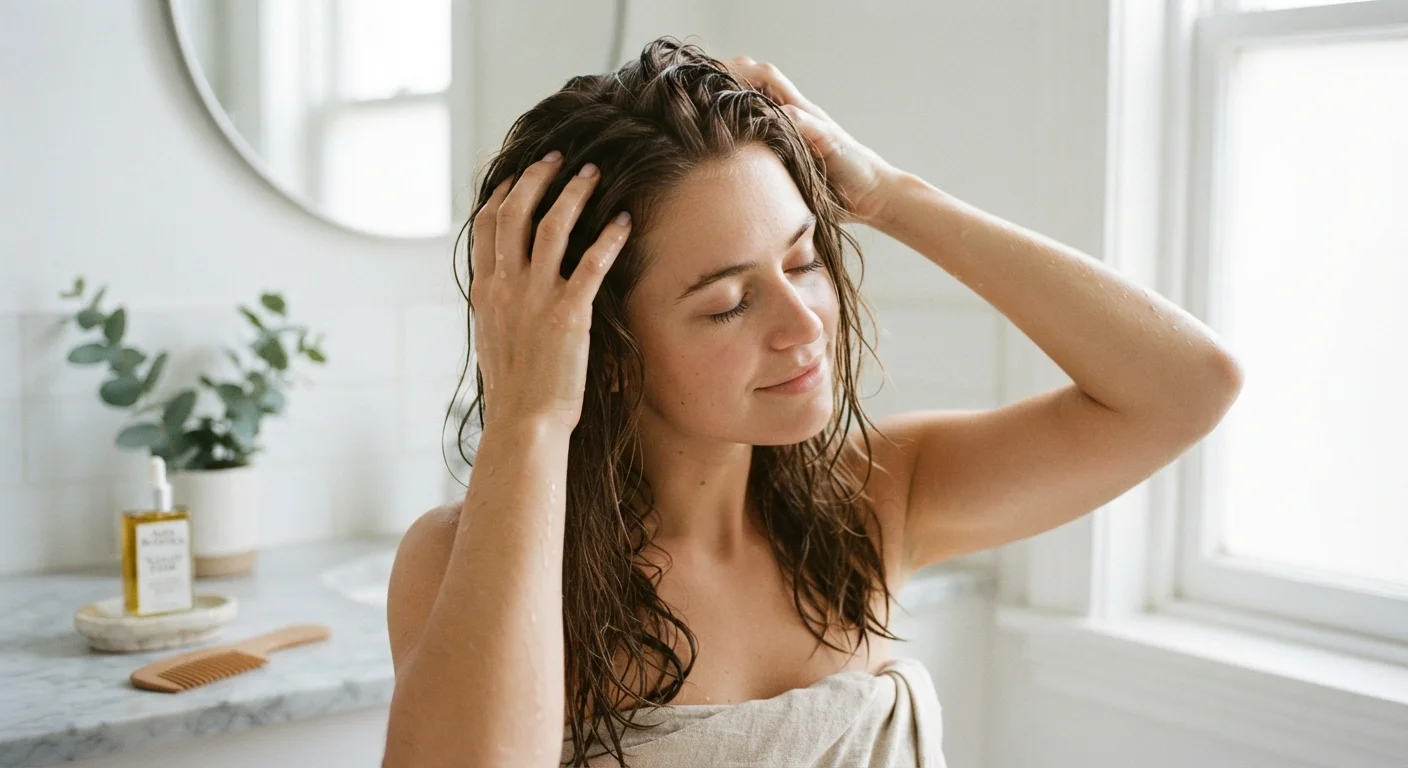
The simplest way to start a scalp care practice is to build it into an existing habit. Before shampooing, spend 60-90 seconds massaging your scalp with dry fingertips or a silicone brush to loosen buildup and increase circulation. Follow with a thorough cleanse focused on the scalp, and rinse completely. This small shift adds minimal time but addresses the most commonly neglected step in hair routines.
Scalp massage - whether done manually or with a silicone tool - is often recommended for improving circulation. While robust clinical evidence on hair growth outcomes is limited, many people find it a relaxing addition to their routine with no meaningful downside.
This article provides general beauty and wellness information only. For persistent scalp conditions, hair loss, or significant changes in hair or scalp health, consult a qualified dermatologist or healthcare professional.