
Fragrance in Skincare: What It Does, Who It Affects, and When It's Worth Skipping

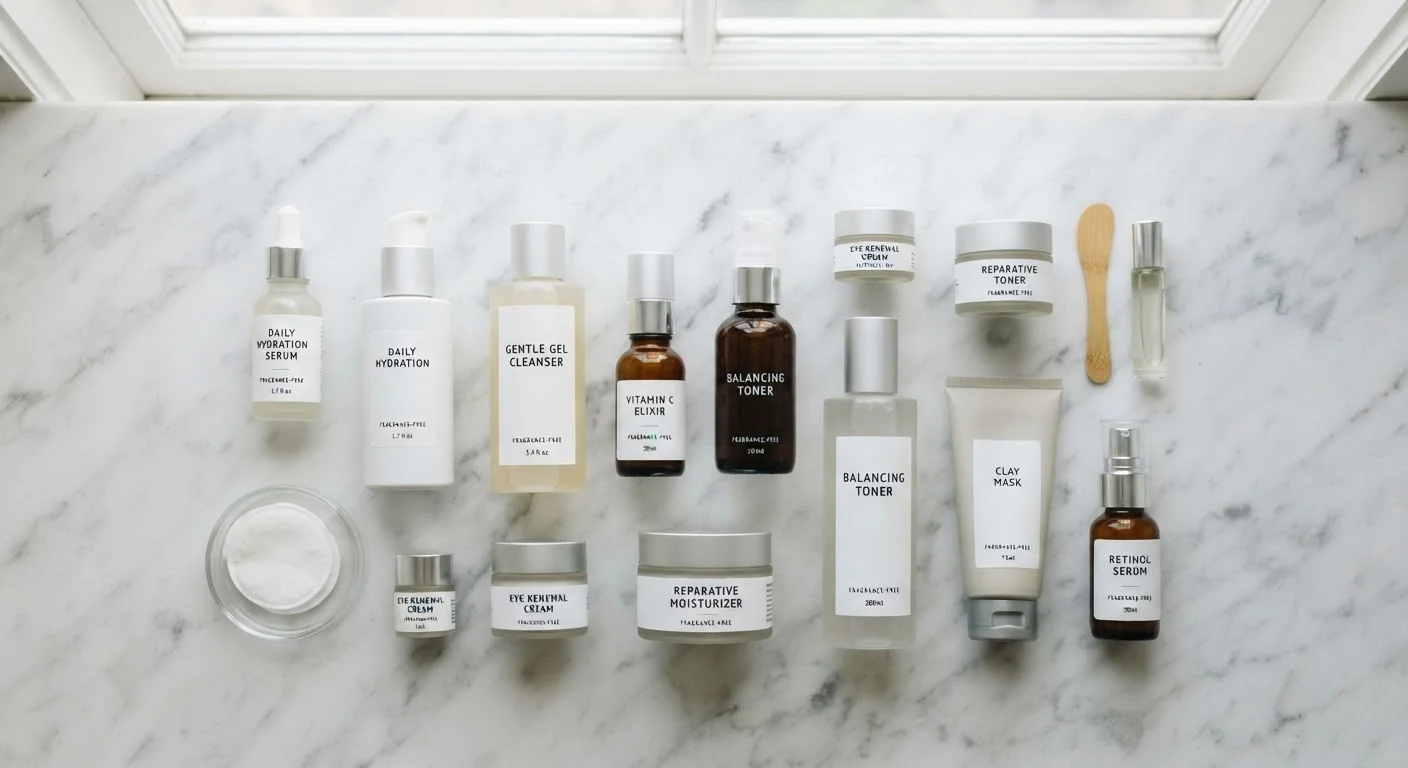
Key Takeaways
- Fragrance is added to skincare purely for sensory appeal and serves no therapeutic skin function.
- It is one of the most frequently identified contact allergens in cosmetic products.
- Sensitive skin, compromised skin barriers, and conditions like rosacea increase fragrance sensitivity risk.
- Fragrance-free does not always mean unscented - some products mask odor with other chemicals.
- Reading labels carefully helps identify fragrance whether listed broadly or as individual aroma ingredients.
- Most people with healthy skin tolerate fragrance well, but patch testing is a sound habit for anyone trying new products.
Fragrance in Skincare
Fragrance in skincare refers to any aromatic ingredient added to a product primarily for scent rather than function. It may appear on an ingredient label as 'fragrance,' 'parfum,' or as individual named aroma chemicals and essential oils. While fragrance makes products more pleasant to use, it is also among the most common causes of skin sensitivity reactions in cosmetic formulations.
Under U.S. labeling rules, manufacturers may list 'fragrance' as a single ingredient without disclosing the individual components, which can number in the hundreds and include both synthetic aroma chemicals and natural botanical extracts.
Why Fragrance Is Added to Skincare at All
Fragrance serves one primary purpose in a skincare formulation: to make the product smell good. That might sound trivial, but sensory experience has a real influence on whether consumers enjoy and consistently use a product. A pleasant scent can also mask the naturally unpleasant odor of certain active ingredients, like niacinamide or certain peptide complexes.
From a formulation standpoint, fragrance provides no skin benefit. It does not hydrate, protect, or repair. This is why dermatologists and cosmetic chemists often describe it as a purely aesthetic addition - one that comes with a trade-off that matters more for some people than others.
Fragrance ingredients may be synthetic aroma chemicals, plant-derived essential oils, or a combination. Under current U.S. labeling regulations, all of them can be grouped under the single term 'fragrance' or 'parfum,' which means consumers don't automatically see each component. Reading a skincare ingredient list carefully is the first step toward understanding what you're actually applying.
The Skin Science Behind Fragrance Reactions
Fragrance is consistently ranked among the most common causes of allergic contact dermatitis - a delayed immune response that causes redness, itching, and rash at the site of skin contact. Research published in dermatology literature has repeatedly identified fragrance as a leading cosmetic allergen, with individual aroma chemicals such as linalool, limonene, and eugenol frequently implicated.
There are two distinct types of reactions worth understanding. Irritant contact dermatitis is a non-immune reaction where fragrance chemicals directly disrupt the skin barrier, causing stinging or redness. Allergic contact dermatitis involves immune sensitization - initial exposures may cause no visible reaction, but sensitivity can build over time until a threshold is crossed and a reaction occurs. This is why some people develop fragrance problems after years of use without incident.
~1 in 10
People sensitized to fragrance mix allergens
European dermatology research suggests roughly 1 in 10 patients patch-tested for contact dermatitis react to the fragrance mix, a standard panel of common aroma chemicals.
Top 5
Fragrance ranks among leading cosmetic allergens
Fragrance is consistently listed among the top causes of allergic contact dermatitis from personal care products in dermatology literature and patch test clinic data.
3,000+
Distinct fragrance chemicals in commercial use
The Research Institute for Fragrance Materials (RIFM) has evaluated over 3,000 individual fragrance ingredients used across the cosmetics and personal care industry.
Essential oils are a common misconception point: because they are 'natural,' they are sometimes assumed to be safer. In practice, natural aromatic extracts contain many of the same reactive compounds found in synthetic fragrance blends. Citrus oils, in particular, can also cause phototoxic reactions when applied before sun exposure.
Who Is Most Likely to Be Affected
Fragrance sensitivity is not universal, and most people with intact, healthy skin tolerate scented products without issue. But certain groups face meaningfully higher risk:
- People with eczema or atopic dermatitis have a compromised skin barrier that allows irritants and allergens to penetrate more easily. Fragrance avoidance is often recommended as part of managing flare-ups.
- Those with rosacea are prone to inflammation from a range of triggers, and fragrance can be one of them - particularly in products applied to the face.
- People with a history of contact allergies are at greater risk of cross-reacting to fragrance components.
- Infants and young children have thinner, more permeable skin and are generally advised to use fragrance-free products, though caregivers should consult a pediatrician or dermatologist for guidance specific to their child's needs.
Patch Testing: A Simple Precaution
Before committing to a new scented skincare product, apply a small amount to an inconspicuous area - like the inside of the wrist - and wait 24 to 48 hours before wider use. This won't catch all reactions, but it's a practical first screen. If you have a history of skin sensitivity, consider choosing fragrance-free formulations for leave-on products as a default precaution.
If you're uncertain about your own sensitivity, a patch test is a low-risk way to assess a new product before applying it widely. Apply a small amount to the inside of your wrist or behind your ear, leave it for 24 to 48 hours, and watch for any reaction. A dermatologist can conduct formal patch testing if you want a more comprehensive picture.
When Skipping Fragrance Makes Practical Sense
Even if you don't have a diagnosed sensitivity, there are situations where choosing fragrance-free formulations is a reasonable default. Products that sit on the skin for extended periods - serums, moisturizers, and sunscreens - give fragrance ingredients more contact time and absorption opportunity than a cleanser rinsed off quickly. The same logic applies to products used around the eye area, where skin is thinner and more reactive.
If you're managing a compromised barrier from over-exfoliation, a recent procedure, or an active flare of a skin condition, your skin's defenses are temporarily reduced. This is a window when fragrance can cause irritation that wouldn't occur otherwise. Choosing a moisturizer with barrier-supporting ingredients and avoiding fragrance during recovery periods is a widely supported approach in dermatological guidance.
It's also worth considering where fragrance appears in a product's ingredient list. Ingredients are listed in descending order of concentration, so fragrance appearing near the top of a long list signals a higher amount than fragrance buried at the end. Understanding how to assess fragrance in product labels can help you make more informed comparisons.
A Note on 'Fragrance-Free' vs. 'Unscented'
These two label terms are not interchangeable. 'Fragrance-free' means no aromatic ingredients were added. 'Unscented' may still contain masking fragrances used to suppress the natural smell of other ingredients. If avoiding fragrance is a priority for you, look for 'fragrance-free' labeling and verify by checking that neither 'fragrance' nor 'parfum' appears in the ingredient list.
This article is for informational purposes only and does not constitute medical advice. If you experience persistent skin reactions, consult a board-certified dermatologist for a personalized evaluation.