

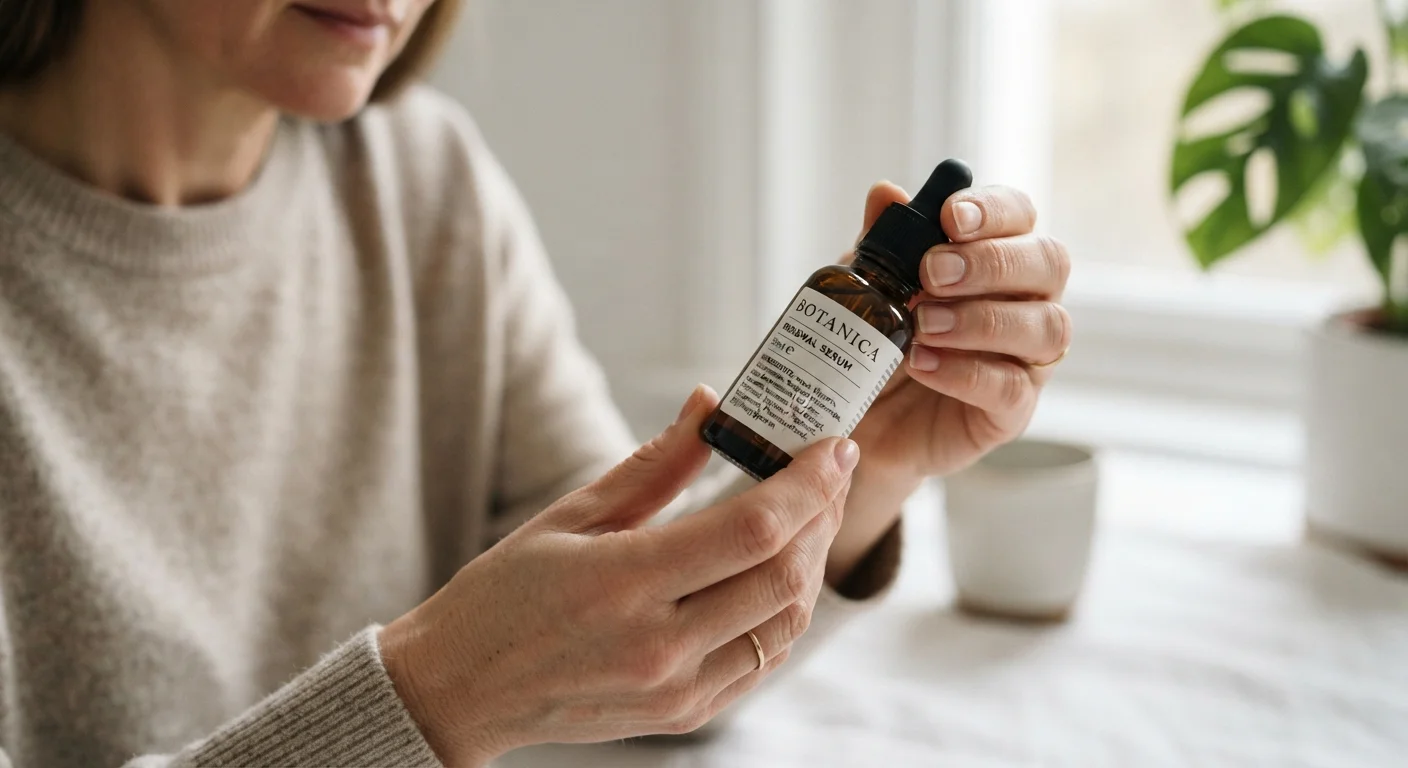
Key Takeaways
- Ingredients are listed in descending order by concentration, so the top five to ten matter most.
- INCI names (International Nomenclature of Cosmetic Ingredients) are the standardized scientific names required on U.S. labels.
- Marketing terms like 'natural' or 'clean' have no regulated definition and don't appear in the ingredient list.
- Water (aqua) listed first usually means it is the product's primary base ingredient.
- Ingredients below 1% concentration can be listed in any order, which is worth knowing for fragrance and preservatives.
- A shorter ingredient list is not automatically safer or more effective than a longer one.
What you will need
How Skincare Labels Are Structured
In the United States, the FDA requires cosmetic products to list ingredients using INCI names - the International Nomenclature of Cosmetic Ingredients, a globally standardized system of Latin-derived and scientific terms. This is why you'll see Aqua instead of water, or Tocopherol instead of vitamin E. The system exists to create consistency across products and countries, not to confuse consumers.
The core rule: ingredients are listed in descending order of concentration - the ingredient present in the greatest amount appears first. This single fact changes how you read any label. A product with niacinamide listed second has far more of it than one where it appears fifteenth.
There is one important exception. Ingredients present at 1% or less can be listed in any order after those above 1%. Manufacturers aren't required to disclose exactly where that threshold falls, which means you can't always pinpoint concentration from position alone - but you can identify the workhorse ingredients near the top with confidence.
Position Tells You Concentration, Not Quality
A high-ranking ingredient isn't automatically beneficial, and a low-ranking one isn't automatically useless. Some actives - like retinol or certain peptides - are effective at very low concentrations by design. Position gives you a relative signal, not the full picture.
For a deeper look at how ingredient categories work in moisturizers specifically, see our guide to moisturizer ingredients. And if label language outside of skincare interests you, the same label-reading logic applies in other categories - including product specification sheets.
What to Focus On - and What to Skip
Once you understand the structure, you can read a label strategically rather than exhaustively.
What you will need
The Top Five to Ten Ingredients
These constitute the bulk of any formula. If water (Aqua) is first, the product is water-based. If a silicone like Dimethicone or an oil like Caprylic/Capric Triglyceride ranks high, the formula is richer and more occlusive. Actives you're specifically seeking - such as hyaluronic acid (Sodium Hyaluronate) or niacinamide - should appear within this range to be present in meaningful amounts. For a plain-language reference to what these actives do, see our ingredient reference guide.
Fragrance and Preservatives
These frequently appear lower on the list - in the sub-1% zone - but can have outsized effects on sensitive skin. Fragrance (or Parfum) is a catch-all term that can represent dozens of undisclosed compounds. If you have reactive skin, it's worth understanding how fragrance is labeled. Our article on fragrance in skincare walks through the research in detail.
Marketing Claims on the Front of the Pack
Terms printed on the front - clean, natural, dermatologist-tested - are not part of the regulated ingredient list and carry no standardized meaning under current FDA cosmetic regulations. They are marketing language. The ingredient list on the back is where the factual information lives. For a thorough breakdown, see clean beauty labels decoded and our marketing language glossary.
Front-of-Pack Claims Are Not Regulated
Words like 'hypoallergenic,' 'dermatologist-tested,' and 'clinically proven' have no standardized legal definition under current FDA cosmetic regulations. They reflect marketing positioning, not independently verified safety or efficacy thresholds. Always base your evaluation on the ingredient list itself, not the front label.
Step-by-Step: Reading a Label in Practice
Flip the product over and find the full ingredient list
The regulated ingredient list is always on the back or side of the packaging - not the front. Look for the heading Ingredients: followed by a list of INCI names separated by commas. If the text is very small, using a phone camera to zoom in is a practical workaround at the shelf.
Identify the base of the formula
The first one or two ingredients tell you what the product is fundamentally made of. Aqua or Water first indicates a water-based formula - typical for serums, toners, and lightweight moisturizers. An oil or wax listed first signals a richer, anhydrous (water-free) product like a balm or oil cleanser.
Locate the active ingredients you care about
Identify the key actives relevant to your skincare goal - for example, Retinol for cell turnover, Ascorbic Acid for vitamin C activity, or Salicylic Acid for exfoliation. Note where they appear in the list. If they're in the bottom third of a long ingredient list, their concentration may be too low to have significant functional effect, though formulation complexity means this isn't always a hard rule.
Scan for fragrance and common sensitizers
Look for Fragrance, Parfum, or specific fragrance compounds like Linalool, Limonene, or Geraniol - these are individual fragrance allergens that must be disclosed by name in the EU and are increasingly listed voluntarily in the U.S. Also note common preservatives like Methylisothiazolinone or Phenoxyethanol, which some individuals may react to.
Cross-reference unfamiliar names with a reliable database
INCI names can look intimidating - Butyrospermum Parkii is simply shea butter. Free databases such as the INCI Decoder or the U.S. National Library of Medicine's resources can translate unfamiliar terms quickly. This step builds familiarity over time and removes much of the label-reading anxiety.
If you notice signs of irritation after introducing a new product, the ingredient list is the first place to investigate. Our article on signs your routine may be causing harm can help you identify patterns. For context on how individual ingredients interact with your skin's protective function, see the science behind your skin barrier.
This article is for informational purposes only and does not constitute medical or dermatological advice. If you have a diagnosed skin condition or concerns about ingredient sensitivities, consult a licensed dermatologist or healthcare professional.