

Key Takeaways
- The skin barrier is your skin's outermost protective layer, made of cells and lipids working together.
- A compromised barrier can cause dryness, redness, sensitivity, and increased breakouts.
- Over-cleansing, harsh exfoliants, and low humidity are common causes of barrier damage.
- Ceramides, fatty acids, and cholesterol are the key lipids that help maintain and restore the barrier.
- Supporting your skin barrier is the foundation of any effective skincare routine.
- A dermatologist can help identify if barrier dysfunction is contributing to a persistent skin concern.
Skin Barrier
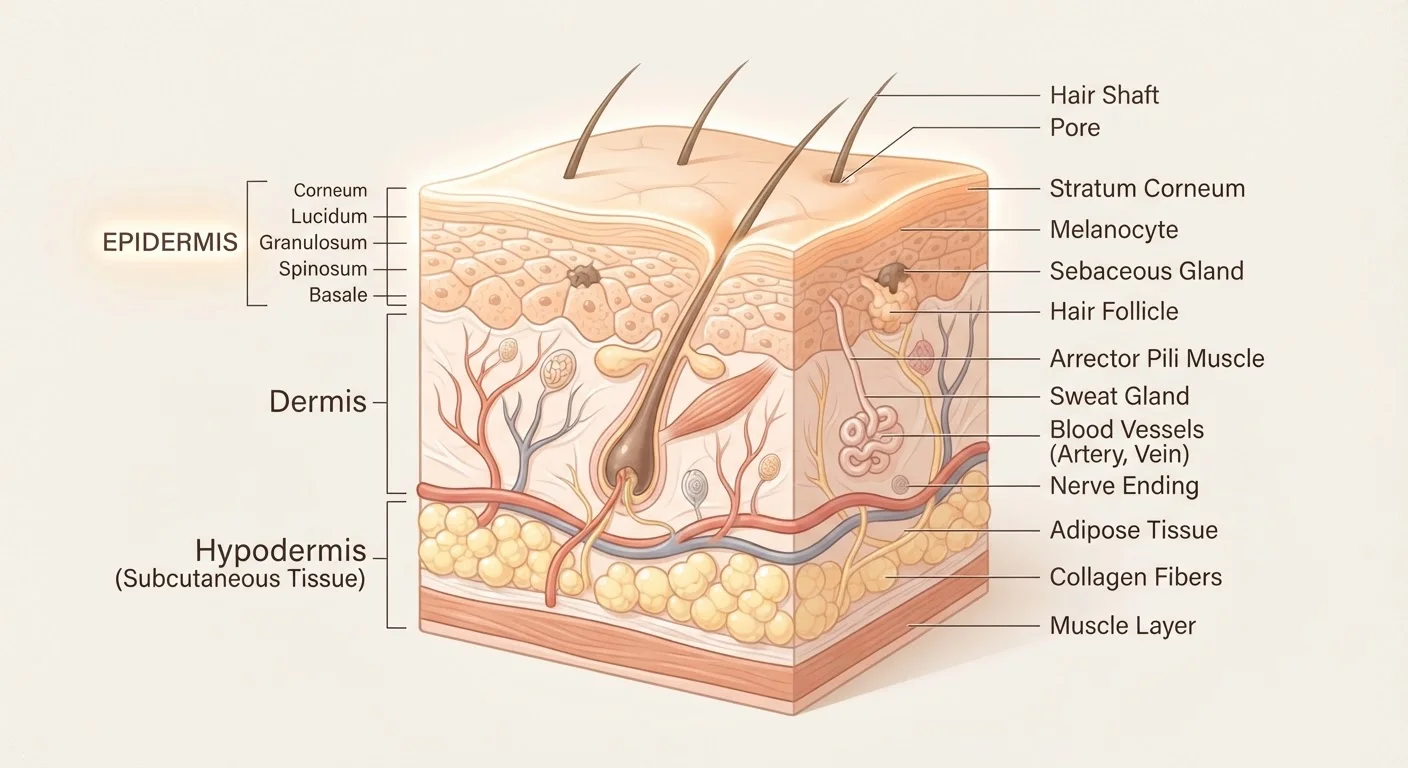
The skin barrier - technically called the stratum corneum - is the outermost layer of your skin. It acts as a two-way shield: keeping moisture locked in while blocking out environmental aggressors like pollution, bacteria, and irritants. Think of it as your skin's first line of defense against the outside world.
The stratum corneum is composed of dead, flattened skin cells (corneocytes) embedded in a lipid matrix of ceramides, fatty acids, and cholesterol - often described using a 'brick and mortar' model, where cells are the bricks and lipids are the mortar holding them together.
What the Skin Barrier Actually Is
Despite the skincare industry's frequent mention of the 'skin barrier,' the concept is often oversimplified or misrepresented. At its core, the skin barrier refers to the stratum corneum - the very outermost portion of the epidermis, which is itself the skin's outermost layer.
Scientists often describe its structure using a brick and mortar analogy. The 'bricks' are corneocytes: flattened, protein-rich cells that have completed their lifecycle and no longer contain a nucleus. The 'mortar' is a structured lipid matrix composed primarily of ceramides, free fatty acids, and cholesterol. This matrix is not simply a passive sealant - it's a carefully arranged lamellar (layered) structure that controls what passes through in either direction.
The barrier performs two equally critical jobs: it limits transepidermal water loss (TEWL), the process by which water evaporates from the skin's surface, and it prevents the penetration of microorganisms, allergens, and irritants from the environment. When either function is compromised, a cascade of skin concerns often follows.
The Barrier Is Not the Entire Skin
It's easy to conflate 'skin barrier' with 'skin' as a whole, but the stratum corneum is just the uppermost sublayer of the epidermis, which is itself only one of three main skin layers (the others being the dermis and hypodermis). Many skincare conversations focus on the barrier specifically because it's the accessible, modifiable layer most directly affected by topical products and environmental exposure.
What Disrupts the Skin Barrier - and Why It's So Easy to Do
Barrier disruption is more common than most people realize, and some of the most routine skincare habits can contribute to it. The most frequently cited causes include:
- Over-cleansing or using harsh surfactants - stripping the skin of its natural lipids more quickly than they can be replaced
- Excessive exfoliation - physical scrubs or high-concentration chemical exfoliants used too frequently can physically degrade the lipid matrix
- Low environmental humidity - particularly relevant in winter or in air-conditioned spaces, where ambient moisture is reduced
- Skin conditions like eczema (atopic dermatitis) or psoriasis - these are associated with structurally or functionally impaired barriers
- Aging - ceramide production naturally declines with age, gradually reducing the barrier's resilience
The order and composition of your skincare routine can meaningfully affect barrier integrity. Understanding why product layering matters is explored in our guide on skincare routine order.
When in Doubt, Simplify Your Routine
If you suspect barrier disruption, reducing your routine to its most basic elements - a gentle cleanser, a lipid-rich moisturizer, and daily SPF - is often more effective than adding new products. Adding active ingredients when the barrier is already stressed can worsen sensitivity. Give your skin a period of lower-stimulation care before reintroducing exfoliants or other actives.
The Signs of a Compromised Barrier
A healthy barrier is often invisible - your skin simply functions. When it's disrupted, the signs tend to be both visible and tactile. Recognizing them early makes it easier to course-correct before the disruption deepens.
~50%
Of skin lipids are ceramides
Research published in dermatology literature consistently identifies ceramides as the dominant lipid component of the stratum corneum, making them central to barrier structure and function.
30-40%
Of adults experience sensitive skin
Epidemiological surveys suggest a substantial proportion of the adult population self-report skin sensitivity, a condition frequently linked to compromised barrier function rather than true allergy.
2-4 weeks
Average skin cell turnover cycle
The skin naturally renews its surface cells roughly every two to four weeks in younger adults, though this rate slows with age - affecting how quickly a disrupted barrier can rebuild itself.
Common indicators of barrier disruption include persistent dryness or dehydration that doesn't resolve with standard moisturizing, a feeling of tightness or sensitivity to products that previously felt comfortable, redness or inflammation without an identifiable cause, increased breakouts (since a compromised barrier allows bacteria easier access), and a rough or dull texture. In more significant cases, visible flaking or scaling may appear.
It's worth noting that some of these symptoms overlap with other skin conditions. A board-certified dermatologist is the appropriate resource for persistent or severe presentations - self-diagnosis has real limits here.
How to Support a Healthy Skin Barrier
Barrier support doesn't require an elaborate routine - in fact, simplicity is often the most effective approach. The foundational principles are well-established in dermatological research:
- Cleanse gently. Low-pH, fragrance-free cleansers that don't strip the skin preserve the lipid layer more effectively than traditional soap-based formulas.
- Moisturize consistently. Look for formulations containing ceramides, cholesterol, and fatty acids - these most closely mirror the skin's own lipid composition. For a deeper look at how these categories work, our article on moisturizer ingredients worth understanding breaks down humectants, occlusives, and emollients.
- Use SPF daily. UV exposure degrades the lipid matrix over time. The case for daily sun protection is covered in detail in our piece on SPF as a daily skincare step.
- Pace your actives. Retinoids and exfoliating acids can be valuable tools, but frequency and concentration matter significantly. Introducing them slowly gives the barrier time to adapt.
For a comprehensive look at the habits and ingredients that support long-term barrier health, see everything the skin barrier needs to stay healthy.
This article is for general informational purposes only and does not constitute medical or dermatological advice. Consult a qualified healthcare professional for concerns about your specific skin health.