

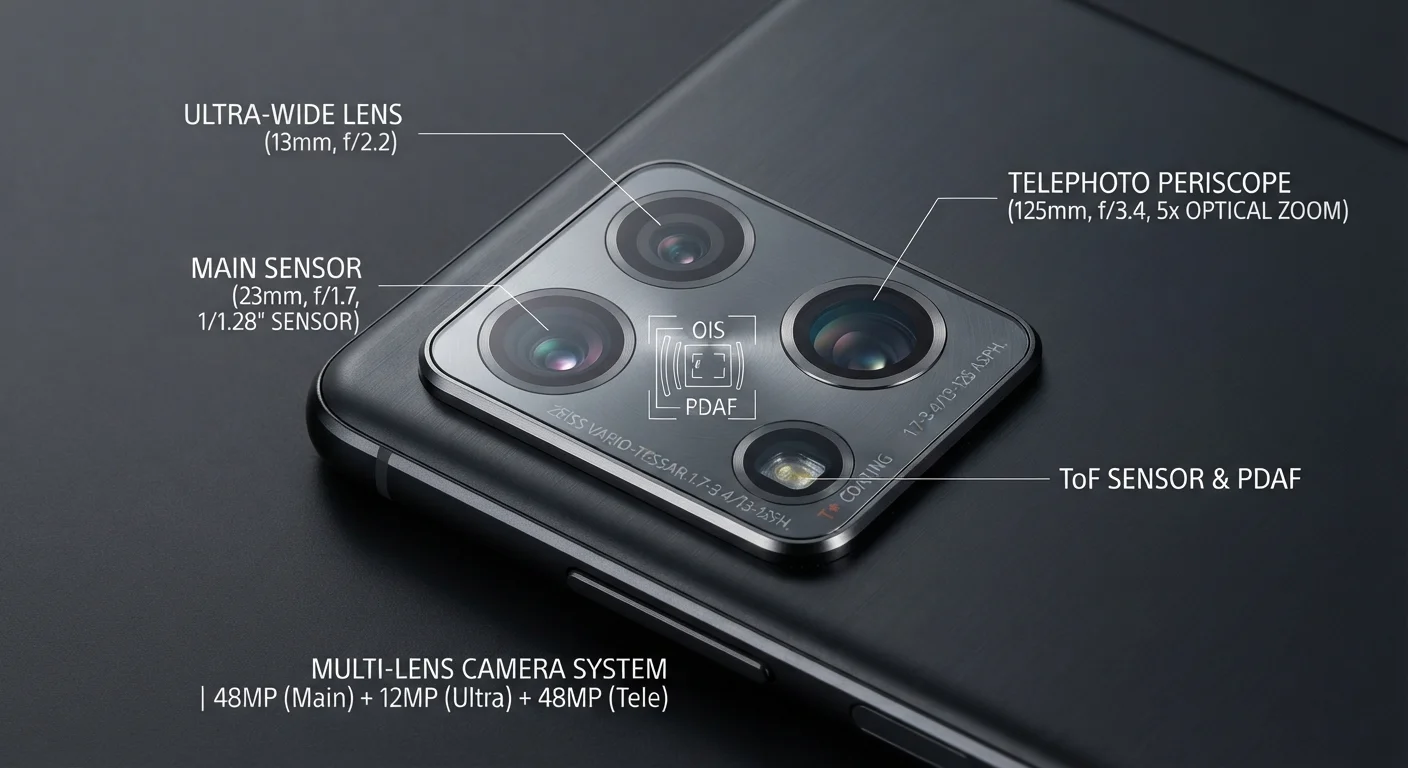
Key Takeaways
- More megapixels do not automatically mean better photo quality - sensor size and aperture matter more in low light.
- A lower f-number (e.g., f/1.8) means a wider aperture, which lets in more light and generally produces better photos in dim conditions.
- Optical zoom preserves image sharpness; digital zoom is essentially cropping and degrades quality.
- OIS (optical image stabilization) reduces blur from hand movement, especially useful for video and low-light shots.
- Spec sheets describe hardware potential - real-world image processing by the phone's software plays an equally important role.
Start here
Why Camera Specs Can Mislead You
Core concept
Megapixels: The Most Misunderstood Number
Go deeper
Aperture and Sensor Size: Where Light Actually Matters
Key distinction
Optical vs. Digital Zoom: A Critical Distinction
Advanced context
Specs That Affect Video and Low-Light Performance
Apply it
Putting It All Together Before You Decide
Why Camera Specs Can Mislead You
Phone camera spec sheets are written to impress, not necessarily to inform. Numbers cascade down marketing pages - 200MP, 10x zoom, f/1.6 aperture - without much explanation of what they mean for the photos you'll actually take at a birthday party or on a hiking trail.
The challenge is that camera performance is a product of many interacting factors: hardware, software, and even conditions like lighting. A single impressive-sounding number rarely tells the whole story. As our guide to reading product specifications objectively explains, specs can mislead as easily as they inform. Understanding what each term actually measures is the first step to cutting through the noise.
Megapixels (MP)
The total number of pixels in an image. Higher megapixels allow for larger prints or heavier cropping, but do not directly determine overall photo quality.
Aperture
How wide the camera lens opens to let in light, expressed as an f-number. A smaller f-number (e.g., f/1.8) means a wider opening and better performance in dim conditions.
Sensor size
The physical area of the image sensor inside the camera. Larger sensors capture more light, typically producing less noise and better detail in challenging lighting.
Optical zoom
Magnification achieved through physical lens optics rather than software. Optical zoom maintains image sharpness, unlike digital zoom, which crops and degrades quality.
OIS (Optical Image Stabilization)
A hardware mechanism that physically adjusts the lens or sensor to counteract hand movement, reducing blur in photos and shakiness in video.
Computational photography
Software-driven image processing that combines multiple exposures, AI algorithms, and sensor data to produce a finished photo - often the main reason two phones with similar specs look different.
Megapixels: The Most Misunderstood Number
Megapixels (MP) measure how many individual pixels make up an image. More pixels mean a larger file and the ability to crop or print at bigger sizes without visible degradation. However, megapixels say nothing about color accuracy, dynamic range, or performance in difficult lighting.
Sensor design matters more than pixel count for everyday photo quality. Manufacturers sometimes pack more pixels onto a smaller sensor - a practice called pixel binning when reversed - which can create noise in low-light images. A phone with a lower megapixel count but a physically larger sensor often captures cleaner, more detailed shots in real-world conditions.
Check Sensor Size Alongside Megapixels
When comparing cameras, look for the sensor size spec (often listed as a fraction like 1/1.56") alongside the megapixel count. A phone with fewer megapixels but a larger sensor will frequently outperform a higher-megapixel model with a smaller sensor, especially indoors or at night. If sensor size isn't listed, sample photos in dim lighting are a more reliable indicator than the MP number alone.
Aperture and Sensor Size: Where Light Actually Matters
Aperture describes how wide the camera lens opens, expressed as an f-number such as f/1.8 or f/2.4. The lower the f-number, the wider the opening - and the more light reaches the sensor. Wide apertures (low f-numbers) are especially valuable in indoor or nighttime settings where ambient light is limited.
Sensor size - often listed in fractions of an inch or as a ratio like 1/1.56" - describes the physical area capturing light. Larger sensors collect more photons per shot, which generally translates to less digital noise and better tonal range. These two specs together (aperture and sensor size) are a far more reliable predictor of low-light performance than megapixel count alone.
For more on how display-related specs interact with image quality perception, see our plain-English guide to resolution, which applies similar reasoning to screen specs.
Optical vs. Digital Zoom: A Critical Distinction
Zoom specs are one of the most frequently misrepresented numbers in phone marketing. Optical zoom uses a dedicated telephoto lens or physical lens movement to magnify a subject, preserving image sharpness and detail. Digital zoom is software-based: the camera crops into the existing frame and enlarges the result, which always reduces image quality.
When a spec sheet lists "10x zoom," check whether it specifies optical or digital. Many phones combine both - for example, 5x optical zoom extended to 10x via digital processing. The optical portion is where sharpness is preserved; everything beyond that is an enlargement of a cropped image. For shooting distant subjects where detail matters, the optical zoom figure is the one worth comparing.
"Space Zoom" and Similar Marketing Terms
Terms like "Space Zoom" or "Super Zoom" are brand-specific marketing labels, not standardized technical specs. They typically combine optical and digital zoom into a single headline number. Always look for the specific optical zoom value (e.g., "5x optical") rather than the combined or maximum figure to understand actual lens capability. Relying on the headline zoom number alone is one of the most common misreads on a camera spec sheet.
Specs That Affect Video and Low-Light Performance
Beyond still photography, several specs shape how well a phone handles video and challenging lighting:
- OIS (Optical Image Stabilization): Uses physical hardware to compensate for hand tremor. Reduces blur in photos and shakiness in video - particularly valuable for handheld or walking shots.
- EIS (Electronic Image Stabilization): Software-based stabilization that crops the frame slightly to smooth motion. Less effective than OIS in severe shake, but often used in combination.
- Video resolution and frame rate: Specs like 4K at 60fps describe maximum capability, not default recording settings. Higher frame rates require more storage and processing power.
- Night mode: A software feature, not a hardware spec, though it relies on the hardware listed above to function well.
Just as battery specs don't tell the full performance story, video specs require context to interpret accurately.
Putting It All Together Before You Decide
No single camera spec determines whether a phone takes photos you'll love. The practical approach is to identify which shooting situations matter most to you - low-light evenings, action shots, landscape travel - and then match the relevant specs to those needs.
Prioritize aperture and sensor size for low-light shooting. Look for confirmed optical zoom if you frequently photograph distant subjects. Check for OIS if video is a priority. And recognize that software processing plays an equally important role - two phones with near-identical specs can produce noticeably different results based solely on how each manufacturer's algorithms interpret sensor data.
For a broader foundation in decoding phone specs beyond the camera, our plain-English phone spec dictionary covers RAM, storage, and processors in the same approachable format. And if you want a framework for evaluating any spec sheet - not just cameras - reading a product specification sheet without getting lost is a useful next step.
Plain-English Phone Spec Dictionary
A quick-reference glossary covering RAM, storage, processors, and other common smartphone specs in straightforward, everyday language - a useful companion to camera spec literacy.
Product Research Tips Hub
A curated collection of guides on how to evaluate products before purchasing, including how to read spec sheets critically and avoid common comparison traps.