

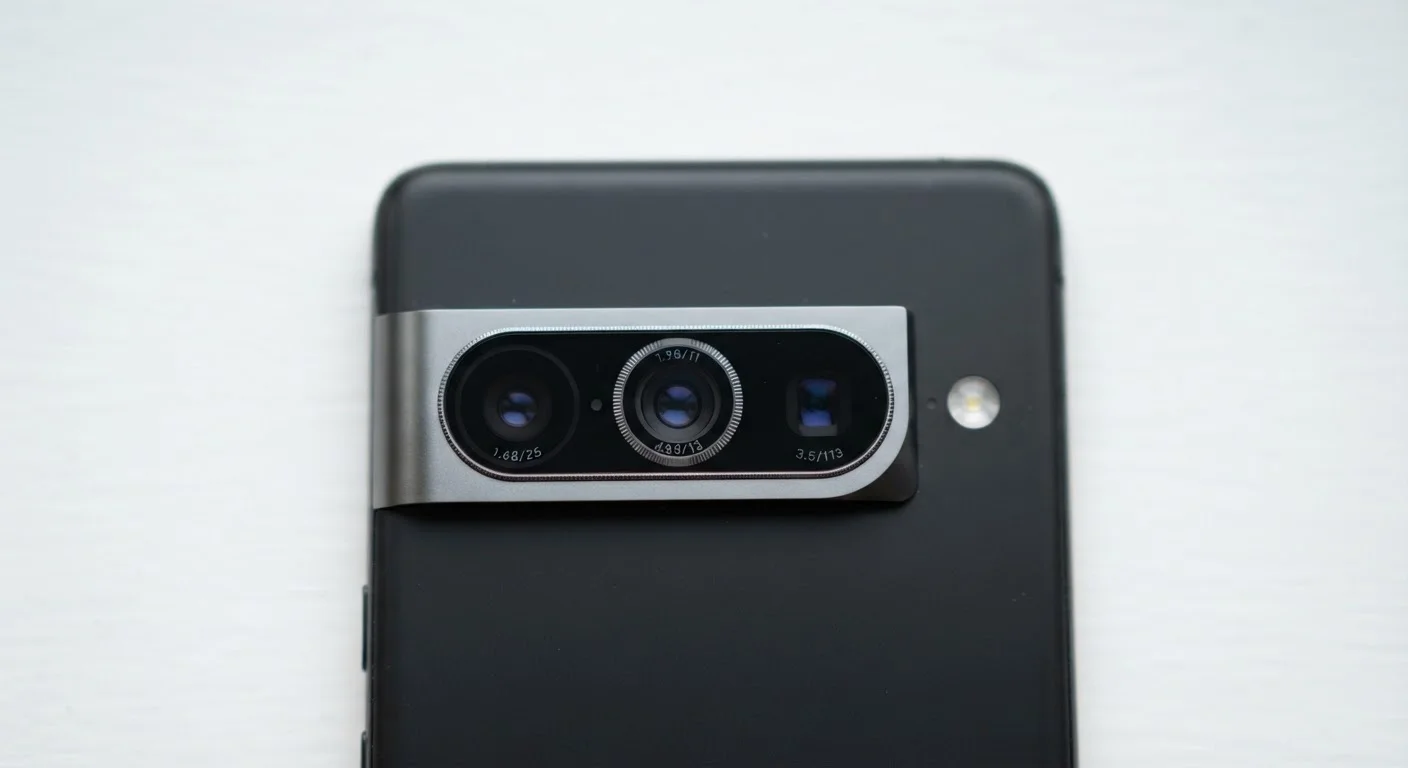
Key Takeaways
- Megapixels measure image resolution, not overall photo quality.
- Sensor size and individual pixel size often matter more than total pixel count.
- Software processing and computational photography play a major role in modern image quality.
- Lens aperture and optical image stabilization significantly affect low-light and action shots.
- A phone with fewer megapixels can produce noticeably better photos than one with more.
Megapixels (MP)
A megapixel is one million pixels - the tiny dots of color that make up a digital image. A phone's megapixel count tells you how many of those dots its camera captures per photo. Higher numbers mean larger potential image files and more flexibility to crop, but they say nothing about how sharp, well-lit, or accurate in color those pixels actually are.
Sensor resolution (megapixels) is mathematically independent of sensor size, pixel pitch, and optical quality - all of which can affect final image fidelity more than raw pixel count.
What Megapixels Actually Measure
Every time you see a phone marketed with a "200MP camera" or a "108MP sensor," the number describes exactly one thing: how many pixels the camera assembles into a single image. One megapixel equals one million pixels. A 12MP shot produces an image with roughly 12 million individual color dots; a 48MP shot produces one with 48 million.
That larger number does have genuine uses. Higher-resolution images give you more room to crop a photo without the result looking blurry, and they enable very large-format printing. But resolution is only one dimension of image quality - and in most daily situations, it is not the most important one. As this guide to reading product specs explains, a single headline number rarely tells the whole story.
12-16MP
Resolution sufficient for standard social and print use
Photography educators and imaging engineers widely agree this range meets most everyday consumer needs without trade-offs in pixel size.
~50%
Resolution reduction common with pixel binning
Many phones using pixel binning combine four pixels into one by default, reducing output resolution to improve light capture in typical shooting conditions.
f/1.5-f/2.8
Typical smartphone main lens aperture range
Aperture values across contemporary flagship and mid-range phones, reflecting the range from wide to moderate light-gathering capability.
Why Sensor Size and Pixel Size Often Matter More
Inside every phone camera sits a small semiconductor chip called the image sensor. Its physical dimensions determine how much light the camera can collect at any given moment - and light is the raw ingredient that separates a clean, vivid photo from a grainy, flat one.
When manufacturers squeeze more pixels onto a sensor of the same size, each individual pixel gets smaller. Smaller pixels capture less light per exposure, which tends to increase noise (that grainy texture common in dim photos) and compress dynamic range. A phone with fewer but larger pixels on a bigger sensor can gather more light and produce a cleaner result than a higher-MP device with a cramped sensor.
Many current phones address this using a technique called pixel binning - merging groups of adjacent pixels into one effective "super pixel" to improve light capture. The practical effect is that the camera's default output is lower in resolution but better in quality than shooting at the sensor's full pixel count. That 108MP spec may routinely produce 12MP photos under normal conditions by design.
Pixel Binning Changes What the MP Number Means
When a phone lists a very high megapixel count, check whether the default photo mode uses pixel binning. Many devices capture at a quarter of the listed resolution by default to prioritize image quality over file size and pixel count. The headline MP figure describes the sensor's maximum capability, not necessarily the resolution of photos you'll actually take day-to-day.
The Role of Optics and Computational Photography
Even a large, high-resolution sensor underperforms when paired with a poor-quality lens. Lens quality shapes sharpness, color fringing (chromatic aberration), and how the camera handles glare. Aperture - expressed as an f-number - determines how wide the lens opens to admit light. A wider aperture (lower f-number) allows more light in, which helps in low-light environments and contributes to background blur.
Optical image stabilization (OIS) physically adjusts the lens or sensor to counteract hand movement, reducing blur in low-light and motion scenarios in ways that more megapixels simply cannot compensate for.
Software arguably does as much heavy lifting as hardware in modern smartphone cameras. Computational photography - algorithms that process multiple frames, align exposures, and reconstruct detail - can dramatically improve a photo taken by modest hardware. Night modes, HDR merging, and AI-driven sharpening all operate after the shutter fires. This is why two cameras with identical megapixel counts can deliver meaningfully different results. For a deeper look at other camera specs, see this walkthrough of phone camera spec sheets.
Look Beyond the Headline MP Number
When comparing phone cameras, search for the sensor size (often listed in inches or millimeters) and the main lens aperture alongside the megapixel count. These three data points together give a far more complete picture of expected image quality than MP alone. Independent lab tests and sample image repositories can fill in what spec sheets leave out.
Putting It All Together When Reading a Spec Sheet
When you encounter a camera spec sheet, treat megapixels as one data point rather than a quality score. Pair it with context: What is the sensor size? Does the phone use OIS? What aperture does the main lens use? Does the manufacturer publish information about its image processing pipeline?
Real-world sample photos and independent camera tests remain the most reliable way to evaluate a phone's camera output, because they capture the combined effect of sensor, optics, and software together - not any single spec in isolation. The same principle applies across many phone features, from zoom capabilities (see how optical, digital, and hybrid zoom differ) to battery life (explored in what battery specs don't tell you). Spec sheets are useful starting points, but they reward readers who look past the headline numbers. See also common smartphone myths worth setting straight for related misconceptions that trip up buyers.