

Key Takeaways
- Tire pressure and tread depth are among the most overlooked pre-trip checks - both affect safety significantly.
- Fluids degrade between services; check levels visually even if your last oil change was recent.
- A working emergency kit and a charged phone are low-effort safeguards worth verifying every time.
- Most pre-trip checks require no tools and can be done in a single driveway walkthrough.
- Catching a minor issue before departure is far less disruptive than discovering it mid-highway.
Summary
22 items · 20-45 minutes
Why a Pre-Trip Check Is Worth the Time
Most breakdowns don't happen without warning - they happen after warnings get ignored. A tire that was already underinflated, a battery that had been slow to crank for weeks, or a wiper blade that smeared instead of cleared: these are fixable issues that become roadside emergencies when they're left unaddressed before a long drive.
This checklist is designed for any driver heading out on a trip of two or more hours. It doesn't require mechanical expertise - just a willingness to spend 20 to 45 minutes walking around your vehicle and checking what's there. For drivers who want a broader view of how maintenance fits into vehicle costs overall, the vehicle ownership cost audit is a useful complement to what you'll find here.
The checks below are grouped by category so you can move systematically - from tires to fluids to lights to your emergency kit - without doubling back or missing anything.
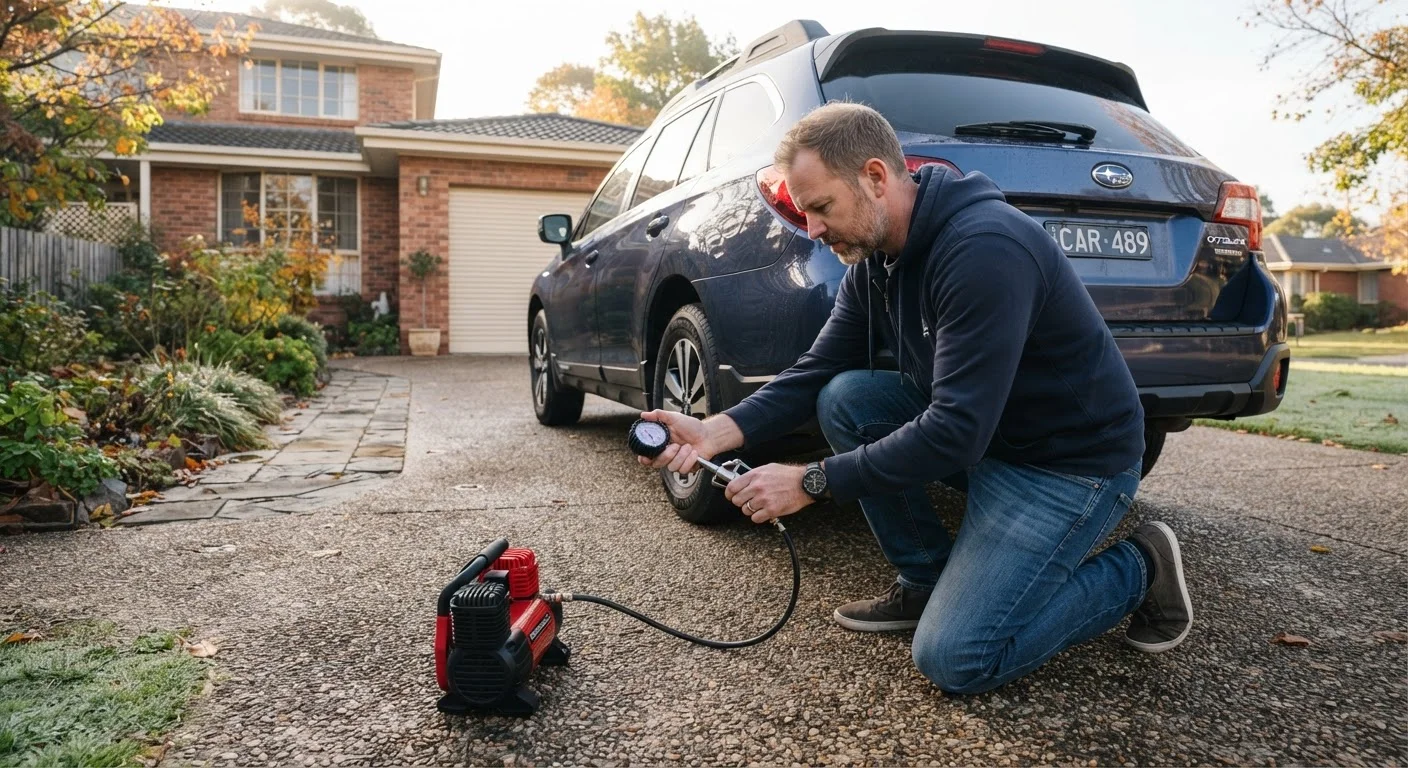
Tire pressure gauge
Used to measure PSI in all four tires and the spare against the manufacturer's recommended level.
Tread depth gauge or quarter
Used to check whether tire tread depth is still within a safe range for highway driving.
Flashlight or headlamp
Helps you inspect dark areas under the hood and beneath the vehicle for leaks or worn components.
Vehicle owner's manual
Provides manufacturer-specified fluid levels, tire pressure ratings, and service intervals for your specific model.
Lint-free rag or paper towels
Used when checking oil and other fluid dipsticks for an accurate reading.
The Pre-Departure Checklist
Work through each group in order. Most items take under a minute; a few require you to pop the hood or consult your owner's manual. Flag anything that looks off - even if it doesn't seem urgent - and decide before you leave whether it needs attention now or can wait.
Tires
Fluids
Lights and Visibility
Under the Hood and Belts
Emergency Preparedness
When to See a Mechanic Before Departing
If during your check you find a fluid leak, a visibly damaged tire, a brake warning light, or a battery that seems corroded or weak, don't dismiss it as something to deal with later. These are issues that can escalate quickly at highway speeds or in unfamiliar territory. Have a qualified mechanic assess the vehicle before a long trip if anything gives you genuine pause - it's a far smaller disruption than a breakdown 200 miles from home.
For context on how tires and fluids interact with changing seasons and driving conditions, see our guide to seasonal car prep. And if you're unsure what your emergency kit should actually contain, the breakdown of roadside emergency kit components explains what each item is for and why it matters.
A Few Things to Do the Night Before
Some checks are easier - or more useful - done the evening before departure rather than the morning of. Tire pressure readings are more accurate when tires are cold, meaning before the car has been driven. Checking fluid levels after the engine has cooled overnight also gives you a cleaner read than immediately after a warm-up.
Use the night before to also confirm your route, download offline maps if you're traveling through areas with spotty cell service, and make sure your phone charger and any mounts are in the car. None of that is a vehicle check, but it folds naturally into departure preparation.
Don't Skip Checks Because the Car Feels Fine
Vehicles can mask developing problems - especially with tires and batteries - until the failure is sudden. A tire can be significantly underinflated without any obvious handling change at low speeds. Similarly, a battery can start a car normally right up until it doesn't. Subjective confidence is not a substitute for a physical check.
Battery condition deserves particular attention before long drives. If your car has been slow to start recently, or you've noticed dim headlights or interior lights, those may be early warning signs. Our article on signs of a failing car battery walks through what to look for before you end up stranded. For more general upkeep guidance, the car maintenance hub is a good starting point.