

Key Takeaways
- Simple fluid checks, air filters, and wiper blades are generally safe for home maintenance.
- Tasks involving brakes, suspension, or advanced diagnostics carry real risk if done incorrectly.
- DIY maintenance can save money but requires the right tools, space, and honest self-assessment.
- A shop visit is worth the cost when safety systems or warranties are on the line.
- Knowing where the line is between DIY and professional work protects both your wallet and your safety.
Saves money on routine, low-skill tasks
Fluid top-offs, air filter swaps, and wiper replacements cost a fraction of shop labor when done yourself. These savings add up meaningfully over a vehicle's life.
Builds useful knowledge about your vehicle
Drivers who handle basic maintenance tend to notice problems earlier - unusual sounds, leaks, or wear - because they're regularly under the hood.
Flexible timing, no appointment needed
You can check tire pressure or swap a cabin filter on your schedule, without waiting for a shop opening or leaving your car for the day.
Greater transparency over what's being done
When you do the work yourself, you know exactly what parts were used and how the job was completed - no uncertainty about whether a service was actually performed.
Mistakes on safety systems can be dangerous
Errors in brake, steering, or suspension work can cause failures that put you and other drivers at serious risk. These systems have zero margin for error.
Tool costs reduce or eliminate savings
Quality jack stands, torque wrenches, and specialty sockets represent a real investment that may not pay off unless you're doing multiple repairs over time.
Risk of misdiagnosis wastes time and money
Replacing parts based on an incomplete diagnosis is a common and costly DIY mistake - the root cause remains unfixed and parts expenses pile up.
Some repairs may affect warranty coverage
Depending on your vehicle's warranty terms, certain work done outside a certified shop could complicate future claims. Always review warranty documentation first.
Our Verdict
DIY car maintenance makes sense for straightforward, low-risk tasks that require minimal tools and have clear how-to guidance. For anything involving safety-critical systems, advanced diagnostics, or work that could void a warranty, a qualified mechanic is the right call. The goal isn't to do everything yourself - it's to know which jobs you reasonably can.
Drivers who want to stay engaged with their vehicle's upkeep, reduce routine costs, and make more informed decisions when they do take their car to a shop.
Why This Decision Matters More Than People Think
Most drivers fall into one of two camps: those who never open the hood, and those who assume every job is a YouTube tutorial away. The reality sits firmly in the middle. Knowing which maintenance tasks belong in your driveway and which belong at a shop isn't just about saving money - it's about not creating a bigger, more expensive problem in the process.
For a full picture of what your car actually needs and when, see the complete car maintenance timeline - it's a useful reference before deciding what to tackle yourself.
Saves money on routine, low-skill tasks
Fluid top-offs, air filter swaps, and wiper replacements cost a fraction of shop labor when done yourself. These savings add up meaningfully over a vehicle's life.
Builds useful knowledge about your vehicle
Drivers who handle basic maintenance tend to notice problems earlier - unusual sounds, leaks, or wear - because they're regularly under the hood.
Flexible timing, no appointment needed
You can check tire pressure or swap a cabin filter on your schedule, without waiting for a shop opening or leaving your car for the day.
Greater transparency over what's being done
When you do the work yourself, you know exactly what parts were used and how the job was completed - no uncertainty about whether a service was actually performed.
What You Can Realistically Handle at Home
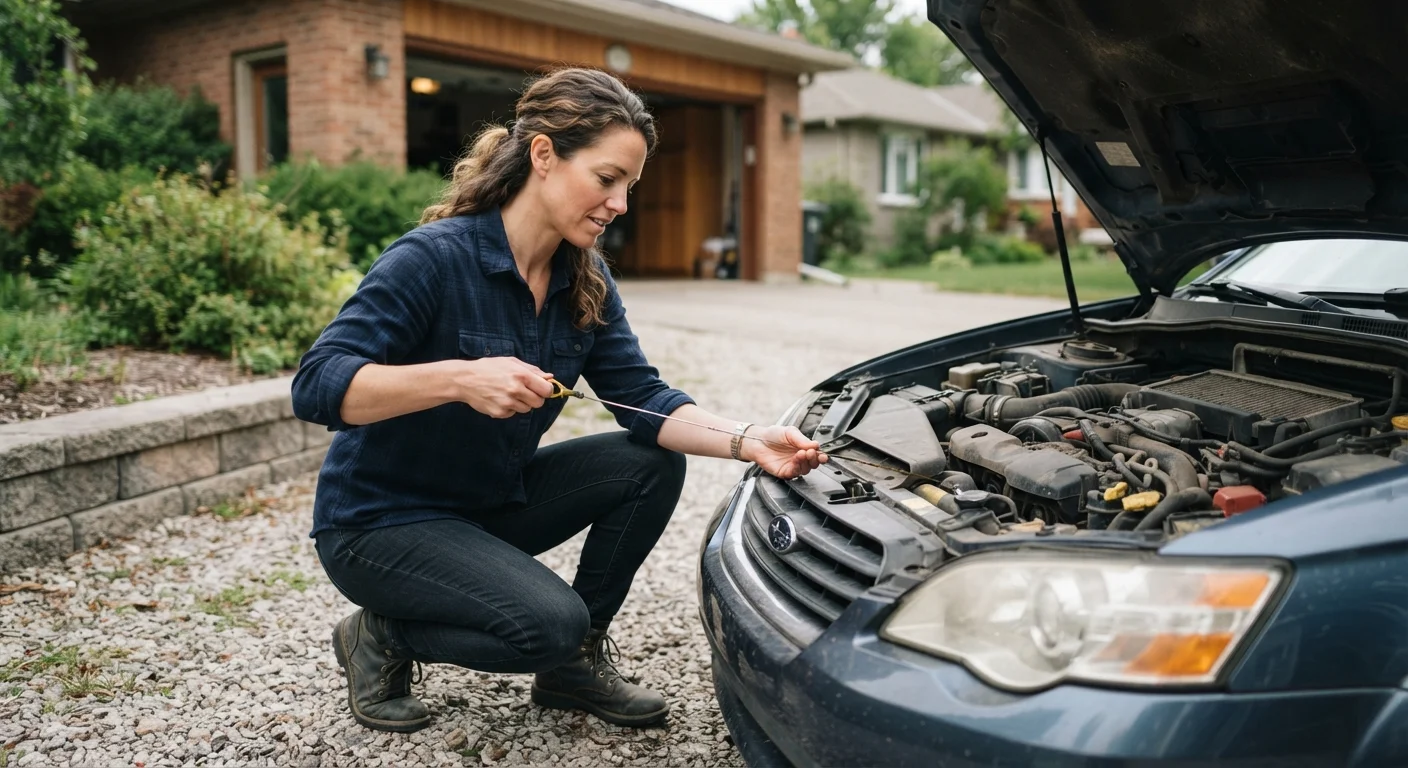
Several routine tasks are well within reach for drivers with basic mechanical confidence and a little time. Checking and topping off fluids - engine oil, coolant, washer fluid, and brake fluid - requires no special tools and gives you early warning of leaks or consumption issues. A detailed walkthrough is available in fluid checks you can do at home.
Other DIY-friendly tasks include replacing windshield wiper blades, swapping out cabin air filters, and checking tire pressure. These jobs are inexpensive, low-risk, and clearly described in most owner's manuals. Replacing a dead battery is also manageable for many drivers, though some newer vehicles have battery registration requirements - check your owner's manual first.
Check Your Owner's Manual First
Before attempting any maintenance task, consult your vehicle's owner's manual - not just online guides. Manufacturers specify correct fluid types, torque specs, and service intervals that can differ significantly from generic advice. Some modern vehicles also have battery management systems or electronic calibration requirements that make even simple replacements more involved than expected.
Where DIY Starts Carrying Real Risk
The line gets crossed when the task involves safety-critical systems or requires precision that's hard to achieve outside a proper shop environment. Brake pad and rotor replacement is a common DIY attempt, but incorrect installation can cause brake failure - a scenario that puts everyone on the road at risk. Similarly, suspension and steering components, timing belt or chain replacements, and anything involving the airbag system should stay with a qualified mechanic.
Advanced diagnostics are another area where home repair often falls short. A code reader can tell you a fault code exists, but interpreting it accurately and addressing the root cause usually requires factory-level tools and experience. Guessing your way through an engine warning light can lead to replacing parts that weren't the actual problem.
Mistakes on safety systems can be dangerous
Errors in brake, steering, or suspension work can cause failures that put you and other drivers at serious risk. These systems have zero margin for error.
Tool costs reduce or eliminate savings
Quality jack stands, torque wrenches, and specialty sockets represent a real investment that may not pay off unless you're doing multiple repairs over time.
Risk of misdiagnosis wastes time and money
Replacing parts based on an incomplete diagnosis is a common and costly DIY mistake - the root cause remains unfixed and parts expenses pile up.
Some repairs may affect warranty coverage
Depending on your vehicle's warranty terms, certain work done outside a certified shop could complicate future claims. Always review warranty documentation first.
The Hidden Costs on Both Sides
DIY has real upfront costs that don't always get factored in: jack stands, torque wrenches, socket sets, and disposal fees for used oil add up. For a task you'll do once, renting tools or paying a shop may actually cost less. On the other side, shops vary widely in labor rates and diagnostic fees - understanding what a service involves helps you ask better questions and avoid unnecessary upsells.
Warranty coverage is also worth checking. On newer vehicles, certain repairs done outside a dealership or certified shop may affect coverage depending on the terms. This doesn't mean you can never touch your car, but it's worth knowing before you start. For broader cost-management strategies, keeping maintenance costs under control covers the balance well.
~$100-$150
Typical shop labor cost for an oil change service
Dealership and independent shop rates vary significantly by region and vehicle type; this range reflects common mid-market pricing in the U.S.
3-4x
Cost multiplier when small problems go unaddressed
Industry estimates suggest that deferred maintenance tasks - like ignoring a worn belt - frequently result in repair bills several times higher than the original fix would have cost.
Making the Call: A Practical Framework
Before starting any maintenance task, ask three questions: Do I have the right tools? Do I have a safe, flat workspace? And if something goes wrong, can I reverse course or is this a no-going-back situation? If the answer to any of these is uncertain, the shop is the right choice.
New drivers especially benefit from building this kind of judgment early. Car maintenance habits for new drivers explains how to develop a routine that keeps problems small. And if you're starting from scratch with no mechanical background, car maintenance for people who know nothing about cars is a no-jargon starting point worth reading first.