

Key Takeaways
- Checking five key fluids at home takes under 20 minutes and requires no mechanical training.
- Engine oil, coolant, brake fluid, power steering fluid, and windshield washer fluid all have visible reservoirs or dipsticks.
- Color and level together tell you more than level alone - dark, cloudy, or milky fluid signals a problem.
- Most checks should be done with the engine cold and on level ground for accurate readings.
- Consistent monitoring helps you catch leaks or degradation before they lead to expensive repairs.
What you will need
Why Fluid Checks Belong in Every Driver's Routine
Most catastrophic engine failures don't happen without warning - they follow weeks or months of low oil, overheating coolant, or degraded brake fluid that nobody caught in time. The good news is that catching these issues early doesn't require any mechanical skill. If you can read a ruler and recognize basic colors, you can monitor the fluids that keep your vehicle running safely.
This walkthrough covers the five fluids most relevant to everyday drivers: engine oil, coolant, brake fluid, power steering fluid, and windshield washer fluid. For a broader look at what belongs on your maintenance calendar, this no-jargon maintenance overview is a solid starting point.
Before you begin, gather what you'll need:
What you will need
Then give yourself a flat, safe place to work and follow the steps below.
What You'll Need
No specialty tools required - just a few items you likely already have at home. Having these on hand makes the process faster and more accurate:
Owner's Manual
Identifies the correct fluid types and reservoir locations specific to your vehicle.
Lint-Free Rags or Paper Towels
Used to wipe dipsticks clean before taking an accurate reading.
Flashlight or Work Light
Illuminates dark under-hood areas and helps you assess fluid color accurately.
Nitrile Gloves
Protects skin from contact with brake fluid and other corrosive fluids.
Once you have these ready, the checks themselves move quickly. If you want context on which home maintenance tasks carry more risk versus less, this breakdown of DIY versus shop tasks is worth a read before you get started.
Step-by-Step: Checking Each Fluid
Park on level ground and let the engine cool
Pull onto a flat surface and turn off the engine. For most fluid checks - especially oil and coolant - you need the vehicle on level ground to get an accurate reading. Wait at least 10 minutes (longer for coolant) before opening anything under the hood.
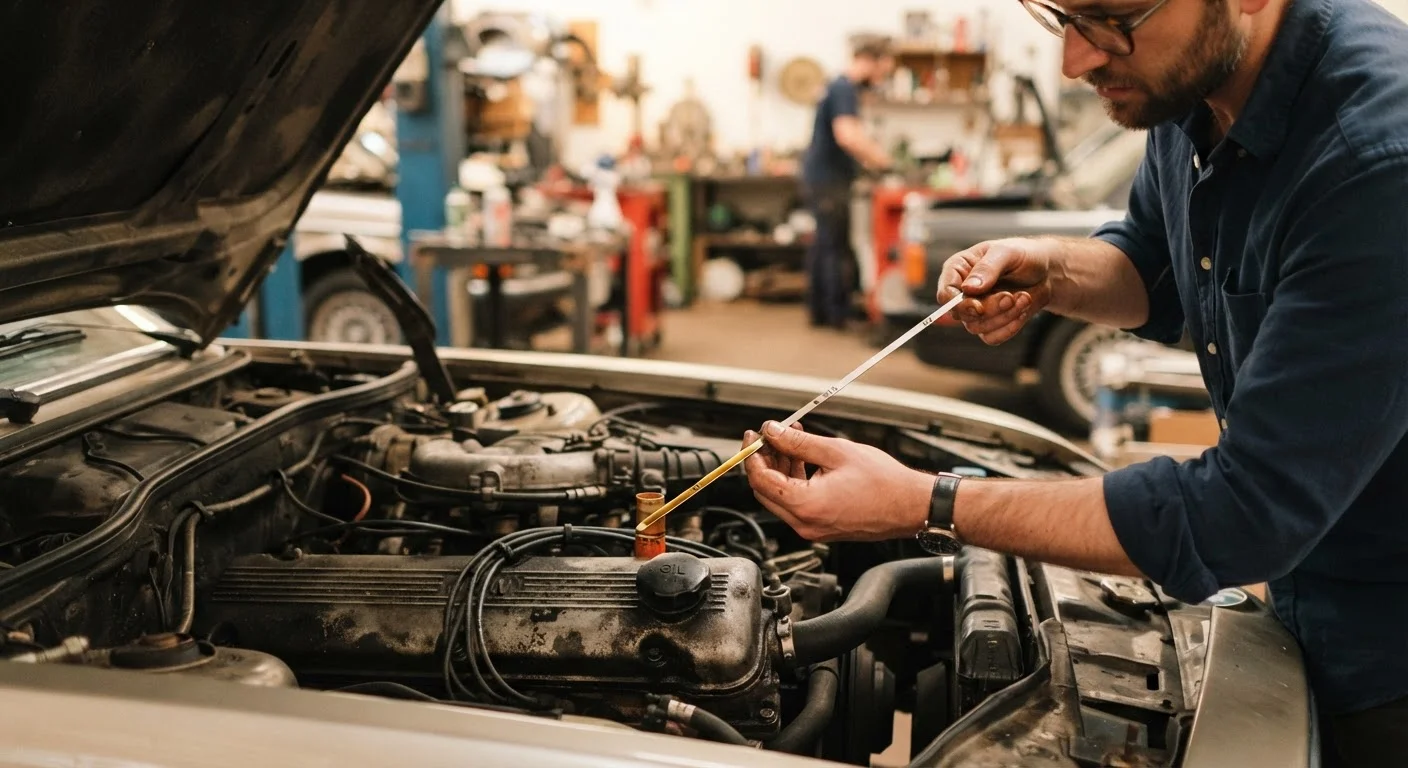
Check engine oil with the dipstick
Locate the oil dipstick - it typically has a brightly colored handle marked with an oil can symbol. Pull it out, wipe it clean with a rag, reinsert it fully, then pull it out again. The oil level should fall between the two marks at the bottom of the dipstick. Also check color: healthy oil ranges from amber to light brown. Nearly black oil with a gritty feel suggests it's overdue for a change.
Inspect the coolant (antifreeze) reservoir
The coolant reservoir is a translucent plastic tank, usually near the radiator, with MIN and MAX lines visible from the outside. You don't need to open it - read the level through the tank wall. Coolant should be a bright color (green, orange, pink, or blue depending on type). If it looks murky, rusty, or milky, that's a sign of contamination and warrants professional attention.
Check brake fluid in the master cylinder reservoir
The brake fluid reservoir sits on top of the brake master cylinder, usually near the back of the engine bay on the driver's side. Many reservoirs are translucent, so you can check the level without removing the cap. Brake fluid should be between MIN and MAX. Its color ranges from clear to light yellow when fresh; dark brown fluid indicates it has absorbed moisture and should be flushed by a mechanic.
Check power steering fluid (if applicable)
Not all vehicles have traditional hydraulic power steering - many newer models use electric power steering, which has no fluid reservoir. If your vehicle has one, the reservoir is usually labeled and has a dipstick built into the cap or visible MIN/MAX markings. The fluid should be clear to light pink; dark or foamy fluid means it needs attention. Consult your owner's manual to confirm whether this applies to your vehicle.
Top off windshield washer fluid
The windshield washer reservoir is the one fluid you can safely add yourself without any risk to engine systems. It's typically a blue-capped tank clearly marked with a wiper symbol. Use a washer fluid rated for your climate - formulas designed for freezing temperatures prevent the lines from icing up in winter. Plain water is not a substitute; it can freeze and breed bacteria in the system.
Brake Fluid: Don't Ignore Low Levels
A low brake fluid reservoir can indicate worn brake pads - but it can also mean a leak in the hydraulic system. If the level is significantly low and pads aren't near the end of their life, have a qualified mechanic inspect the system before driving. Never top off brake fluid without understanding why it dropped.
Never Open the Coolant Cap on a Hot Engine
Coolant systems are pressurized. Opening the radiator cap or reservoir cap while the engine is hot can cause scalding fluid to spray forcefully. Always wait at least 30 minutes after the engine has been running before inspecting coolant levels.
Building the Habit and Knowing When to Call a Pro
Make a Monthly Under-Hood Habit
Pick one day each month - the first of the month works well - to run through all five fluid checks at once. It takes less time than a coffee run and keeps small issues from becoming shop visits. Pair it with a quick look for any stains on your driveway.
Fluid checks are most useful when done consistently. A one-time check tells you where things stand today; monthly checks show you trends - a reservoir that's always a little low may indicate a slow leak that's worth investigating before it worsens.
Keep a simple note on your phone or in your glove box logging what you checked and when. If you notice fluid on your driveway or a warning light on the dash, don't wait for your next scheduled check - inspect immediately.
There are also things under the hood - and under the car - that fluid checks won't reveal. A proper undercarriage inspection requires a lift and trained eyes, and it's worth scheduling periodically alongside your standard service visits. And if you've absorbed some common automotive advice over the years, it's worth cross-referencing with a look at maintenance myths that deserve skepticism - some widely repeated rules of thumb are outdated or simply wrong.
Fluid monitoring is one of the simplest, highest-value habits a driver can build. It costs nothing but a few minutes and can prevent repairs that cost hundreds - or more.