

Key Takeaways
- Most undercarriage damage develops silently - drivers feel nothing until a component fails.
- Rust, fluid leaks, and worn bushings are the three most common findings in a thorough under-car check.
- A lift-up inspection at any oil change interval costs little or nothing extra to request.
- Catching a leaking brake line or cracked exhaust early can prevent serious safety risks.
- Suspension wear found underneath rarely triggers a dashboard warning light - it shows up in handling feel or tire wear instead.
Under-Car Inspection
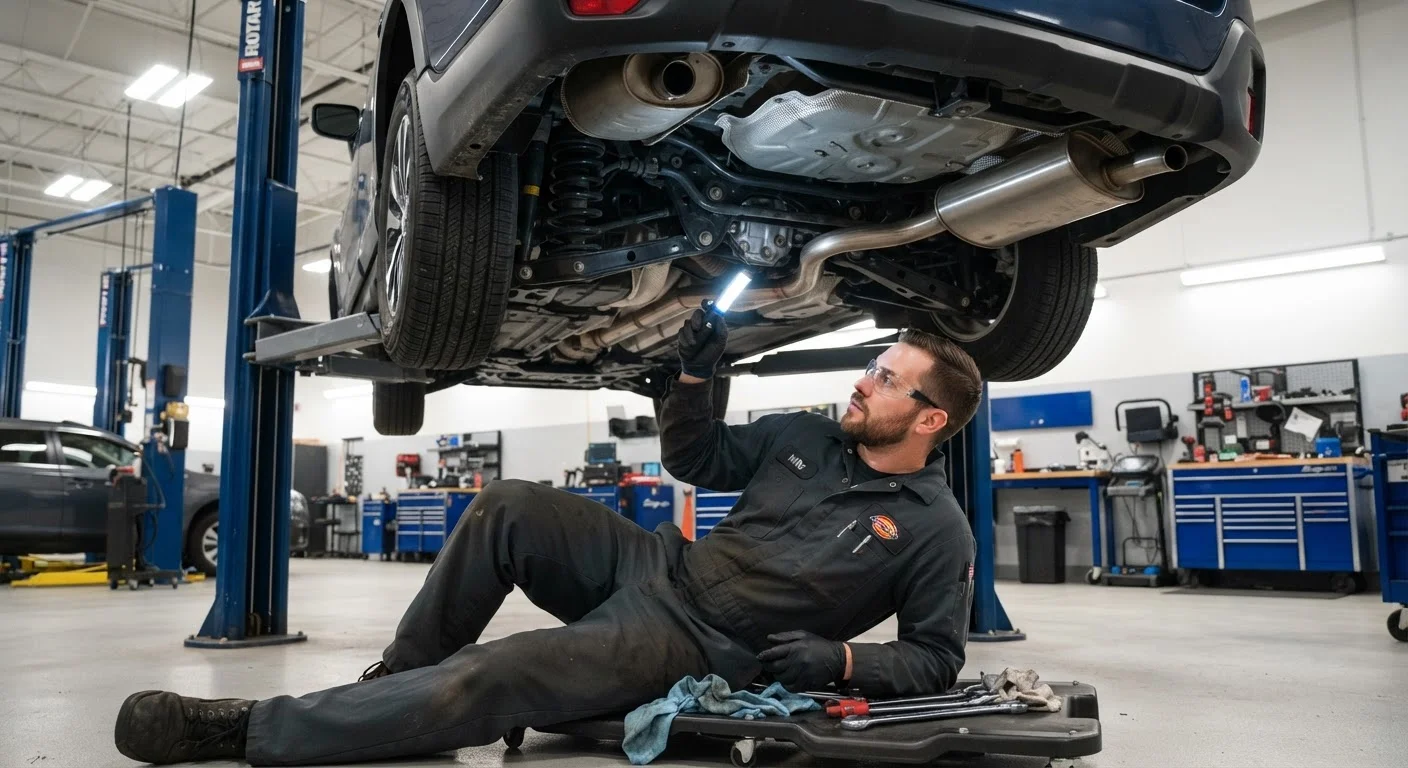
An under-car inspection - also called an undercarriage or underbody inspection - is a systematic check of all the components located beneath a vehicle, performed while the car is raised on a lift or supported on jack stands. Mechanics examine structural elements, fluid systems, and moving parts that are invisible during a routine walk-around. It's one of the most revealing checks a technician can perform.
A complete undercarriage inspection typically covers the exhaust system, suspension and steering linkages, brake lines, fuel lines, frame or unibody structure, CV axles or driveshafts, and the underside of the engine and transmission for leaks.
Why the Undercarriage Is the Most Overlooked Part of Your Vehicle
Drivers check tire pressure, glance at oil levels, and notice when a warning light appears. Almost nobody looks underneath their car. That blind spot matters, because the undercarriage houses components that directly affect braking, steering, ride quality, and structural safety - and most of them never show up on a dashboard display.
Road grime, moisture, road salt, and heat cycles work against everything underneath your vehicle every single mile. Unlike an engine check light, a cracking bushing or a weeping brake line doesn't announce itself. By the time a driver notices something is off, a small problem has often become an expensive one.
Understanding what mechanics are actually looking for - and why - puts you in a much stronger position when your car goes up on the lift. See our maintenance habit guide for new drivers for broader context on building a preventive inspection routine.
Undercarriage Checks Aren't Just for Older Vehicles
Many drivers assume only aging cars need undercarriage attention. In practice, a vehicle three to four years old in a high-salt-use region can develop notable brake line corrosion or suspension wear. Inspection intervals based on age alone miss this. Driving environment matters as much as mileage.
The Key Systems a Mechanic Examines Under Your Car
A thorough under-car inspection isn't a single glance - it's a structured walkthrough of multiple systems. Here's what a trained technician is actually evaluating:
- Exhaust system: The mechanic checks for cracks, holes, and loose hangers along the exhaust pipes, catalytic converter, and muffler. A damaged exhaust can route carbon monoxide toward the cabin - a genuine safety hazard, not just a noise problem.
- Brake lines and fuel lines: These steel and rubber lines run the length of the undercarriage. Rust, kinks, or chafe points can cause leaks. A compromised brake line is one of the most urgent findings a mechanic can report.
- Suspension components: Ball joints, control arm bushings, sway bar end links, and strut mounts all live underneath. Mechanics physically push and pull on these to feel for excess movement (called "play") that indicates wear. Worn suspension affects handling long before it causes a dramatic failure.
- CV axles and driveshafts: Torn CV boot seals allow grease to escape and contaminants to enter, accelerating joint wear. On four-wheel-drive and all-wheel-drive vehicles, the driveshaft U-joints and center support bearings also get scrutinized.
- Frame and unibody structure: Mechanics look for rust perforation, previous collision repairs, and cracked welds - especially around subframe mounting points, which bear enormous load.
- Fluid leaks: Oil, transmission fluid, coolant, and power steering fluid all have characteristic colors and textures. A technician can often identify the source and severity of a leak before it causes real damage.
~22%
Of vehicle crashes linked to pre-existing mechanical failure
According to a NHTSA large-scale study on crash causation, a meaningful share of crashes involve vehicles with known or detectable mechanical deficiencies - many affecting brakes and suspension.
6-10 years
Typical lifespan of rubber suspension bushings
Industry guidance from automotive engineers suggests most OEM rubber bushings degrade noticeably within this range, with accelerated wear in vehicles exposed to road salt or extreme temperature swings.
What Road Salt, Moisture, and Heat Actually Do Over Time
Corrosion is the primary enemy of anything underneath a vehicle in much of the United States. In northern states, road salt applied during winter accelerates rust on steel components dramatically - particularly on brake lines, exhaust hardware, and frame rails. Coastal environments bring salt air year-round, even for vehicles that never see snow.
Heat cycling - the engine warming up and cooling down repeatedly - stresses rubber components like bushings and CV boots. Over time, rubber hardens, cracks, and tears. Once a boot tears, the joint it protects typically needs replacement within a short period.
Moisture trapped in crevices causes rust to develop from the inside out. By the time surface rust is visible, structural rust underneath may already be advanced. That's why mechanics in rust-belt states flag undercarriage condition as a primary factor when evaluating a used vehicle's true condition - something that factors directly into long-term ownership costs.
When to Ask for an Undercarriage Inspection - and What to Do With the Findings
The most practical time to request an undercarriage inspection is whenever your vehicle is already on a lift - at an oil change, tire rotation, or brake service. There's no additional labor involved in a technician doing a walkthrough while the car is already raised. Ask directly: "Can you do a full undercarriage check while it's up?"
When the mechanic reports findings, ask them to categorize issues by urgency. Brake line corrosion or a cracked exhaust near the manifold warrants prompt attention. A slightly weeping rear main seal or minor surface rust on the frame may be worth monitoring rather than immediately repairing. Not every finding is an emergency, and a trustworthy shop will tell you which is which.
Keep a simple record of what was found and when - even a photo on your phone of the written inspection report. This helps you track whether a noted issue is progressing, and it gives you documentation if you're buying or selling the vehicle. For a broader vehicle readiness picture, a pre-trip inspection checklist is a good starting point before any significant drive.
While fluid checks you can do at home are a good self-service habit, undercarriage work genuinely requires professional equipment and trained eyes. This is one area where deferring to a qualified mechanic is the straightforwardly correct call.
Photograph the Inspection Report
When a mechanic hands you a written undercarriage report, take a photo before you leave. Date it and store it in your glove box or a notes app. If you return six months later with a new symptom, having that baseline record helps the technician spot what's changed - and it's invaluable documentation if you sell the vehicle.