

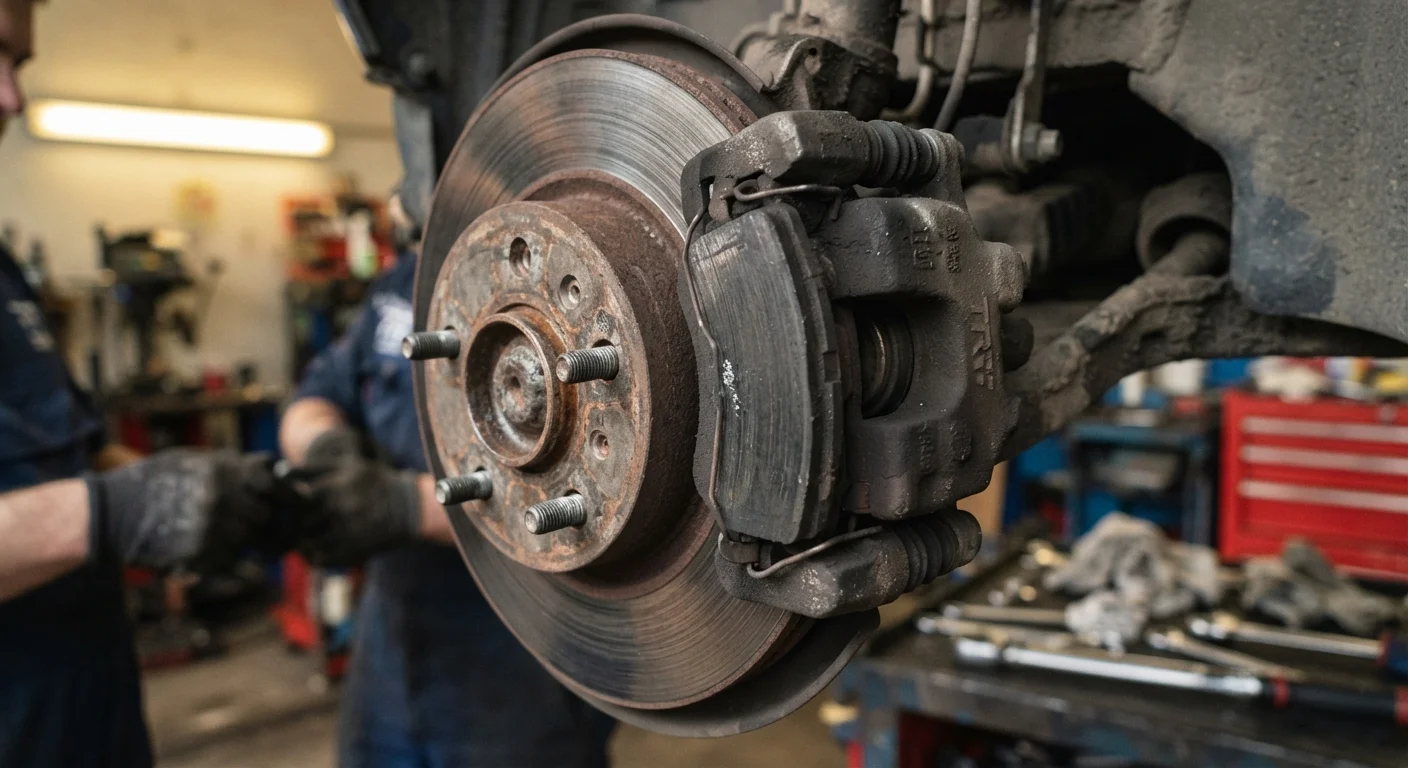
Key Takeaways
- Brake pads are a consumable - they wear down with every stop you make.
- Squealing, grinding, and increased stopping distance are the most common warning signs.
- Ignoring worn pads can damage rotors, significantly raising repair costs.
- Driving style, vehicle weight, and road conditions all affect how fast pads wear.
- A visual check through the wheel spokes can give you a rough read on pad thickness.
- When in doubt, have a qualified mechanic inspect your brakes - don't guess on safety.
Brake Pad Wear
Brake pads are friction material that press against your vehicle's rotors to slow and stop the car. Over time, this friction material wears down through normal use. Brake pad wear refers to the gradual thinning of that material until it can no longer stop your vehicle safely.
Most brake pads start with 10-12mm of friction material. Mechanics generally recommend inspection or replacement when the pad wears down to around 3-4mm, and consider anything at or below 2mm a safety concern.
How Brake Pads Actually Work
Every time you press the brake pedal, your vehicle's braking system forces a pair of brake pads against a metal disc called a rotor. The friction created by that contact is what slows your wheels. It's an elegantly simple system - and a consumable one. The friction material on the pads is sacrificed a little with every stop.
Most modern passenger vehicles use disc brakes on all four wheels, though some older or lighter vehicles still use drum brakes on the rear axle. Disc brakes are more transparent when it comes to inspection: you can often see the pads directly through the wheel spokes. Understanding what you're looking at helps you stay ahead of wear before it becomes a problem.
This is a fundamental part of building good maintenance habits - knowing what wears and why, so you can catch issues early.
25,000-70,000 mi
Typical brake pad lifespan range
The wide range reflects how significantly driving habits, vehicle weight, and terrain affect pad wear rates.
3-4mm
Pad thickness that triggers inspection
Most mechanics recommend replacing pads at or before this thickness; at 2mm or below, replacement is generally considered urgent.
~30%
Greater braking load on front axle
Physics of weight transfer under braking means front pads routinely wear faster than rear pads on most passenger vehicles.
What Accelerates Brake Pad Wear
Not all driving is equal when it comes to brake wear. Stop-and-go city traffic is far harder on pads than steady highway cruising. Each complete stop from speed generates heat and friction, and it's that cumulative stress that depletes the friction material over time.
- Driving style: Drivers who brake hard and late wear pads significantly faster than those who brake gradually from a distance.
- Vehicle weight: Heavier vehicles - trucks, SUVs loaded with cargo - require more braking force and accelerate pad wear accordingly.
- Road terrain: Hilly and mountainous driving means more frequent, often heavier braking compared to flat terrain.
- Pad material: Organic pads tend to wear faster and run quieter; semi-metallic pads are more durable but can be harder on rotors; ceramic pads offer a balance of longevity and low dust.
Keeping these factors in mind helps set realistic expectations. If you commute in a dense urban area in a full-size SUV, your pad life will look very different from someone doing rural highway miles in a compact sedan.
Smooth Braking Extends Pad Life
One of the most effective ways to get more miles from your brake pads is to brake gradually and earlier rather than hard and late. When traffic allows, easing off the accelerator and coasting to reduce speed before applying the brakes reduces the thermal and friction load on pads significantly. It's a habit that costs nothing and pays off in reduced maintenance frequency.
Warning Signs You Shouldn't Ignore
Brake pads communicate wear in several ways - some audible, some tactile, and some visible. Learning to recognize these signals is the most practical skill an everyday driver can have.
Squealing or Squeaking
Most brake pads have a small metal tab called a wear indicator built in. When the pad thins to a certain point, this tab contacts the rotor and produces a high-pitched squeal. It's an intentional design feature - a built-in alert. Note that some squealing after a car sits overnight or in damp weather is normal and typically disappears after the first few stops.
Grinding Noise
Grinding is a more serious signal. It generally means the friction material is gone and metal is contacting metal. At this stage, rotor damage is likely occurring with every stop. Continued driving in this condition raises repair costs and, more critically, compromises stopping ability.
Longer Stopping Distances
If your car takes noticeably longer to stop than it used to, worn pads are a likely factor - though brake fluid condition and rotor health also play a role. This symptom warrants an immediate professional inspection.
Brake Pedal Feel
A pedal that feels soft, spongy, or requires more pressure than usual is worth investigating promptly. While this can relate to brake fluid issues rather than pad wear alone, it signals something in the system deserves attention.
Ignoring these signs doesn't just risk a costly repair - it's a safety issue for you, your passengers, and others on the road. Staying on top of routine maintenance is almost always less expensive than dealing with the consequences of delayed repairs.
Checking Pads and Knowing When to Call a Mechanic
A basic visual check takes about two minutes and no tools. With the vehicle parked on flat ground, shine a flashlight through the wheel spokes toward the brake caliper - the C-shaped clamp around the rotor. You should be able to see the pad pressed against the rotor. If the friction material looks very thin (less than roughly a quarter inch), schedule an inspection soon.
That said, a proper measurement and condition assessment requires removing the wheel. A mechanic can measure exact pad thickness, check rotor wear and scoring, inspect calipers for proper function, and assess brake fluid condition. Brake inspections are generally inexpensive and often included during tire rotations - a good reason to stay current on tire maintenance visits as well.
Front and Rear Pads Wear Differently
Because front brakes handle a disproportionate share of stopping force, front pads almost always wear faster than rear pads. This means you may need to replace front pads more than once before your rear pads require attention. Always confirm the condition of all four corners during any brake service.
The bottom line: treat brake maintenance as a safety system, not a cosmetic one. If you're hearing or feeling something unusual, don't delay. A qualified mechanic is the right call whenever you're uncertain about brake condition - this is not a system where guesswork is appropriate.