

Key Takeaways
- Your vehicle's correct PSI is on the door jamb sticker, not the tire sidewall.
- Check pressure when tires are cold - driving heats air and inflates readings artificially.
- Under-inflated tires increase fuel consumption and wear unevenly, shortening tire life.
- A reliable gauge is the only tool you need; most gas station gauges are imprecise.
- Monthly checks catch slow leaks before they become dangerous or expensive.
What you will need
Why Tire Pressure Matters More Than Most Drivers Realize
Tire pressure sits at the intersection of safety, fuel economy, and tire longevity - yet it's one of the most consistently neglected maintenance tasks. A tire can be 10 PSI underinflated and still look fine to the naked eye. That's the problem.
Running low on pressure increases rolling resistance, meaning your engine works harder to move the car. The U.S. Department of Energy notes that underinflated tires can reduce fuel efficiency - worth keeping in mind if you're tracking what you spend at the pump. See how to calculate your real annual fuel costs to put those numbers in context.
Uneven pressure also causes uneven wear patterns, which can cut thousands of miles off tire life. And as noted in our article on brake pad wear, tire condition and braking performance are closely linked - both degrade quietly before becoming obvious.
Under-Inflation Is a Safety Risk
Tires running significantly below recommended pressure generate excess heat, which accelerates tread wear and raises the risk of a blowout - especially at highway speeds. Under-inflated tires also reduce braking effectiveness and handling response. Do not dismiss a tire that looks slightly flat; trust your gauge, not your eyes.
This task genuinely takes under 15 minutes and requires only one inexpensive tool. It's among the highest-value habits any driver can build. For a broader foundation, see car maintenance habits for new drivers.
What You Need Before You Start
The equipment list is short. A quality gauge is the most important investment - consistency matters more than any single reading.
Tire Pressure Gauge
Measures the air pressure inside each tire in PSI (pounds per square inch).
Air Compressor or Gas Station Air Pump
Adds air to tires that are below the recommended PSI.
Valve Stem Cap
Keeps dirt and moisture out of the valve stem between checks.
What you will need
Temperature Swings Change Your PSI
For every 10°F drop in ambient temperature, tire pressure falls by approximately 1 PSI. In regions with cold winters, tires that were properly inflated in summer can read significantly low by January. Check pressure more frequently when seasons change, and always use the cold-tire method for accuracy.
One common misconception worth addressing: the number on the tire sidewall (often something like "Max. Press. 51 PSI") is not your target. That's the tire's maximum structural load capacity. Your actual target is always on the door jamb sticker. This confusion is covered in more depth in our piece on car maintenance myths.
Step-by-Step: Checking and Adjusting Tire Pressure
Follow these steps in order for the most accurate results. The entire process covers all four tires in about 10 minutes once you've done it once or twice.
Find your vehicle's recommended PSI
Open the driver's door and look for a sticker on the door jamb - it lists the manufacturer's recommended tire pressure for front and rear tires separately. You can also find this in your owner's manual. Do not use the maximum PSI number molded into the tire sidewall - that is the tire's structural limit, not the vehicle's operating recommendation.
Check tires when they are cold
Tire pressure rises as air inside warms up from driving. For an accurate reading, check pressure before you've driven more than 1-2 miles, or after the vehicle has sat for at least three hours. Morning checks before a commute are ideal.
Remove the valve stem cap
Each tire has a small rubber or metal valve stem protruding from the wheel. Unscrew the cap and set it somewhere you won't lose it - a pocket works fine. Inspect the stem briefly; cracks or corrosion can cause slow leaks.
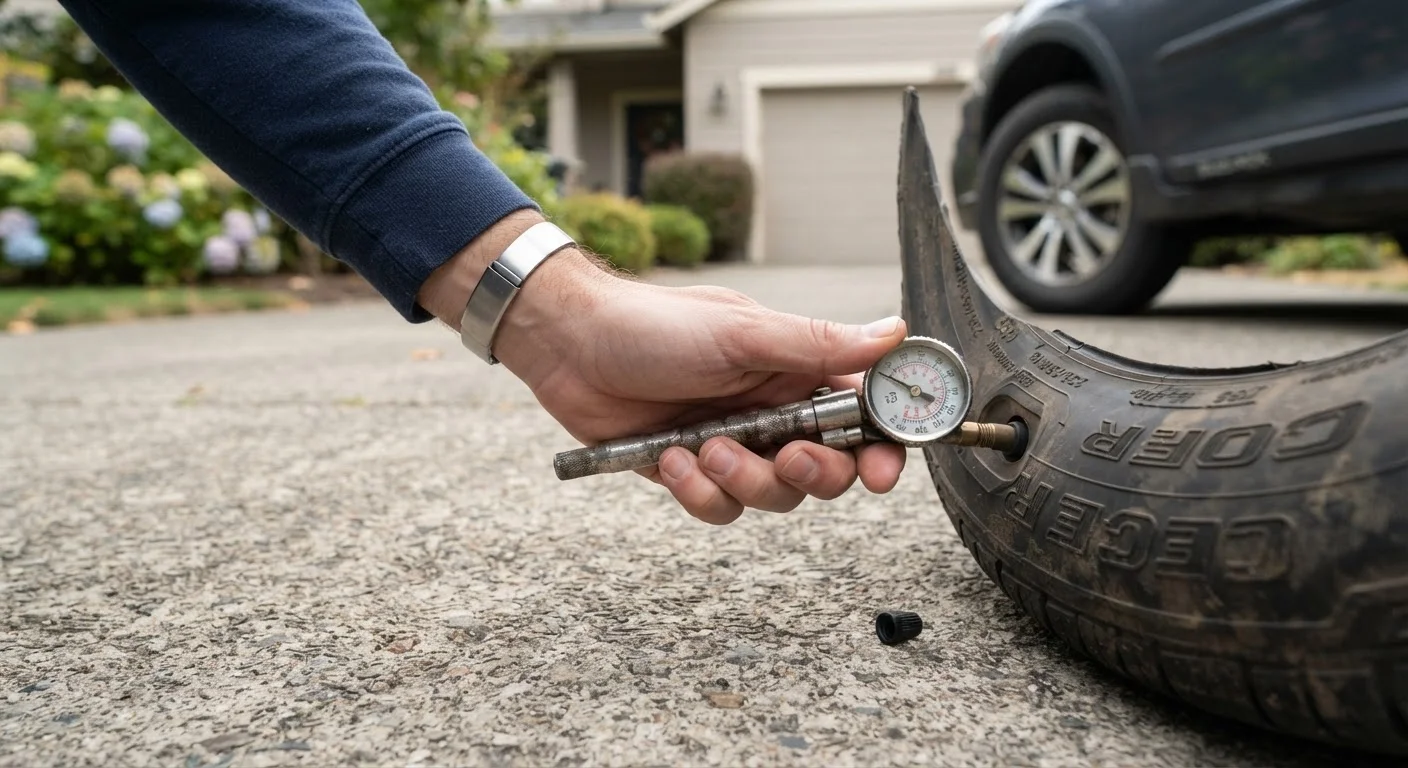
Press the gauge firmly onto the valve stem
Place the open end of the gauge squarely over the valve stem and press down firmly in one smooth motion. A hissing sound means you have an imperfect seal - reposition and try again. The gauge will display a PSI reading within a second or two.
Compare reading to recommended PSI and adjust
If the reading is below the door-jamb figure, add air using a compressor or gas station pump - press the pump chuck onto the valve stem and inflate in short bursts, rechecking frequently. If the reading is above the figure, use the small pin on the back of most gauges (or a pen cap tip) to depress the valve core and release air in short taps, rechecking between each.
Replace the valve cap and repeat for all tires
Screw the valve cap back on hand-tight after each tire. Work around all four tires - and don't forget the spare if your vehicle carries a full-size one. Record the readings or take a quick photo if you want a reference for next month.
Gas Station Gauges Are Often Inaccurate
Built-in gauges on public air pumps are subject to heavy use and rarely calibrated. They can read several PSI off in either direction. Owning your own gauge - even an inexpensive one - gives you a consistent baseline you can trust over time.
For help choosing the right gauge type before you start, compare dial, digital, and stick gauges to find one that suits your needs. If you want to understand the other numbers on your tire sidewall, load index and speed rating codes explained is a useful companion read.